The lime deposit is one part of the story
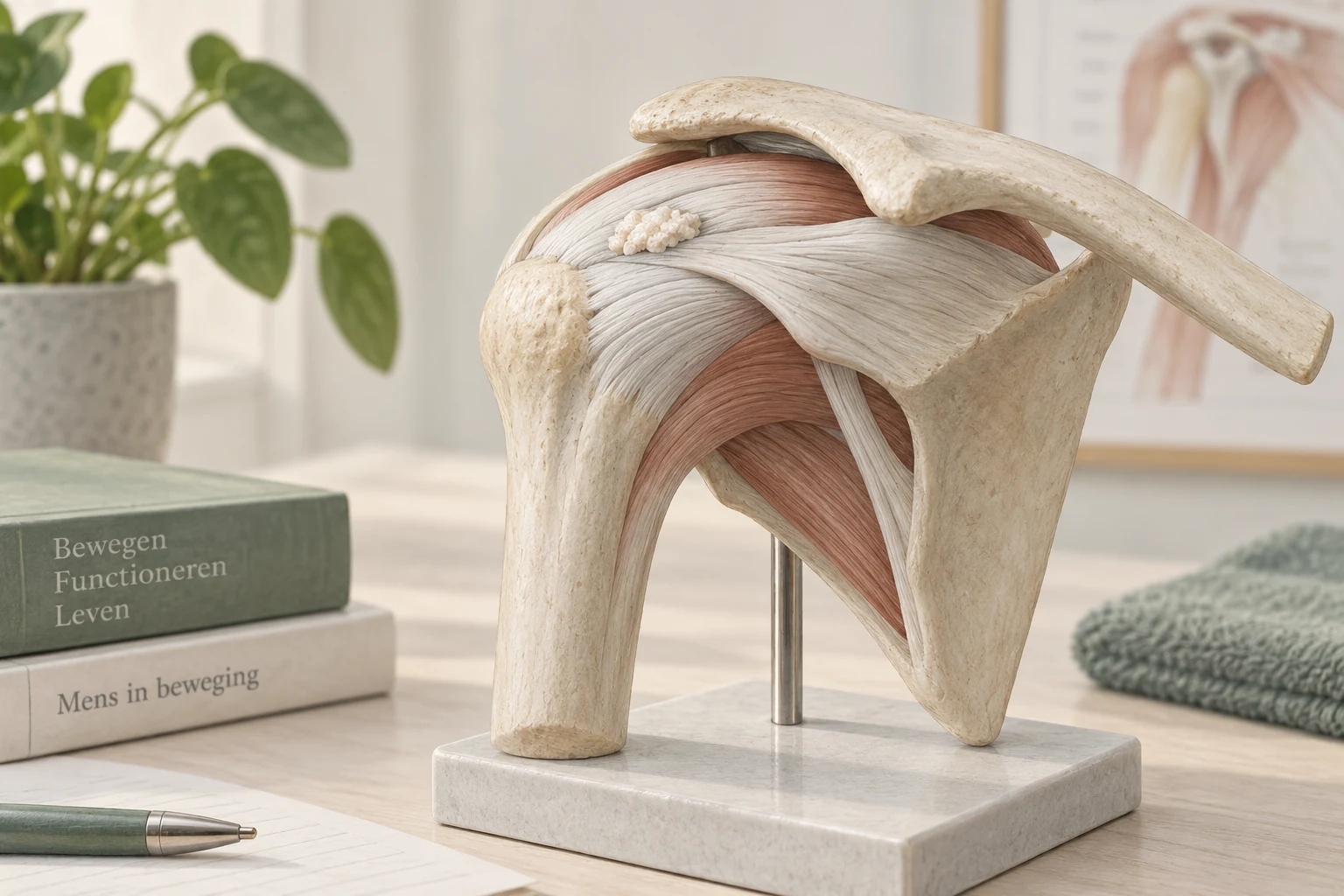
In calcitic tendinopathy, a lime deposit is found in a tendon in the shoulder. It can go hand in hand with pain, but an image doesn't independently tell how much trouble someone needs to suffer. The practical question, therefore, is not just how big the deposition is. It is also about the emergence of symptoms, opportunities for movement, sleep and the activities that no longer succeed.
During the explanation, indicate which tendon and which part of the shoulder are meant. Then ask how that finding fits your symptom pattern. There's lime in there. There's a test report. That is why we choose this approach and expect to be able to assess it is a treatment rationale. You need both to understand a proposal, especially when it asks for money, multiple appointments or an intervention.
What basic questions precede treatment?
A treatment begins with the question of what is currently most hindering. One is hardly able to sleep; the other is a limited movement at work. The Rotator Cuff guideline supports an individual active rehabilitation program and clear explanation. A calcium deposits found doesn't make that conversation unnecessary.
Prepare a short timeline: when began the pain, was there a sudden moment, what has already been tried and what effect did that have? Also mention injections and changes in work or sport. Not only note that physical therapy didn't help, but which parts were performed and why something didn't succeed. This way you prevent a next clinic from repeating the same plan under a new name.
Also discuss which outcome is important. Less lime, less nocturnal awakening and lifting are different goals.
Practice and pain treatment have their own purpose
A training program can be aimed at better shoulder use. It does not need to be presented as a way to literally train lime away. The load and movement results are adjusted to what is possible. If pain blocks any attempt, it is part of the evaluation: perhaps the dose is inappropriate or the pain treatment should be discussed again.
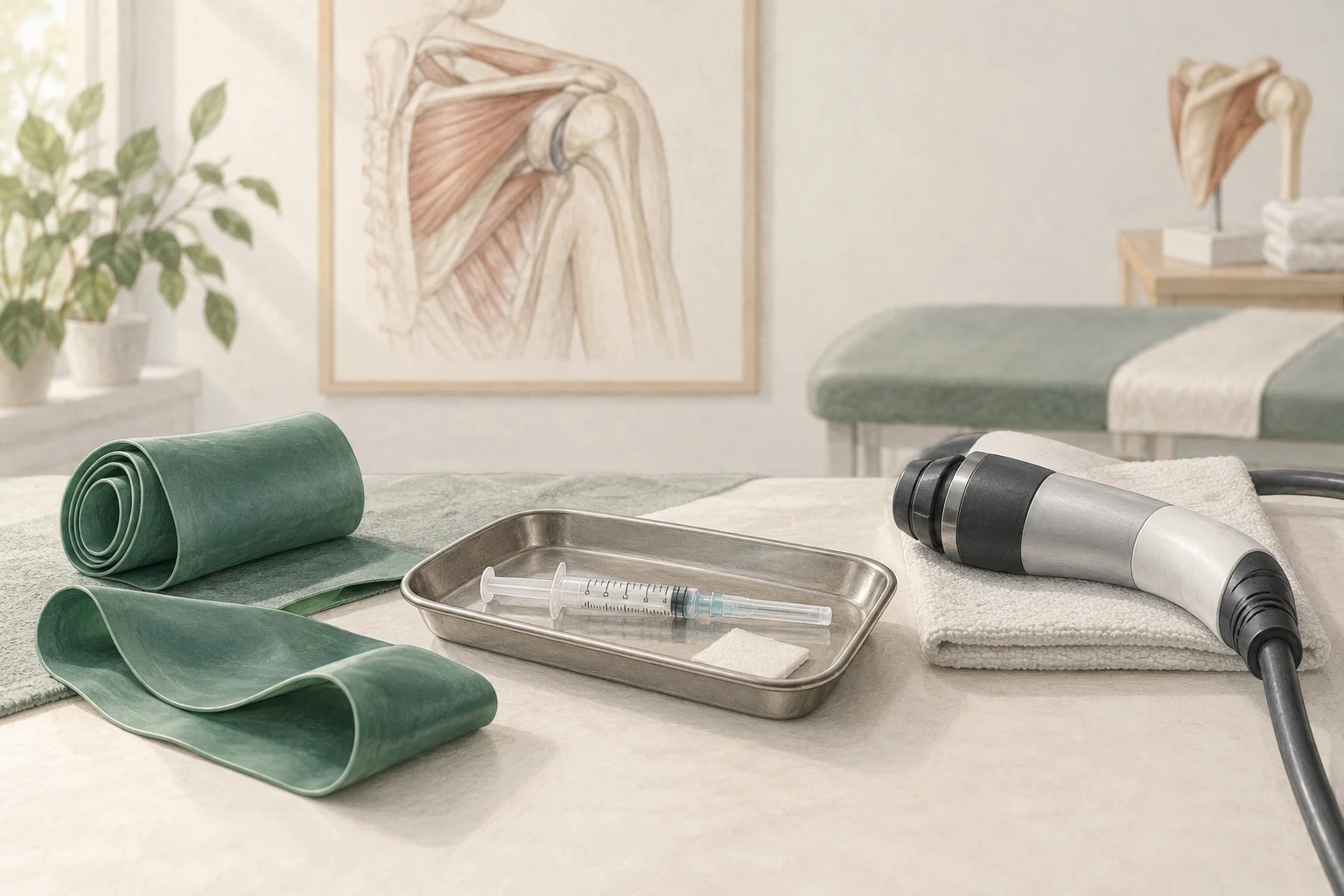
A corticosteroid injection may be considered for reduction of symptoms in certain situations, but is not an automatic recovery certificate. Ask what the intended profit is and how that period is used. Think of moving easier or being able to perform a simple exercise. Also agree what you do when the effect is short-lived.
Make sure that the explanation of medication or injections comes from a qualified prescriber. An article cannot weigh your medical history and any risk derivatives.
Why shockwave isn't an obvious next step
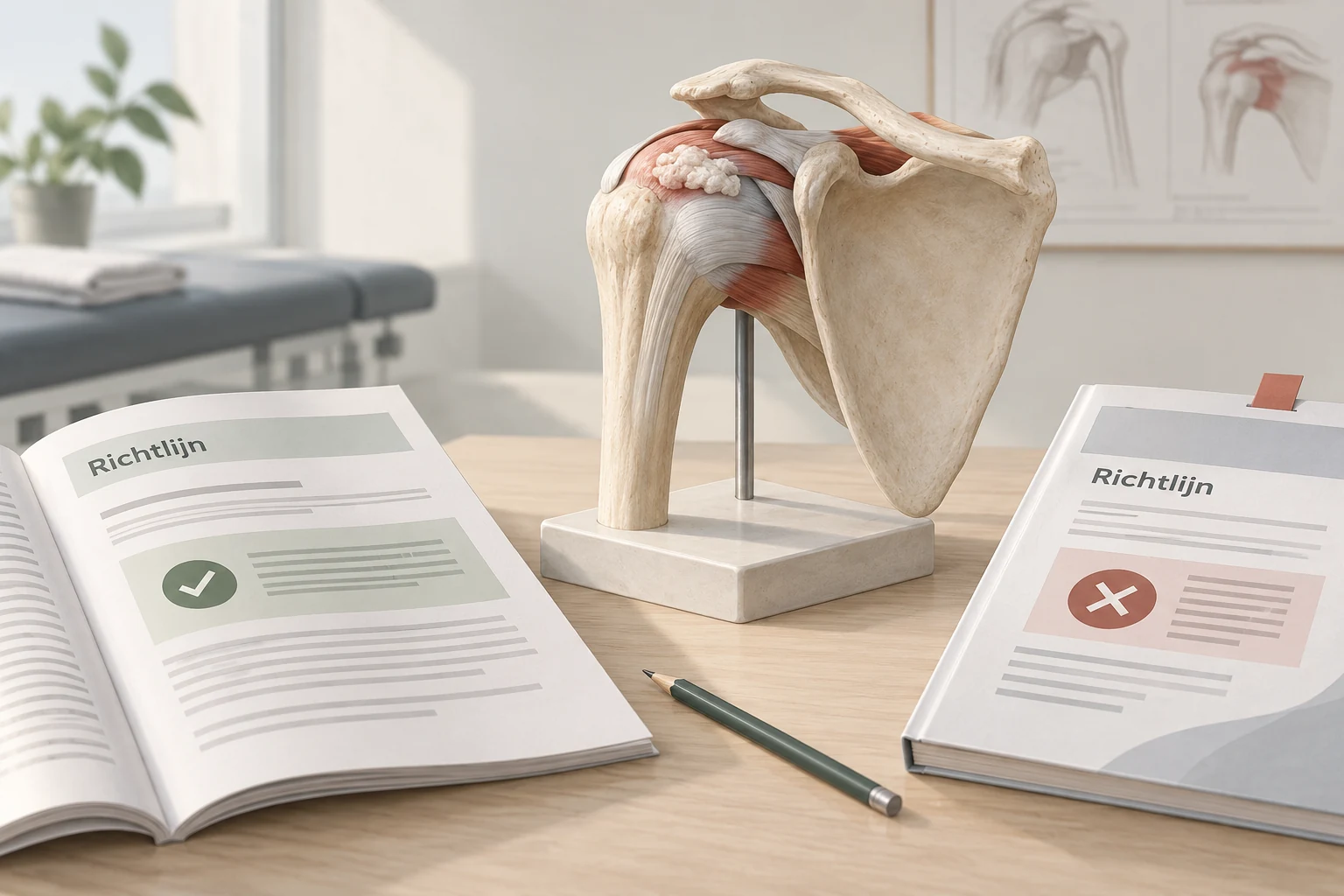
There is no complete unanimous opinion on shoulder calcification. The international guideline of 2025 allows shockwave as an opportunity. NICE finds the basis of the operation insufficient and advises application exclusively in research. That difference must be visible in a fair choice process.
So ask which guideline follows a proposal and why. Also important: what technique is meant, what is the treatment goal and when is stopped? The term shockwave may include several applications. A successful treatment in heel pain can't prove anything about your shoulder calcification.
A consideration may result in you not choosing an additional treatment for the time being. That is a substantive choice, for example because you first want to assess the existing practice plan or if it is not sufficiently clear what additional profit is expected.
Rinse Lime: a logical thought with uncertain result
In lavage, also called barbotage, lime is punctured and rinsed under ultrasound conduction. It makes sense that removing a visible deposition solves symptoms. However, this assumption should be evaluated against outcomes that patients experience.
One randomised BMJ study from 2023 Compared lavage to corticosteroids, a dummy procedure with corticosteroids and a dummy treatment. The active treatments at the main evaluation after four months were no better than the dummy treatment. Also the later comparison did not support any obvious advantage.
This research does not mean that every individual experience is the same. It does mean that a promise of lime gone, pain gone is too definite. A proposal for lavage should include explanations of this uncertainty, possible risks and what waiting for an adapted conservative plan.
Use a choice form without preferential treatment
Write down the same points for each proposal. This prevents the most technically sounding option from automatically becoming more attractive.
| Question | What do you want an answer to? |
|---|---|
| Purpose | What daily restrictions do we want to reduce? |
| Added value | What does this add to what I'm already doing? |
| Substitution | Has this been investigated in my type of shoulder symptom? |
| Load | How many appointments, discomfort, and recovery rooms does it take? |
| Evaluation | When do we choose to continue, modify or stop? |
Add your own rule: what uncertainty do you find acceptable? Anyone looking for information in particular can choose from someone whose work and sleep are already severely restricted. That doesn't make a shared decision random; it makes visible what personal factors matter.
Ask at the end for a brief overview of the agreed order. This creates a follow-up plan, even if another healthcare provider is involved later.
Frequently asked questions
Should shoulder lime always disappear?
A treatment decision should not focus solely on the disappearance of lime. Pain, exercise and daily activities count. Ask why a change in the image in your situation would be relevant and how the treatment outcome is assessed next to the photo.
Do NICE and the 2025 guideline agree?
No. NICE advises shockwave for shoulder calcification solely in research because of insufficient evidence for its effect. The international rotator-cuff guideline of 2025 allows it as a possibility. A trader must explain this difference and not suggest general certainty.
Is barbotage proven better than waiting?
You can't reach that conclusion in general. The study cited did not benefit from lavage with corticosteroids above dummy treatment on the main evaluation. A consideration depends on the diagnosis, previous care and the uncertainty you discuss together.
What am I taking to a second assessment?
Bring previous reports, a list of treatments and your medication list. Add two concrete constraints, such as sleeping or reaching out at work. Ask which finding determines the current choice and what a review would actually change.
Sources and evidence
- Rotator Cuff Tendinopathy: Clinical Practice Guideline (2025) ↗
Active rehabilitation and possible use of shockwave in calcicating tendinopathy.
- NICE: shockwave when calcification of a tendon in the shoulder (2022) ↗
Insufficient efficacy and study advice for shoulder calcification.
- Moosmayer et al.: lavage versus schijnbehandeling bij schouderverkalking (2023) ↗
No benefit from lavage plus corticosteroids above sham on the primary outcome.
A personal follow-up step
From insight
to an appropriate plan.
At a paid intake, we'll discuss your symptom and do targeted research. ultrasound is included at no extra cost when it makes sense. Any treatments are agreed separately.
View the initial consultation