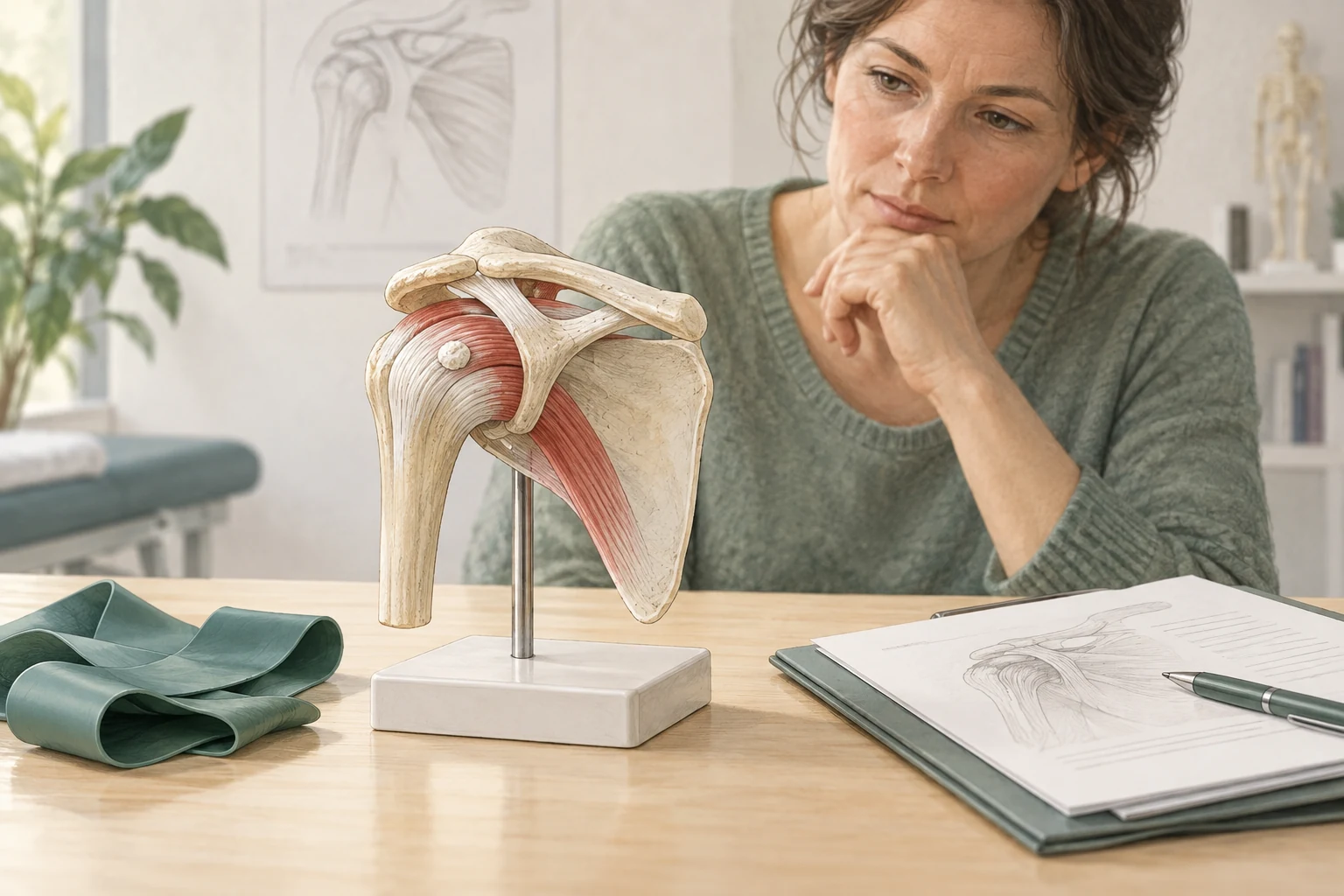
What does a lime find mean?
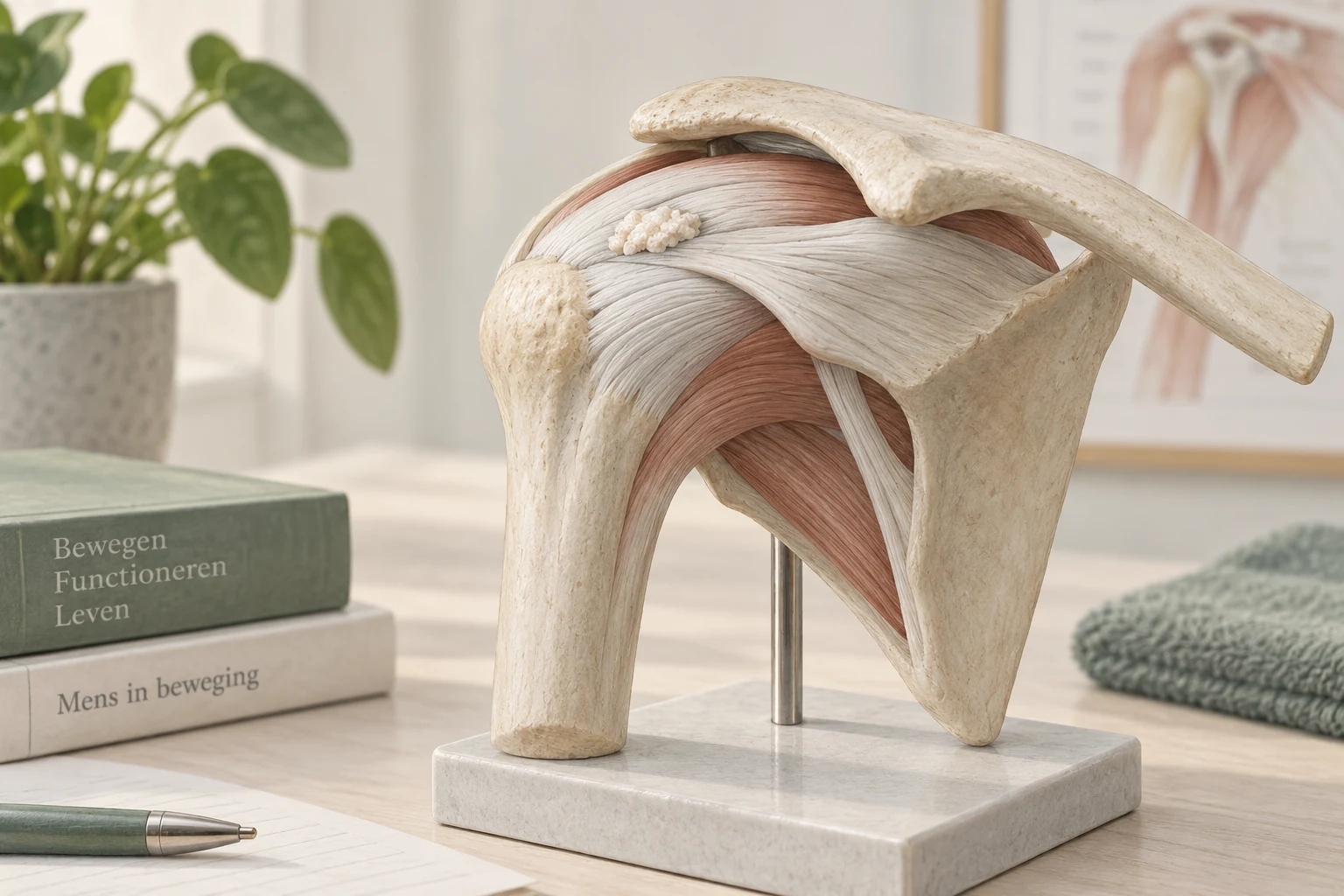
A report may refer to calcification or calcification. This describes that calcium-containing material is visible. The meaning depends on the location and consistency with other findings. The word just doesn't tell you why you're in pain.
A calcification in a tendon is not the same as a bone protrude when attached. These terms can be confused in everyday explanations, while clinical questions differ. Therefore, ask where exactly the finding is and what was seen.
It's understandable that you want to point out something visible as the cause. However, the clinician must first check whether location and pattern match your symptoms. A tangible image makes a statement attractive, but not automatically complete.
Can lime be present without any symptoms?
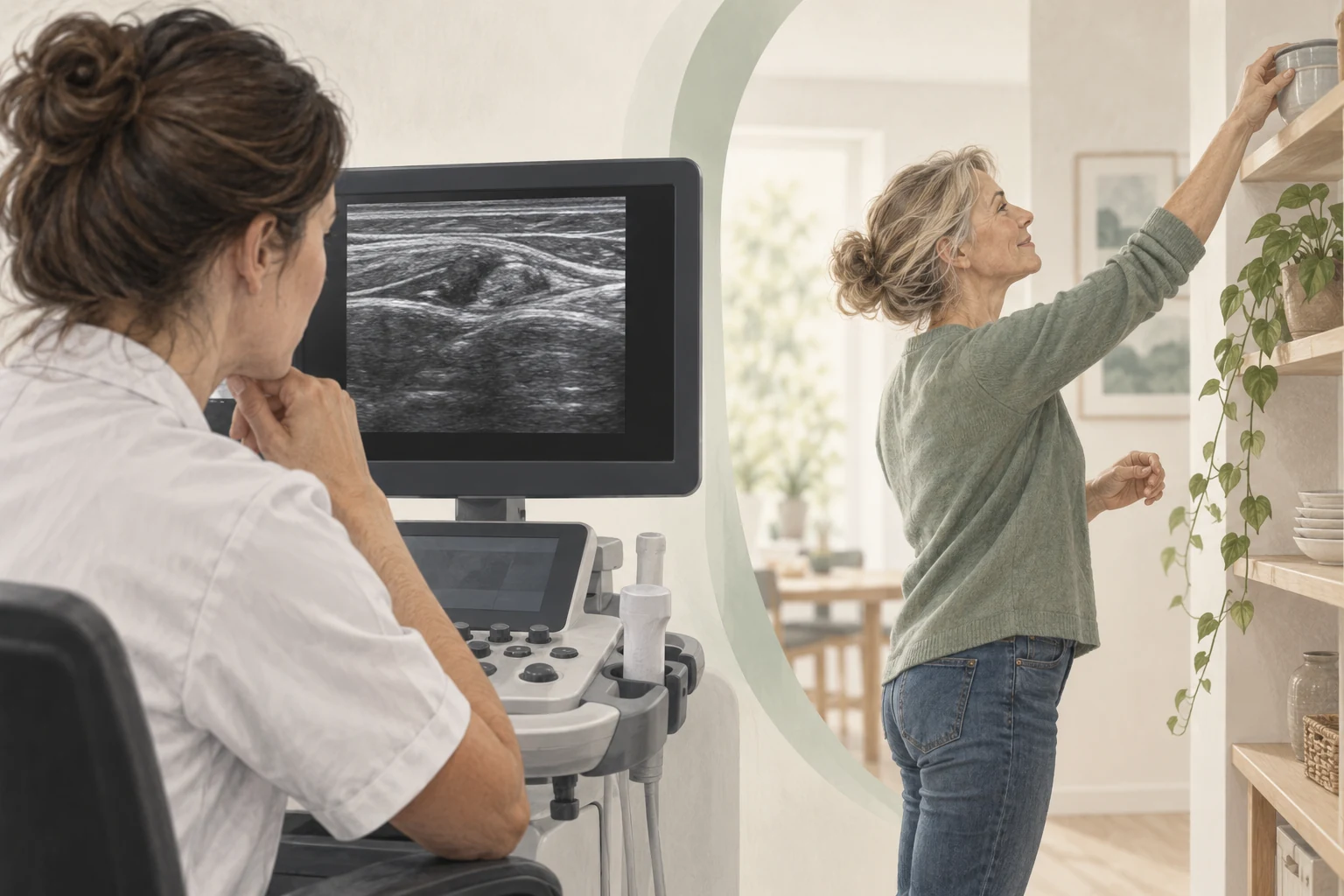
Yes. One Echographic examination in women without shoulder problems Described, among other things, calcium findings. That shows that the presence of lime does not equal the presence of pain.
That observation doesn't mean that calcification is never relevant. It means that the image should remain part of the assessment. The severity of symptoms, movement, strength and course help determine how much meaning it is given.
In case of an accidental finding, ask if there's any reason to do anything with it now. A treatment should have a patient-related purpose. Only removing a different term from a report is not a natural health goal.
Why shoulder calcification requires an own weighing
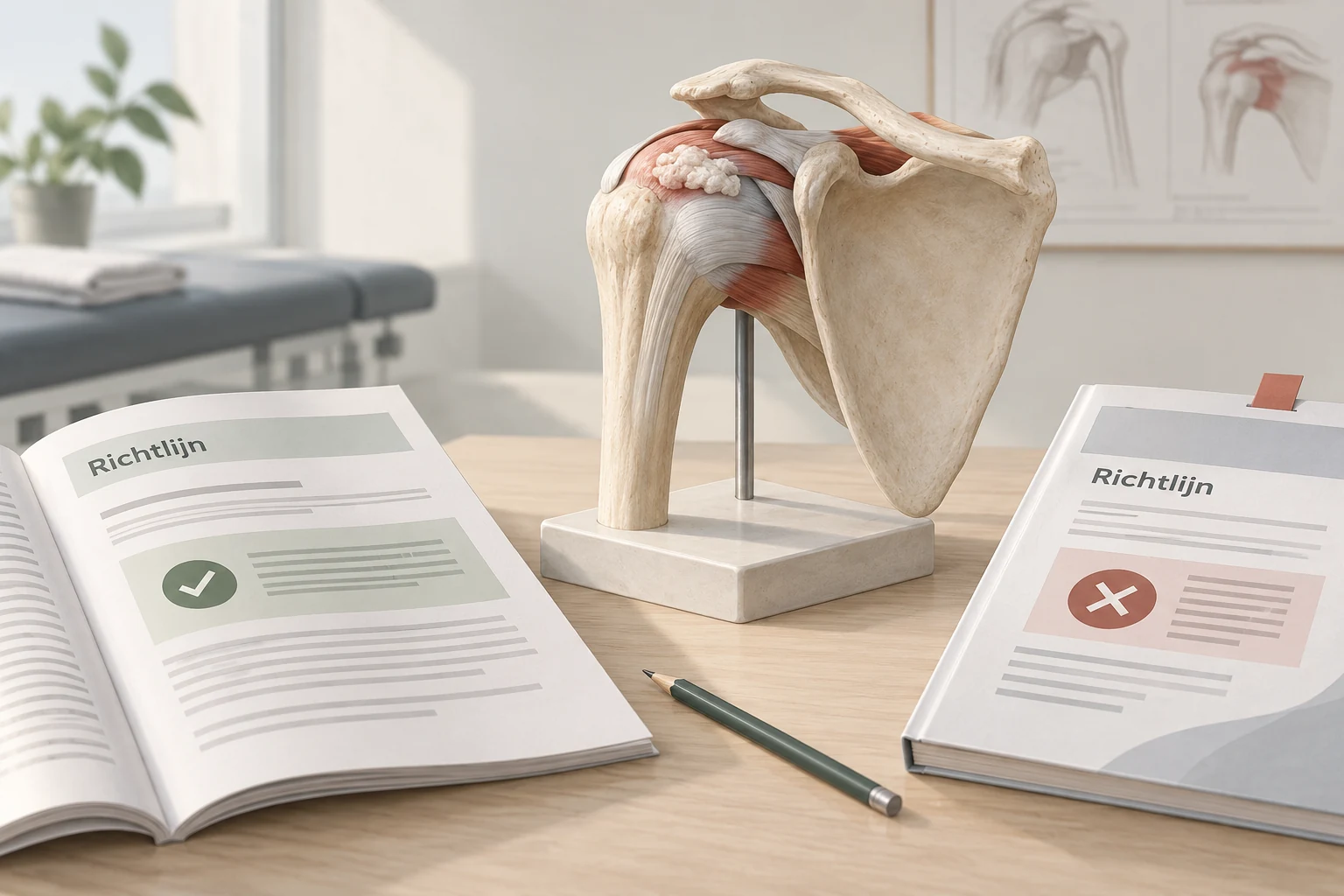
For rotator cuff symptoms, guidelines distinguish between calcific and non-calcific tendons. The JOSPT guideline from 2025 describes several recommendations for those groups. This means that it must be clear which diagnosis is a treatment advice.
There are also differences between directives. NICE recommends ESWT for calcified shoulder paws only within research. A favourable technical description is therefore not a complete representation of the justification.
A proposal for shockwave or any other targeted treatment includes those uncertainties to be discussed. Ask what the goal is: less pain, better functioning, change of lime or a combination of lime. Those are different outcomes.
Less lime and less pain are not the same
A treatment can be judged on the image, but also on what you experience and can experience. The disappearance or removal of a lime deposits does not automatically prove that all symptoms have disappeared. Conversely, functioning can improve without any visible finding being removed.
Therefore, it helps to define a practical purpose prior to treatment. Do you want to be able to lie on the shoulder again or perform a particular task? This way, you avoid the conversation only revolves around the size of a stain on a scan.
In a check, ask what changes the outcome of the counseling. If clinical progress is good, it should be explained why additional treatment of a residual image would still be necessary.
What are you taking to the review?
Prepare three parts: the report, the progress of symptoms and your main limitation. Please indicate whether the pain occurred suddenly or gradually and what gave rise to previous treatment. That makes the lime finding better to place.
A small overview can help:
| Information | Why relevant? |
|---|---|
| Location of the lime | Not every finding is about the same structure. |
| Origin of symptoms | A sudden change raises other questions. |
| Movement and strength | Show us what's functionally limited. |
| Previous care | Helps determine which next step is logical. |
You don't have to decide which treatment would affect the lime the fastest. The first question is whether and how the finding really contributes to your problem.
Avoid a treatment that only follows the image
When someone says that lime should always be broken or removed, ask for the reason and justification. A general mechanical story can be too simple for clinical reality.
Discuss alternatives and the role of active guidance. Depending on the situation, a first approach or further assessment can be more logical than a direct targeted technique. The choice must be consistent with symptoms and goals.
A careful decision can therefore be to follow a lime finding for the time being without specific treatment. It may also be to discuss an additional option. The difference lies in the clinical context, not only in the fact that lime is visible.
Frequently asked questions
Is lime in a tendon the same as a heel spur?
Not exactly. A calcification in a tendon concerns lime-containing material in or with a tendon, while a heel trace usually means a bone protrude when attached. Ask which finding has actually been established; the terms do not automatically indicate the same cause or treatment.
Should all shoulder lime be removed?
No. The need for treatment depends on symptoms, functioning, prior care and assessment of the finding. Lime can also occur without any symptoms. A proposal needs to explain what benefit treatment would have for you, in addition to changing the image.
Can shockwave lime always disappear?
That cannot be guaranteed. Research and recommendations differ and image change is not the same as full clinical recovery. Ask for the basis for your diagnosis and allow pain and functioning to be assessed in addition to possible image change.
Does lime prove I didn't move enough?
You can't tell that from a scan finding. An image is not a judgment of your lifestyle or commitment. Discuss the meaning with your clinician and focus the conversation on the current symptom, possibilities and an appropriate next step.
Sources and evidence
- Meroni et al. – ultrasound findings without shoulder symptoms (2017) ↗
Findings, including calcifications, on asymptomatic shoulders; image and symptoms are not the same.
- Desmeules et al. – Rotator-cufftendinopathy guidance (2025) ↗
Diagnostics and active treatment of rotator-cuff symptoms; ESWT not recommended without calcification and possible option for calcification.
- NICE – ESWT study recommendation for calcified shoulder paws (2022) ↗
Efficacy uncertainty and recommendation for use in studies in the UK context.
A personal follow-up step
From insight
to an appropriate plan.
At a paid intake, we'll discuss your symptom and do targeted research. ultrasound is included at no extra cost when it makes sense. Any treatments are agreed separately.
View the initial consultation