What does pain tell you in bed?
In case of shoulder discomfort, lying on the affected side can be annoying and make sleeping more difficult. Thuisarts calls that as a recognizable part of the symptom pattern. However, nightly pain in itself does not tell which tendon is involved or which treatment is needed.
Look at the whole thing. Do you wake up by rolling on the shoulder, doesn't every posture hurt or succeed in spinning because of stiffness? These descriptions give different information. Also note whether the symptoms started after an accident and if you can move the arm less and less during the day.
You don't have to diagnose in the middle of the night. A sentence in your phone or on paper is enough to explain what happened the next day. This way you avoid that a tiring night during the consultation is only summarized as having slept badly.
Trying out an attitude without finding a perfect position
A practical test is to reduce the stress of the painful shoulder. For example, on your back you can see if support under the forearm feels more comfortable. On the other side you can try to rest the painful arm in front of you on a pillow. These are comfort ideas to test carefully, not proven ways to make a tendon heal faster.
The support does not have to be high or firm. Start with what you have in the house and make sure the attitude feels relaxed. If you have to constantly tighten muscles to keep the arm in place, the solution is probably not pleasant enough.
Change one part at a time. When you choose another mattress, a large pillow and a new sleeping posture at the same time, it becomes difficult to identify which part makes a difference. An expensive purchase is not a necessary first step.
Turning and getting up is part of the night
A good starting position is worth little when you can't move comfortably afterwards. So think about rolling over, moving the duvet and getting out of bed. Put stuff you need at night within easy reach. Look quietly during the day which movement requires less effort, so you don't have to think about it in the dark.
Example: a glass of water is behind the painful shoulder. Only moving to the other side of the bed can prevent a tricky reach. That's an adaptation of the environment, not treatment of the cause.
Ask for help when you become dependent on unexpected support for daily transfers or cannot use the arm properly after a fall. Then it's more than a sleep posture. The problem deserves an assessment before you continue to test all kinds of movements.
Take the daily load into your observation
It is useful to look at the previous day in addition to the night. What job, workout or job required a lot of shoulder work? Was there hardly time to switch activity? A connection in your own notes may help a conversation, but does not prove that one activity caused the symptoms.
Make the registration small. Write down at most one remarkable day job and what was bothering you that night. Avoid measuring pain every hour or consciously staying awake to monitor the reaction. The goal is information for a plan, not constant supervision of your body.
Discuss whether heavy tasks can be temporarily distributed differently. The advice for ordinary shoulder symptoms emphasizes continuing to move with adjustment of heavy loads. Keeping completely still for fear of the night is usually not a useful long-term plan.
When stiffness deserves special attention
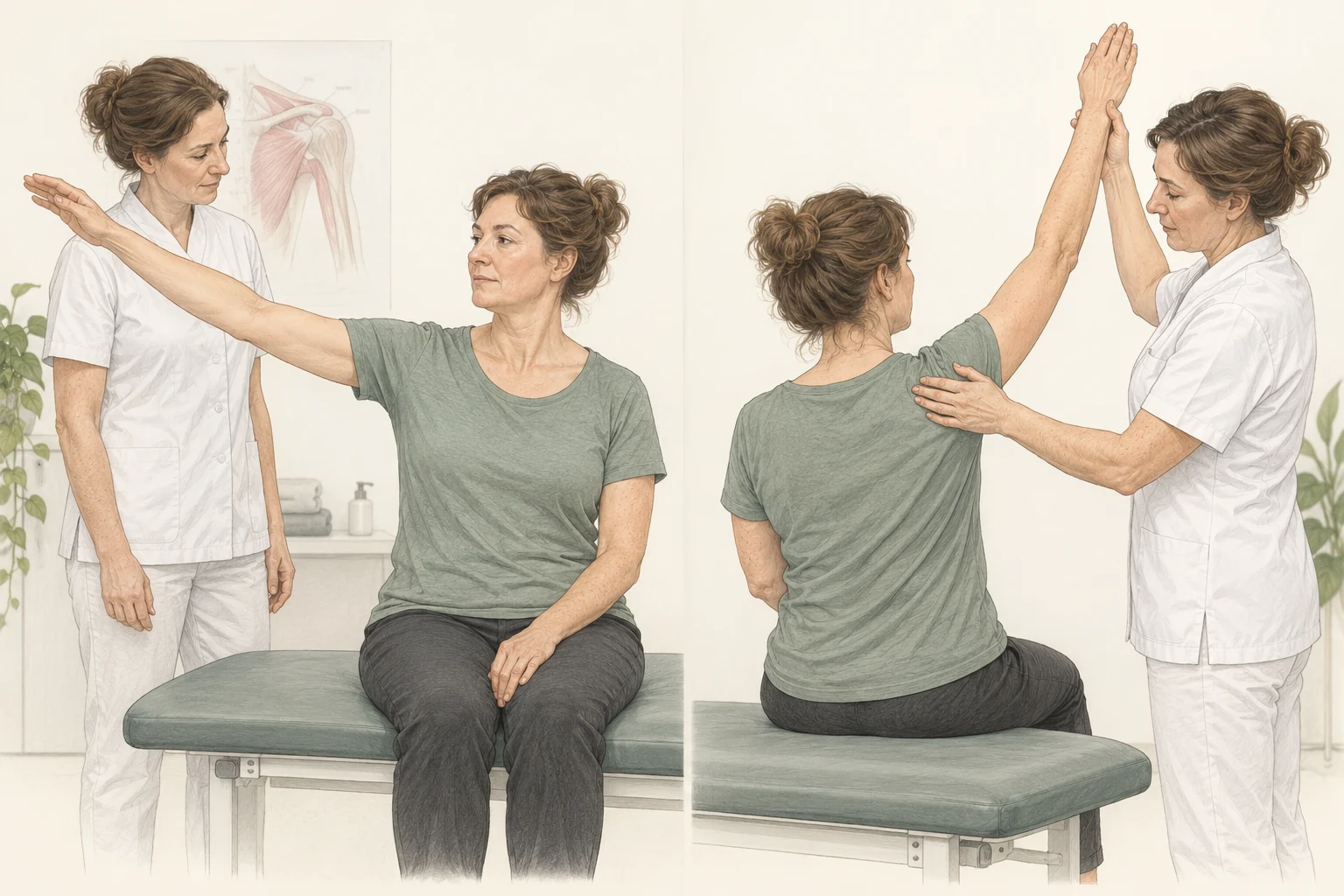
If, next to nocturnal pain, you can move less and less far, that's important information. In a frozen shoulder, pain and later apparent stiffness may occur together. Thuisarts about frozen shoulderer stresses that the diagnosis follows from the course of symptoms and movement studies; an ultrasound is usually not necessary for this.
Try not to pull a stuck shoulder with a lot of force because you want to sleep better afterwards. In frozen shoulder, patient information and assessment should take into account the pain response. What is suitable for a smooth moving, painful shoulder does not need to fit with strong stiffness.
Let also assess new sensational changes, increasing loss of strength or symptoms after an accident. Shoulder pain with acute chest pressure or tightness requires immediate medical attention and does not belong to a pillow test.
A short night pass for your next appointment
Use this overview a few nights, without mimicking an exact sleep study.
| Subject matter | Your observation |
|---|---|
| Sleeping | Especially pain when lying down or also trouble by worrying? |
| Wake up. | Because of pressure, spinning, stiffness or an unclear reason? |
| Which helped. | Another posture, support, or move quietly? |
| Daytime | What task was remarkably heavy? |
| Effect | What activity is less effective due to fatigue? |
Take the card with you when sleep stays a recurring problem. Ask which treatment choice is specifically aimed at pain or sleep and when the effect is assessed. Any pain medication you discuss with doctor or pharmacist, appropriate to your health and other medicines.
Don't make a bad night a proof that recovery fails. Take a look at the pattern together and at feasible changes. The goal is more comfort and an executable day, without the promise that one posture solves the underlying shoulder symptom.
Frequently asked questions
Can I lie on the painful shoulder?
This depends on the comfort and any specific medical arrangements. You don't have to keep up the attitude that keeps waking you up. Try to reduce the pressure and discuss persistent problems. A painful attitude in itself is not a reliable measurement of damage.
Which kiss is best?
There is no general best product for every shoulder symptom. Start with a simple support for your arm and see if you can relax and spin. A cushion is a comfort; it does not prove that a tendon recovers faster.
Is nightly pain always a frozen shoulder?
No. Nightly pain occurs with various shoulder problems. For frozen shoulder, the combination with increasing movement restriction is especially assessed. Have new or persistent symptoms investigated if the diagnosis is unclear; a loose sleeping symptom is not enough for that label.
Do I have to stop moving during the day to sleep better?
Usually that's not the starting point. Discuss which heavy or long-term tasks can be adjusted and which movements remain feasible. In case of severe symptoms or a specific diagnosis, other appointments may be necessary. Look at a pattern over several days, not just one night.
Sources and evidence
- Thuisarts: My shoulder hurts ↗
Nightly pain, posture, keep moving and adjust heavy shoulder load.
- Thuisarts: I have a stiff shoulder with pain ↗
Combination nocturnal pain and increasing stiffness; do not force in frozen shoulder.
A personal follow-up step
From insight
to an appropriate plan.
At a paid intake, we'll discuss your symptom and do targeted research. ultrasound is included at no extra cost when it makes sense. Any treatments are agreed separately.
View the initial consultation