Why the same pain area raises different questions
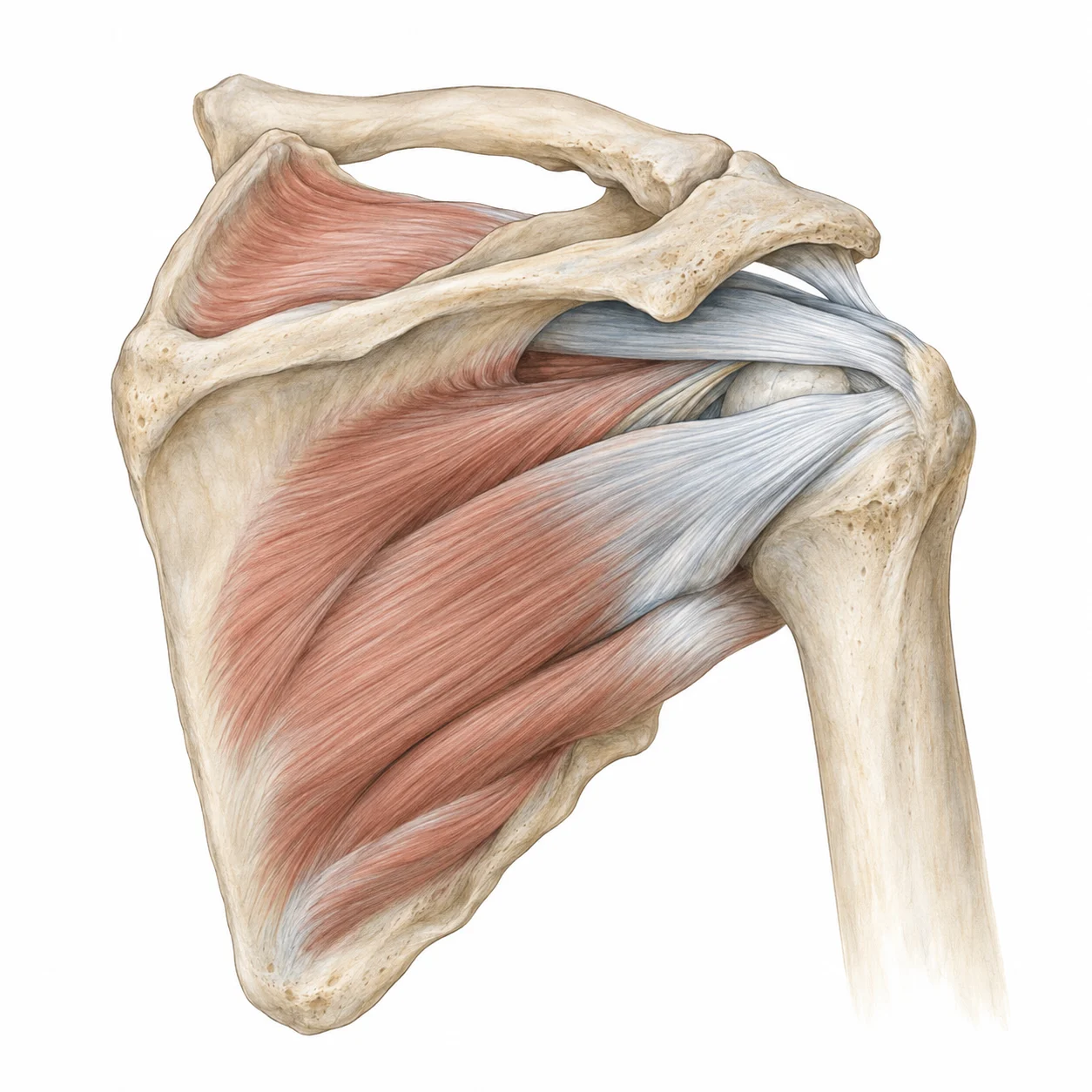
Pain on the outside of your shoulder can occur with various problems. Therefore, where you point out the pain is not enough to distinguish frozen shoulder from a tendon symptom. It's also about what you can move, how it started and how it changes.
A frozen shoulder starts according to Thuisarts often with pain, after which increasing stiffness becomes clearer. In the early period, the explanation may still be uncertain. That's a reason to follow the course.
In the first assessment, ask what is the work diagnosis and what change gives rise to a review. A provisional plan can be careful when it is clear what uncertainty exists. A definite label without explanation about movement and movement helps less.
Painful movement and limited movement are not the same
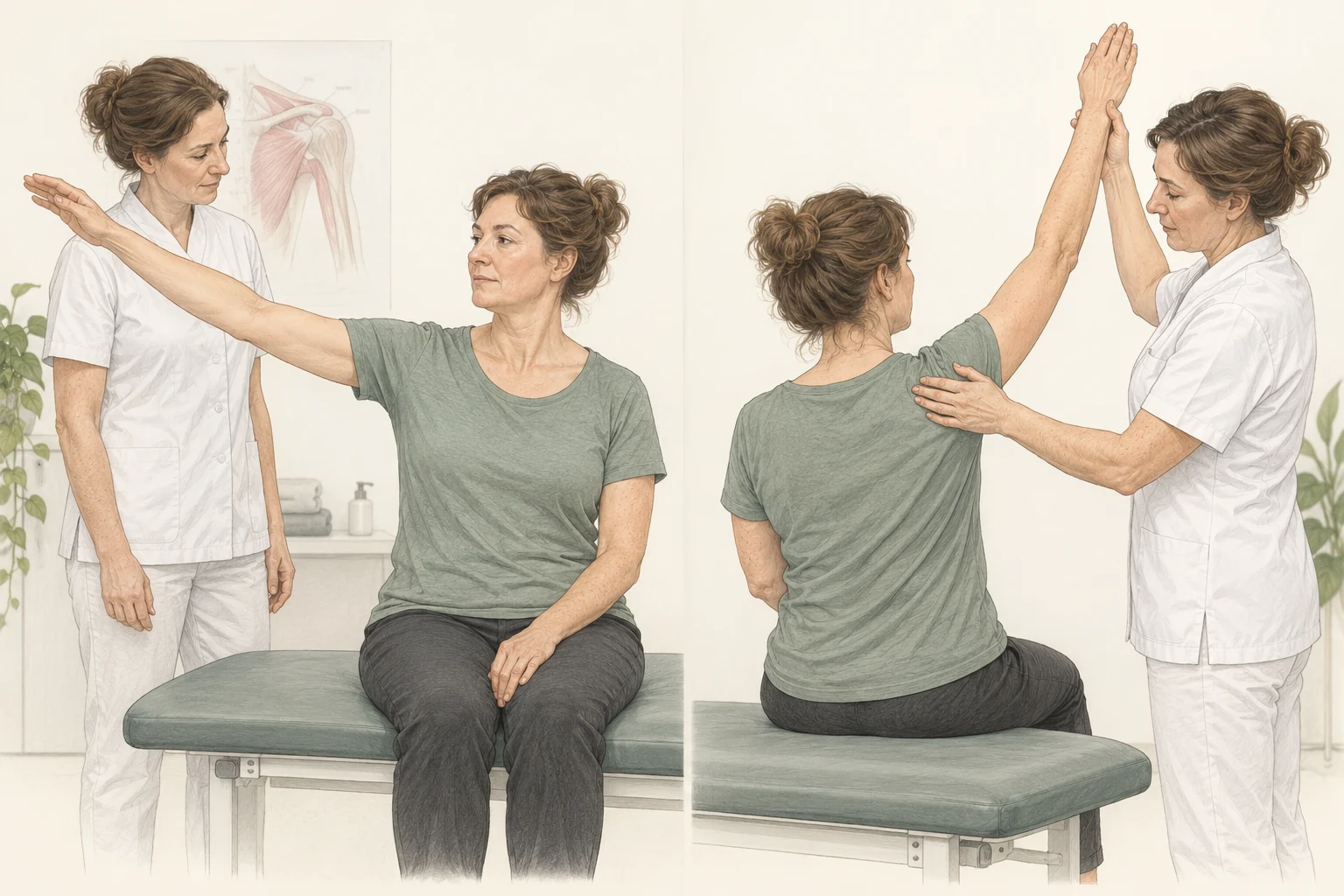
In the case of tendon-related shoulder problems, a movement due to pain can be tricky while there is still a lot of room for movement. With frozen shoulder, the ability to move becomes an important point of attention. A Clinician looks at movements that you make yourself and at movements that help the arm.
Don't try to mimic that at home with force. If you don't get the arm high, someone else doesn't prove what's going on. It can cause extra pain. Prefer to describe which daily movements become more limited.
Think about putting on your coat, grab the seat belt, or put your hand behind your back. Also note if you are turning more and more with your torso to achieve something. That's useful information for the investigation, without you having to draw any conclusions about a joint cut.
What an ultrasound can and cannot answer
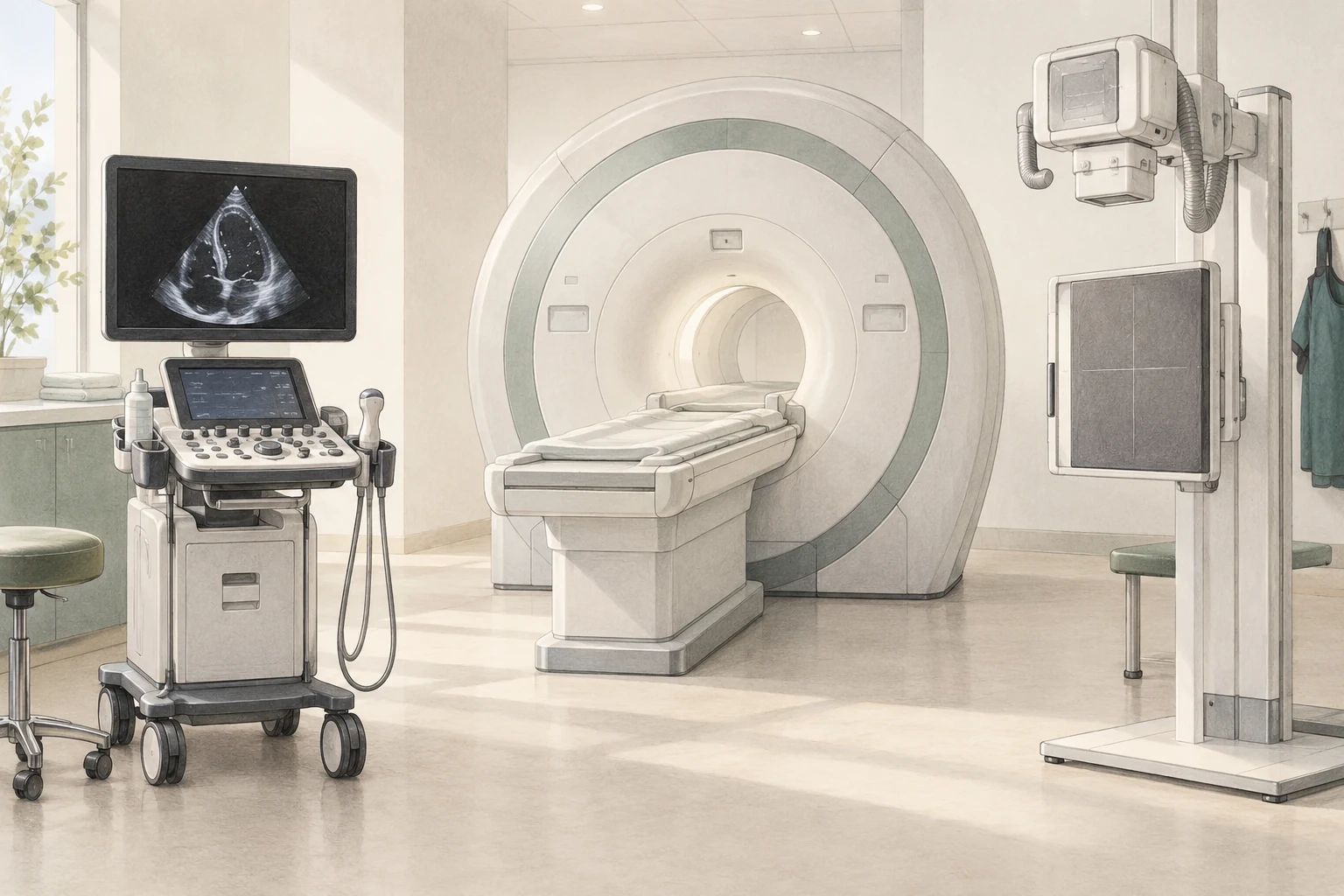
An ultrasound can visualize tendons and certain surrounding structures. However, the diagnosis frozen shoulder is usually made on the basis of symptoms and motion research. Thuisarts says that imaging is usually not necessary.
Also in suspected rotator-cufftendinopathy, the International guideline no routine imaging at the beginning of treatment. That doesn't mean scans never make sense. In the case of another diagnostic question or an abnormal course, the consideration may change.
In any investigation, ask which decision depends on it. If a report mentions a slight tendon change but your shoulder is very limited, someone has to explain how that finding fits the overall picture. A visible detail shall not replace the movement examination.
Why the practice approach may differ
In case of symptoms of the rotator cuff tendons, an active program with appropriate control or strength exercises is a common starting point. The degree of pain and stiffness is taken into account in frozen shoulder. Inciting a lot of pain to force movement doesn't make sense to get better faster, according to Thuisarts.
The difference is not simply in whether or not to move. In both diagnoses, movement may have a place, but the purpose and dosage may vary. Ask what an exercise in your situation should achieve: maintaining a viable movement, building strength or making a daily task easier.
Show me how to practice. An instruction that was appropriate last month may need to be discussed again when you have become clearly stiffer. Holding on to the same schedule is not an end in itself.
Keep track of changes with a movement card
Use some identifiable tasks as call help. It's not a diagnostic test, and you don't have to look up your limit every day.
| Task | What can you compare? |
|---|---|
| Putting on coats | Can you do it on your own or do you need more help? |
| Take care of her. | How far and how long can you use the arm? |
| Reach to a shelf | Does the achievable height change? |
| Hand behind your back | Has the movement become noticeably more limited? |
| Sleep | Do you wake up from pain, turning or both? |
Mostly write down what's changed. A precise number in degrees is not necessary for home. Take also or relieve pain while increasing stiffness. Less pain does not automatically mean that every function is already back.
In your appointment, you can choose which task best suits you to follow further. This prevents an ever-changing collection of self-tests.
Expectations and review
Frozen shoulder can go on for a long time. An average time from patient information doesn't predict when your shoulder is supple again. In the meantime, discuss what you can do for functioning, work and comfort and what treatment is aimed at.
Make an appointment again when the movement is clearly decreasing, the plan is not feasible or the diagnosis remains unclear. New symptoms after a fall, sudden loss of strength or sensational changes deserve a separate assessment. These should not automatically be placed under the existing label.
Shockwave is not a general solution for any stiff or painful shoulder. Test for calcification in a tendon should not be used as evidence for frozen shoulder. The appropriate choice follows from the diagnosis and a discussion about benefits, uncertainty and alternatives.
Frequently asked questions
Can a frozen shoulder look like a tendon symptom first?
Yes. In the beginning pain can be in the foreground while clear stiffness develops later. That is why physical examination and the course of symptoms are important. Ask what changes lead to a review of the first work diagnosis.
You want me to stretch through the stiffness?
Force hard is not an appropriate general rule. At Thuisarts advises not to force frozen shoulder movements that hurt a lot. Have the exercise load tuned to your phase and response. Maintaining movement has a different purpose than reaching more reach at all costs.
Can an ultrasound frozen shoulder rule out?
A normal ultrasound doesn't rule out frozen shoulder on its own. The diagnosis is mainly about symptoms and movement research. An ultrasound can answer another question, but must be explained in addition to that examination. So ask what the result really changes.
Do the same exercises apply to both problems?
Some movements may match, but purpose, motion and load may differ. Don't copy heavy tendon when you're getting stiffer and stiffer. Let us assess which approach fits and discuss the implementation again when the symptom pattern changes.
Sources and evidence
- Thuisarts: I have a stiff shoulder with pain ↗
Passion with pain and stiffness, clinical diagnosis and do not force.
- Rotator Cuff Tendinopathy: Clinical Practice Guideline (2025) ↗
Evaluation and active rehabilitation of rotator-cufftendinopathy; limitation of routine early imaging.
A personal follow-up step
From insight
to an appropriate plan.
At a paid intake, we'll discuss your symptom and do targeted research. ultrasound is included at no extra cost when it makes sense. Any treatments are agreed separately.
View the initial consultation