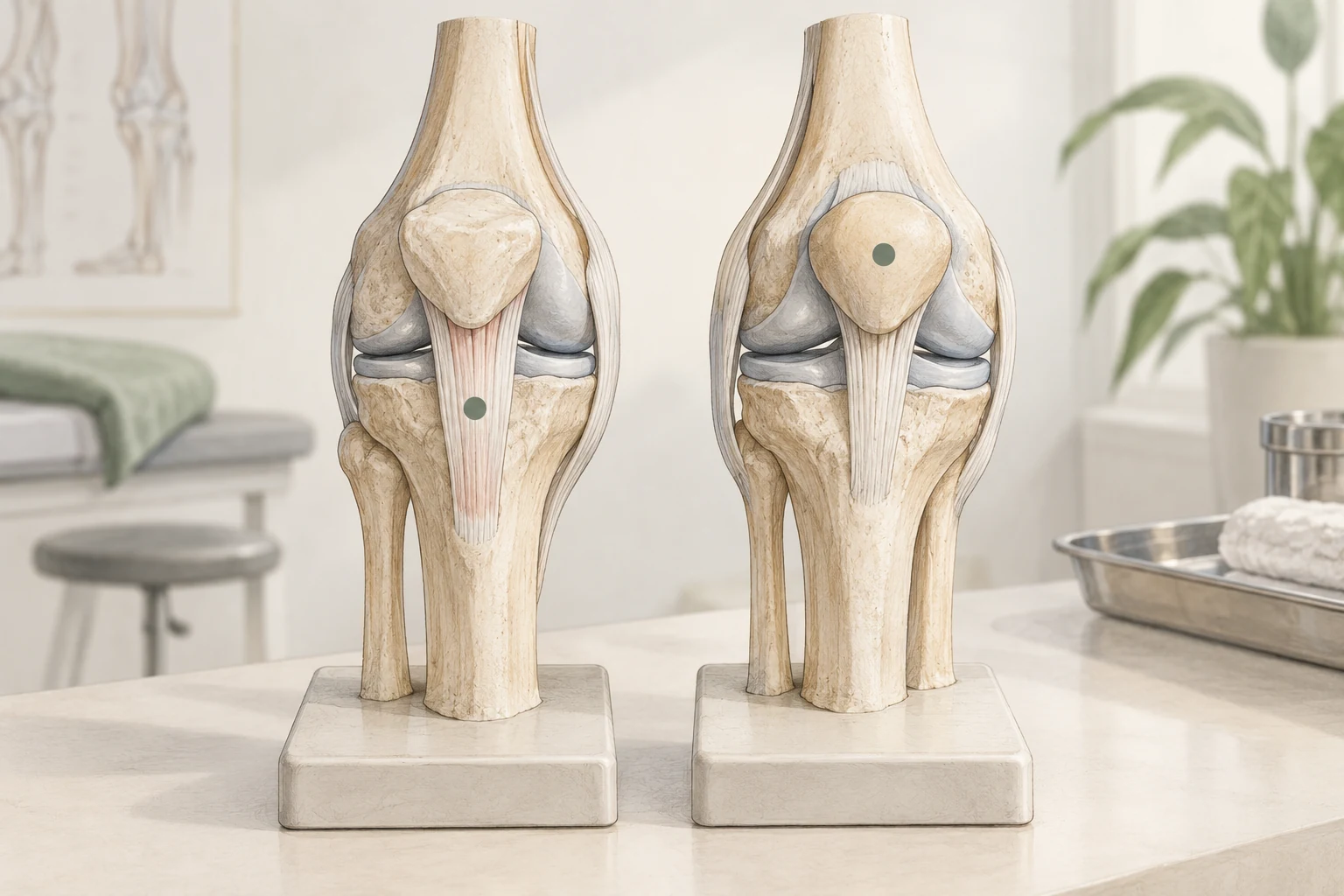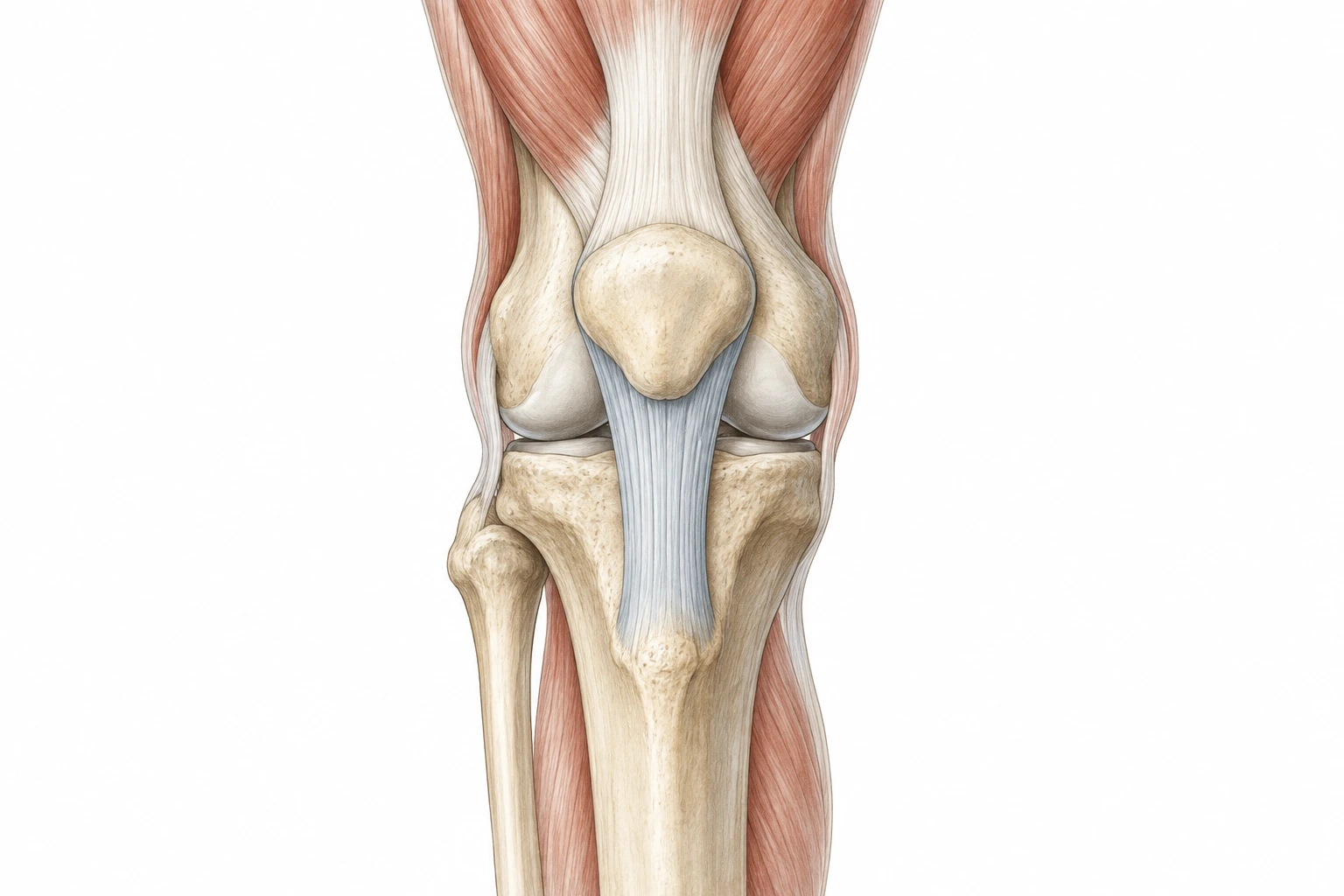
What tendon's under the kneecap?
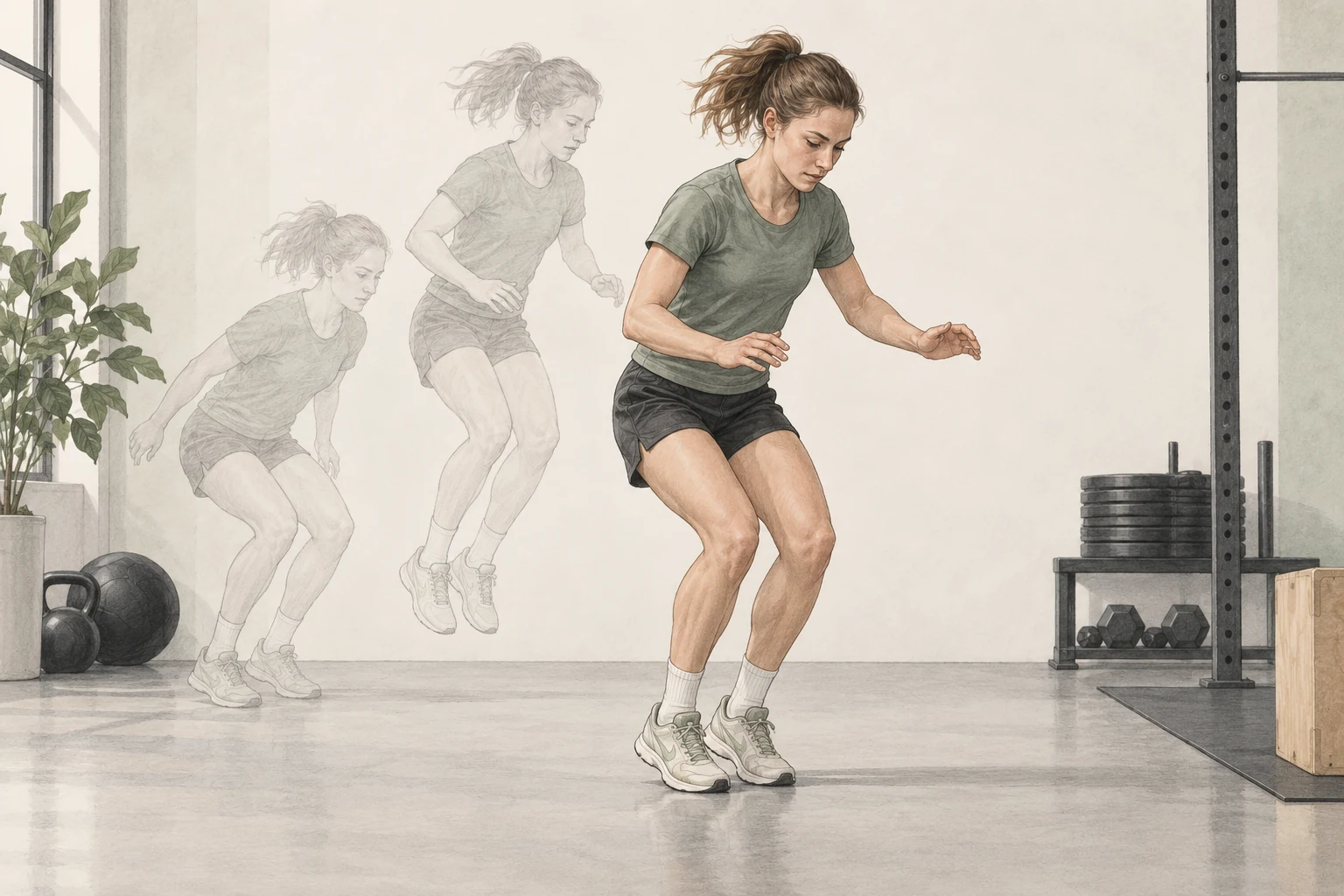
The patellar tendon connects the kneecap to the tibia. Together with the upper leg muscles, this compound helps to stretch the knee and transfer strength when dropping, braking and landing. As a result, the tendon can get a lot to deal with, for example, volleyball, basketball or running. Work and daily movement can also be part of the total load.
Patellate dinopathy causes pain associated with stress. This does not automatically mean that the tendon is torn or that one clearly inflamed spot has to be removed. The term describes a clinical problem: the tendon region hurts and certain activities go less well. The treatment plan should therefore be consistent with what you want to be able to do, in addition to what the knee shows in examination.
The place of pain indicates direction
Pain at the lower edge of the kneecap that is provoked by stress fits patella symptoms of the tendons. The Dutch Diagnosis guideline combines this pattern with physical examination. One sensitive area or one home test is insufficient to rule out all other causes.
For example, pain around or behind the kneecap may have another explanation. A thick knee after a twist also requires a different assessment. It helps to point out with one finger where the pain begins, but do not try to derive the definitive diagnosis from it. Also name symptoms that seem to be less appropriate to the expected story.
The name jumpers knee can be misleading. Someone who jumps little can have symptoms from the tendons; someone who jumps a lot and has knee pain doesn't have to have patellate dinopathy. The movement and the diagnosis are different things.
What's the pattern like over the week?
In case of symptoms from the tendons, the knee may feel different at the beginning of a training, during the warm-up and later in the day. The fact that the pain temporarily decreases during exercise does not yet tell whether the full load fits well. Look at what you can do the next day.
For example, make a short weekly description with four data:
- The activity: training, competition, work or extra many stairs.
- The moment the pain came up and the exact place.
- The activity you had to adjust or skip.
- The reaction later in the day and the next morning.
Such an overview is more useful than constantly pressing the tendon to check whether it is still sensitive. You don't have to register every move. Choose events that clearly differ from your usual day or that noticeably affect your functioning.
An ultrasound is not a mandatory first step
The interview and physical examination form the basis. The guideline mentions imaging as a consideration in case of diagnostic doubt or symptoms that persist despite treatment. A scan then gets a concrete question, for example whether another condition is plausible. Without such a demand, additional image information can mainly create new uncertainty.
Ask therefore what a possible ultrasound would change. Would the conclusion lead to different advice, another research or an adapted structure? That is a more useful consideration than just wanting to know if the tendon looks completely normal. Bring old records if you've already been examined, so that the clinic can put them next to the current functioning.
Recovery requires a load plan
The guideline on practice therapy put education and progressive training at the centre. In doing so, we first look at manageable daily loads, then at strength and later at faster movements needed for sport. The programme is adapted to the person; the guideline does not give any reason for having each knee followed the same internal trecept.
One example: someone does strength training twice a week and also plays volleyball three nights. Adding a training schedule without looking at the jumps on those other evenings makes the total week heavier. A suitable plan thus also describes what is temporarily reduced and which activity can be retained.
I want you to agree on how to assess progress. This can be about better stairs, finishing a training course or more trust in countries. Only a lower pain score at rest says little about returning to a jumping sport. On the other hand, more can be relevant progress in similar, limited pain.
When should the diagnosis be reviewed?
In the event of insufficient progress, the first question is not automatically what additional treatment is available. Check that the diagnosis, execution, construction and total load still fit. Also discuss whether the plan is practically feasible with school, work or sports obligations. A scheme that must always be skipped provides information other than a well executed route without improvement.
Thuisarts advises contact in case of persistent symptoms and also describes an important other scenario: sudden severe pain after which you can no longer actively stretch the knee or lift the stretched leg. Contact your doctor or general practitioner immediately. This does not fit in with ordinary gradual symptoms from tendons and calls for timely assessment.
Frequently asked questions
Is a jumper's knee the same as an ignition?
Not exactly. Patellatendinopathy is the term for load-related pain in a tendon and impaired functioning. Only the name tendinitis does not explain the course. The assessment focuses on the symptoms, the loadability and possible other causes, rather than solely on ignition.
Should I quit all the sports?
Not always. What remains manageable depends on your knee’s response and your overall weekly activity. Discuss which parts of your sport provoke symptoms and how you can maintain fitness and contact with your team.
How long will it take to recover from the tendons' patella problems?
That's different. The guideline recommends a sufficiently long training course and uses 12 weeks as an important period for basic treatment. This is not a recovery guarantee or fixed end date; return to full sport may require more time and build-up.
Does shockwave help with a jumper's knee?
The added value is uncertain. Thuisarts does not recommend shockwave for this and the specialist guideline only discusses additional treatment after insufficient result of the basic approach, explaining missing convincing evidence. A device treatment should not be an automatic first step.
Sources and evidence
- Anterior knee pain guideline: history and physical examination of PT (2022) ↗
Place and load dependence of patellar tendon pain; study and limited indications for imaging.
- Anterior knee pain guideline: practice therapy in patella tendinopathy (2022) ↗
Education and progressive practice therapy as a basis; staged construction towards sports-specific stress.
- Thuisarts: I have a jumper knee ↗
symptom pattern, recovery, when to contact and reluctant advice on shockwave.
A personal follow-up step
From insight
to an appropriate plan.
At a paid intake, we'll discuss your symptom and do targeted research. ultrasound is included at no extra cost when it makes sense. Any treatments are agreed separately.
View the initial consultation