The same movement can trigger different symptoms
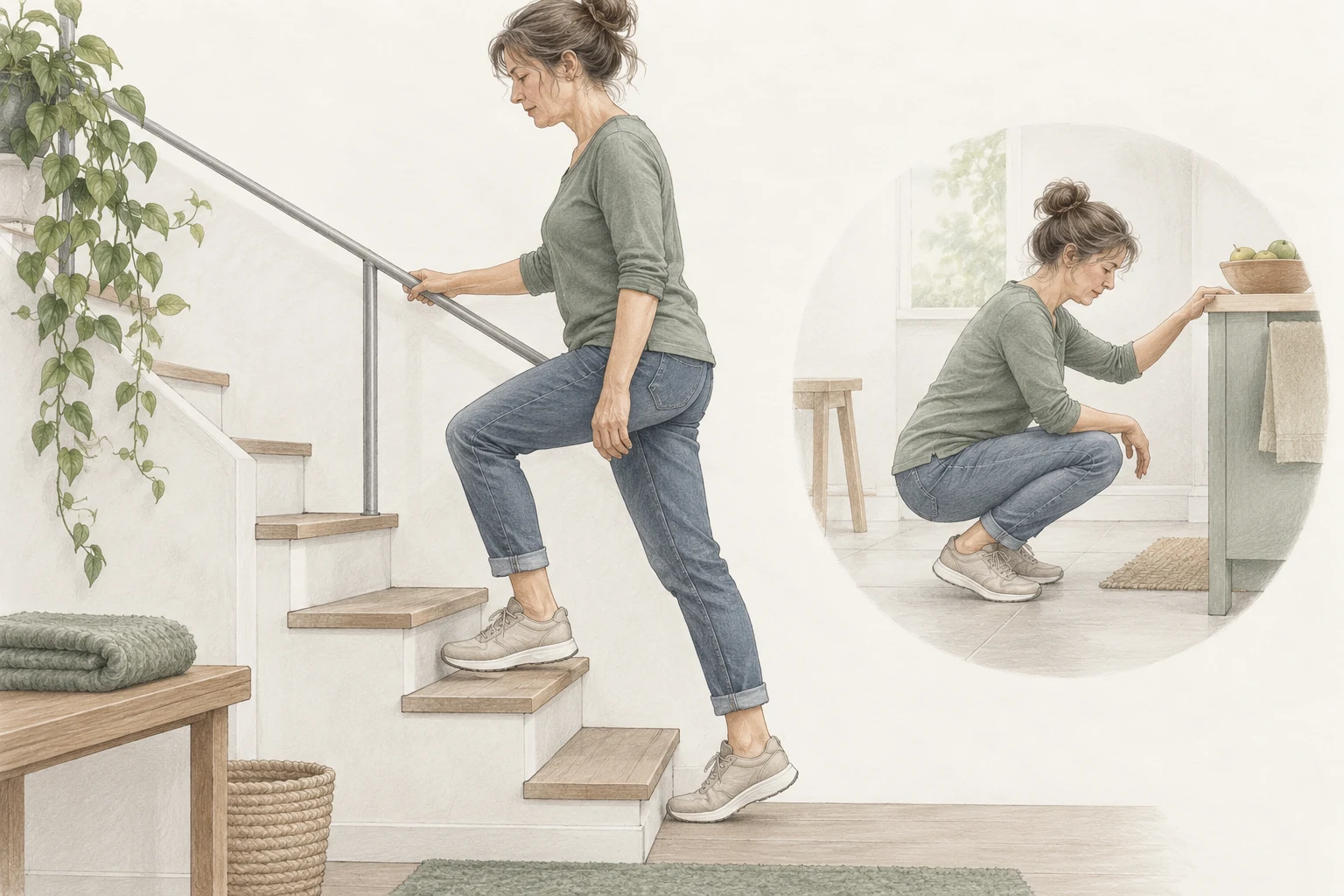
Squatting and stairwells require cooperation of muscles, tendons and the knee joint. It is therefore not surprising that various knee problems stand out precisely in these daily tasks. The conclusion that pain in a squat is always pain in a tendon is too fast. The same applies to the assumption that all pain during stairs is caused by cartilage damage.
For a first distinction three things are useful: the place, the provoking load and the course. For example, describe if you can identify pain with one finger, whether a larger area around the kneecap is sensitive and how the knee reacts after sitting. For example, a clinician receives more information than from the general description bad knees.
What more suits the patellar tendon?
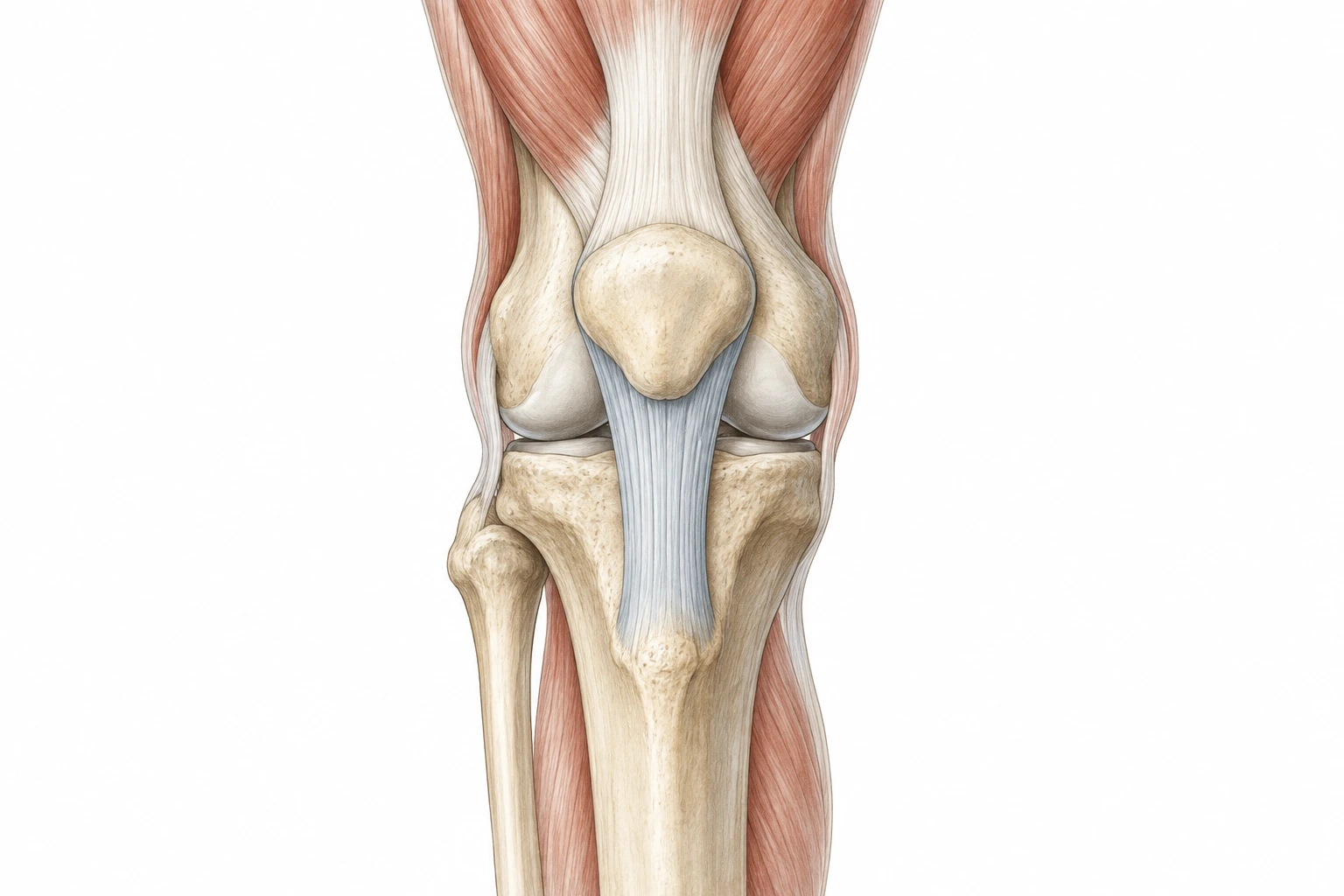
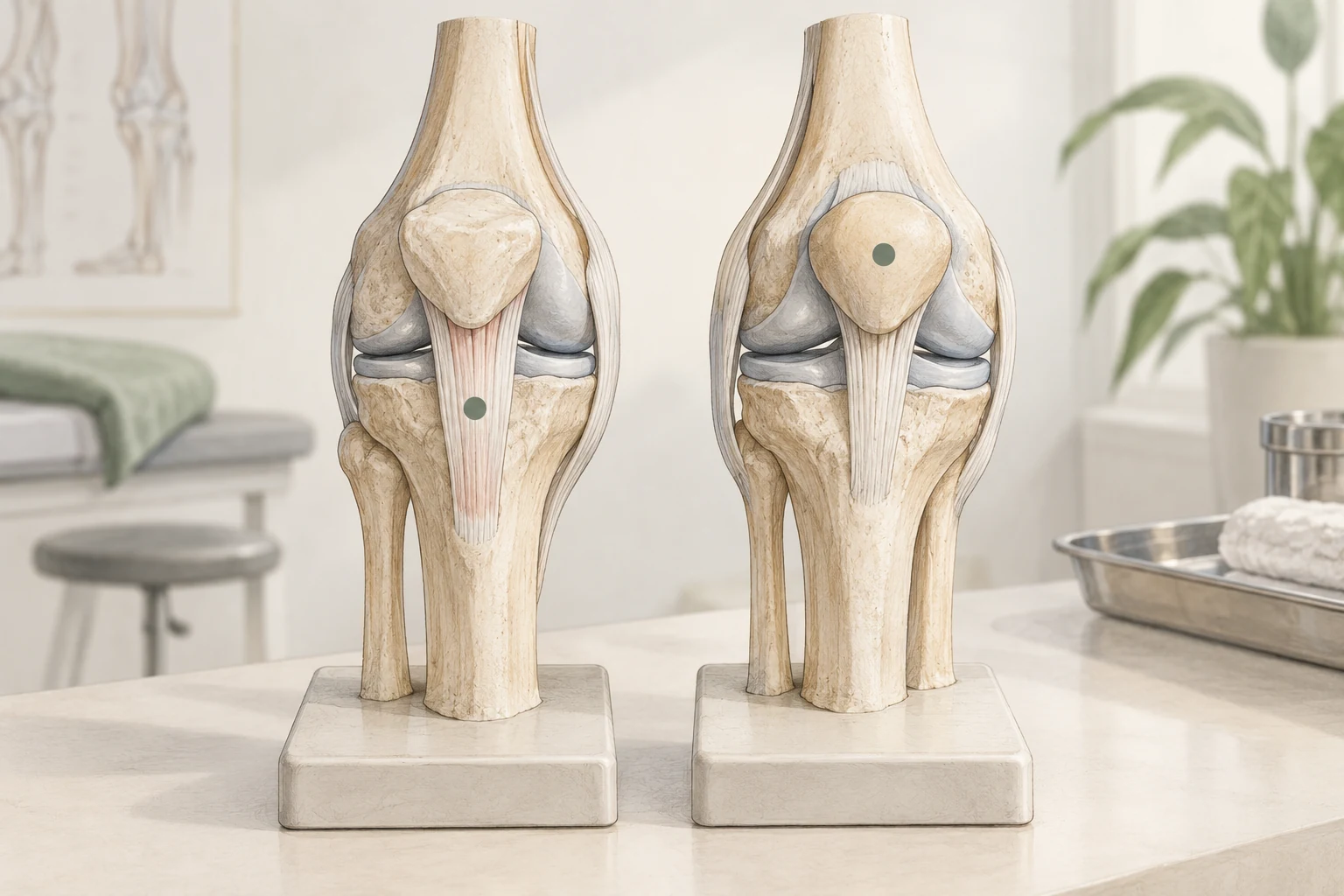
In patellate dinopathy, the recognizable pain is often at the lower end of the kneecap, where the tendon begins. The Dutch Diagnostics guideline calls load-dependent local pain, combined with findings from physical examination. Jumping, accelerating and slowing down can be important parts of the story.
A sensitive place alone doesn't prove the diagnosis. The place must fit the pain you recognize in everyday life. A researcher therefore also looks at provocative movements, history and alternative explanations. Pressing harder and harder can make the region more sensitive without providing new information.
The name jumper knee is an indication of a known load pattern, not an admission condition. A recreational athlete can also have symptoms. Young people can also have growth and other conditions around the knee; the story of an adult volleyball player does not automatically fit a child.
What's more consistent with patelophemoral pain?
Patellofemoral pain is felt around or behind the kneecap. Thuisarts describes symptoms about squatting, stairs, running and cycling, and sometimes after long sitting. Again, the exact combination varies per person.
A knee that makes noise does not in itself answer the cause of pain. In particular, tell me if the sound is associated with pain, blockage, swelling or altered function. The word wear is sometimes used quickly, but can not only be determined on the basis of cracks or cracks.
There may be overlap. A comparison helps to formulate research questions; it does not replace them. Especially when there has been an accident, clear swelling or sudden loss of function, a broader perspective is needed than just tendon versus kneecap.
A comparison to make your story more precise
| Question | More suitable for patella symptoms of tendons | More appropriate for patellofemoral pain |
|---|---|---|
| Where's the pain? | Often locally at the lower edge of the kneecap | More often around or behind the kneecap |
| What kind of load stands out? | For example, repeated jumping and disabling | For example squatting, stairwells and long bent seating |
| Can the same movement hurt? | Yes, a squat can raise the symptom. | Yes, a squat can also raise the symptom |
| Is a scan always necessary? | No, first talk and research. | No, first talk and research. |
Do not use the table as a point system. An appropriate response in one column does not exclude the other cause. In particular, take the questions you do not have a clear answer to to an assessment. Uncertainty about the location is also relevant information.
Why the difference has implications for your plan
Both symptoms may lead to adjustment of stress and practice therapy, but the accents and build-up need not be the same. For example, in case of patella symptoms of the tendons, the preparation for quick loading of a tendon is important for someone who wants to jump again. In the case of kneecap pain, another combination of daily movements and exercise choices may be central.
One example: someone can cycle without a clear reaction but gets pain after long sitting and at the stairs at home. Another can sit and walk stairs for a long time, but gets local pain at maximum jumps. Both have pain at the front of the knee, while the main practical situation differs. A treatment plan should be able to explain those differences.
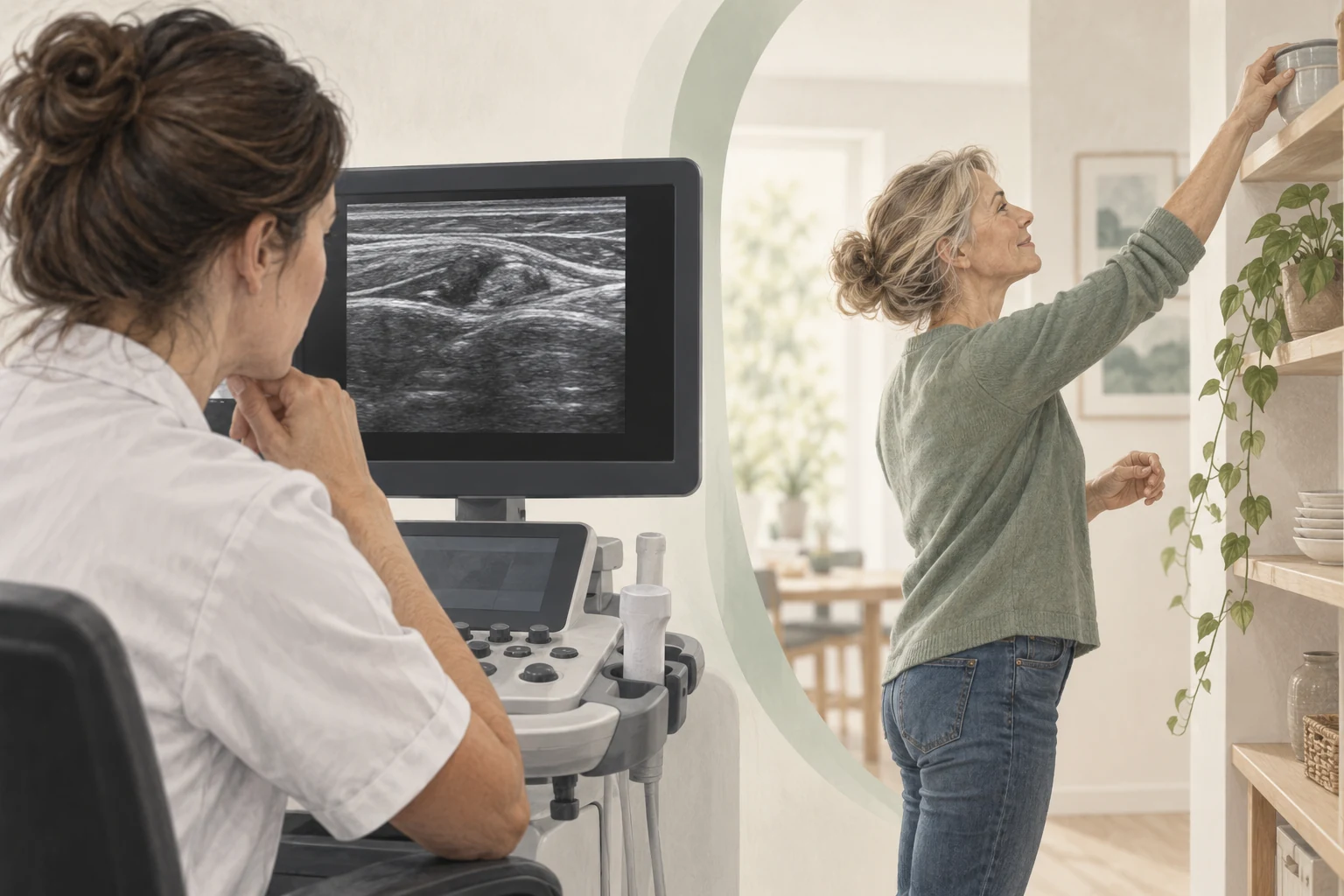
An ultrasound on which something can be seen from the tendon, that tendon does not automatically make the full explanation. The question remains whether the finding fits the recognizable symptoms and whether it changes the treatment. The diagnostics guideline advises imaging especially in case of doubt or insufficient recovery, with regard to the limited probative force.
Prepare a review without testing yourself
Take a short description of the beginning, the place and the three most difficult activities. In addition, write down whether the knee becomes thick, really blocked or unsure. Make it clear what you mean by saggy: a pain reaction and a joint that mechanicalally subsides can be experienced quite differently and ask for further explanation.
List previous injuries and what exercises or tools you have already tried. Write in how long and how consistently you used it. Only the report physiotherapy did not fail to show whether the approach was appropriate to the current symptom. A re-evaluation is particularly useful when a logical plan does not make any progress or when the pattern of symptoms changes.
Frequently asked questions
Can I have both symptoms at the same time?
It's possible. Pain locations and load reactions may overlap. The study should identify the findings that best fit your recognizable limitation and whether there are several factors involved. A choice based on one plate or one home test is too limited.
Does cracking mean my cartilage is broken?
Kraken alone does not provide a reliable diagnosis. Report if it comes with pain, swelling, blockage or an accident. The meaning is determined by the whole story and research, not by the sound or by how loud that sound sounds.
Can an ultrasound always show the difference?
No. An ultrasound can answer a targeted question about the tendon, for example, but does not automatically explain all the pain in front of the knee. Some questions are about other structures. Therefore, first discuss what uncertainty the scan would solve and what changes the result.
Can I just choose an online practice schedule?
A general scheme is difficult to take into account the cause, irritation and sports load. Especially in case of doubt about the diagnosis, assessment is wise. An appropriate plan describes what movement you build up, how you follow the reaction and when the approach needs to be adjusted.
Sources and evidence
- Anterior knee pain guideline: history and physical examination of PT (2022) ↗
Place and load dependence of patellar tendon pain; study and limited indications for imaging.
- Thuisarts: I have kneecap pain when moving ↗
symptoms around the kneecap for stairs, squatting and prolonged sitting; assessment.
A personal follow-up step
From insight
to an appropriate plan.
At a paid intake, we'll discuss your symptom and do targeted research. ultrasound is included at no extra cost when it makes sense. Any treatments are agreed separately.
View the initial consultation