Why standing up can be so striking
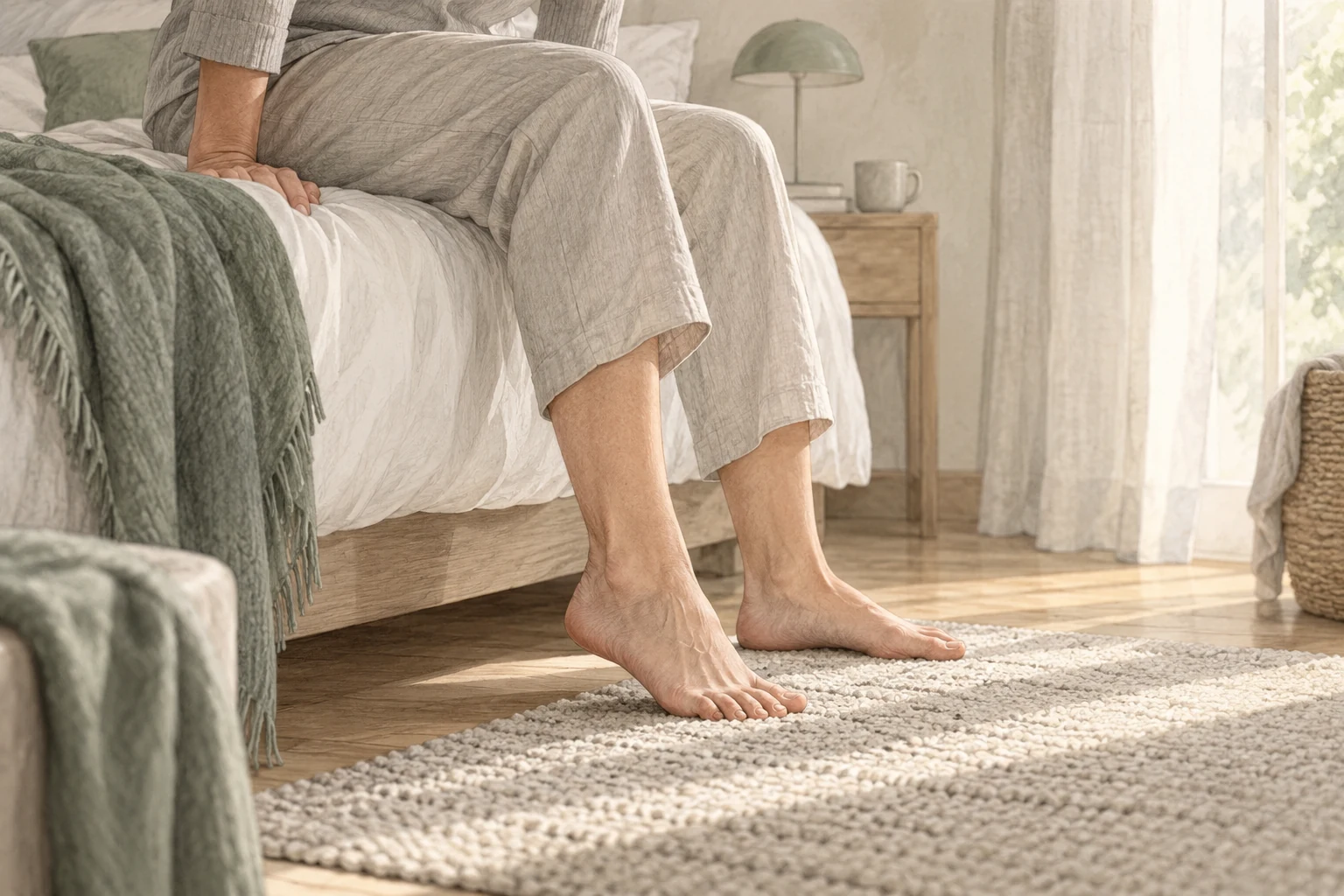
During lying or sitting, the foot carries little body weight. As soon as you get up, the foot will have to recover and unwind again. With a sensitive heel, that transition can clearly be felt. The first corridor to the bathroom can therefore seem more annoying than a later walk. That is a recognizable experience, not proof that there is new damage at every first step.
The patients information of Thuisarts calls pain when starting after rest as a common feature. Yet the pattern differs between people. Some have morning pain, others notice it after driving, a meeting or an evening on the couch. The transition from rest to load is a practical point of reference for the conversation.
Less pain after walking in is not the same as being able to continue indefinitely
When the foot feels more comfortable after a few minutes, the temptation is great to do everything again the rest of the day. However, the reaction may come later. A morning that starts reasonably can be followed by difficulty with long standing or more pain after an afternoon shopping. Only the first five minutes of judging misses an important part of the story.
Conversely, a somewhat rougher morning after a busy day does not necessarily mean that the whole recovery fails. Look at repeated patterns and what you can actually do. The distinction between a temporary swing and an ascending trend is made better with the same observation at several times than by constantly challenging the foot.
Starting pain indicates direction, but the place remains important
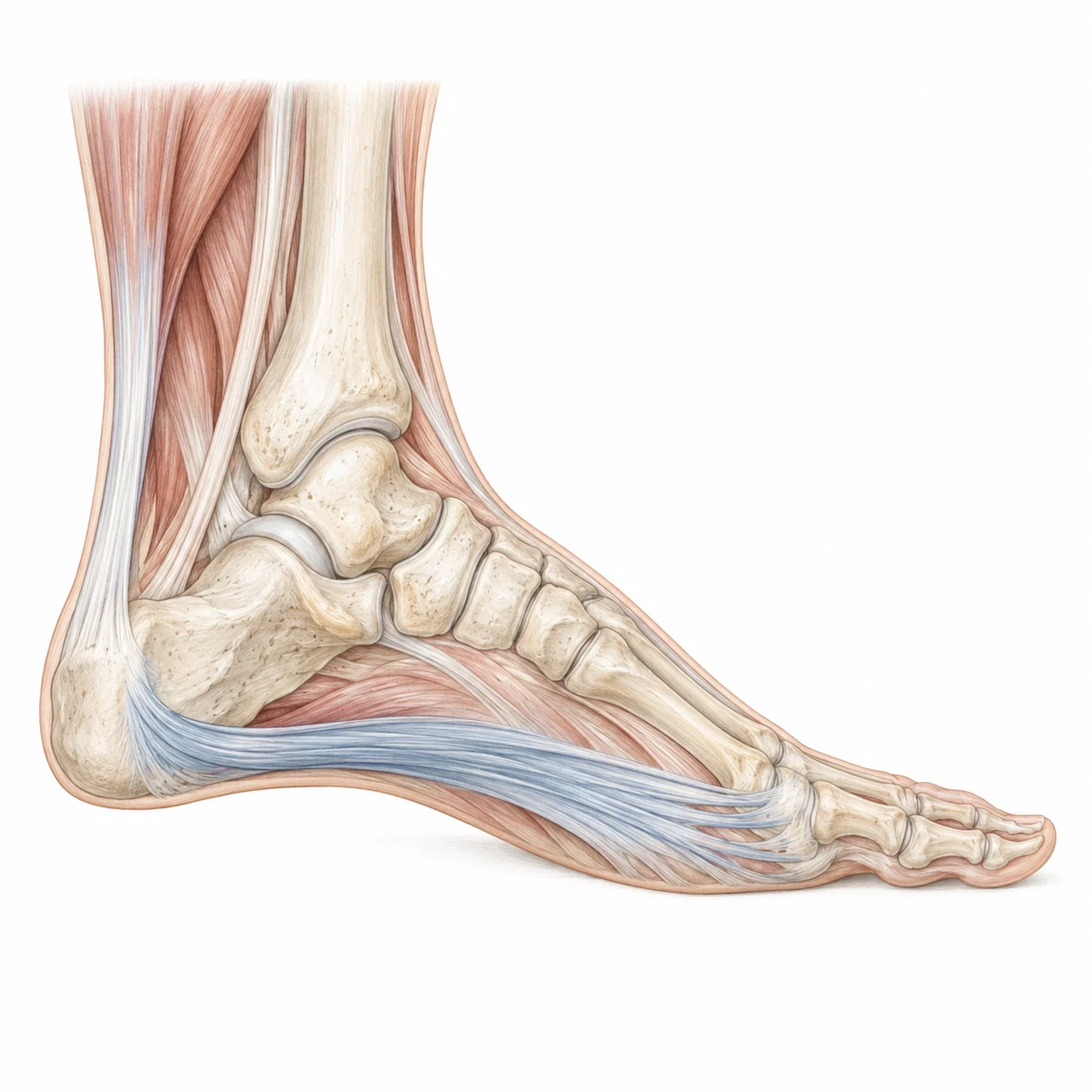
Pain under the heel is examined differently than pain behind the heel bone. Also a burning sensation, tingling or pain after a misstep require other attention than gradually arising load pain. In an appointment, please point out with one finger where the familiar symptom is most obvious. Then describe whether that place changes during the day.
The guideline on physical examination links the assessment to the story, localization and identifiable findings in research. A single home test can't replace that. Pushing hard on the heel until it hurts doesn't make the diagnosis more certain, for example. It can especially make the place extra sensitive and focus your attention constantly on the symptom.
Make the transition to walking practical
Think first of the circumstances of the start. Are your comfortable shoes within range? Do you have to go down stairs in a hurry? Is the first route over a hard floor? Small adjustments can make a morning more manageable without needing an extensive treatment routine.
If necessary, you can discuss with a clinician or move quietly before getting up or a coordinated exercise makes sense. A specific stretching position is not suitable for everyone and more stretching is not automatically better. Avoid the idea that you first have to go through sharp pain to loosen the foot. The goal is a predictable transition, with space to notice what your heel tolerates.
One example: anyone who goes shopping directly in the morning can try to plan that task later and keep the first running moments shorter. That's how you investigate the day schedule. You don't prove that a certain time is medically optimal.
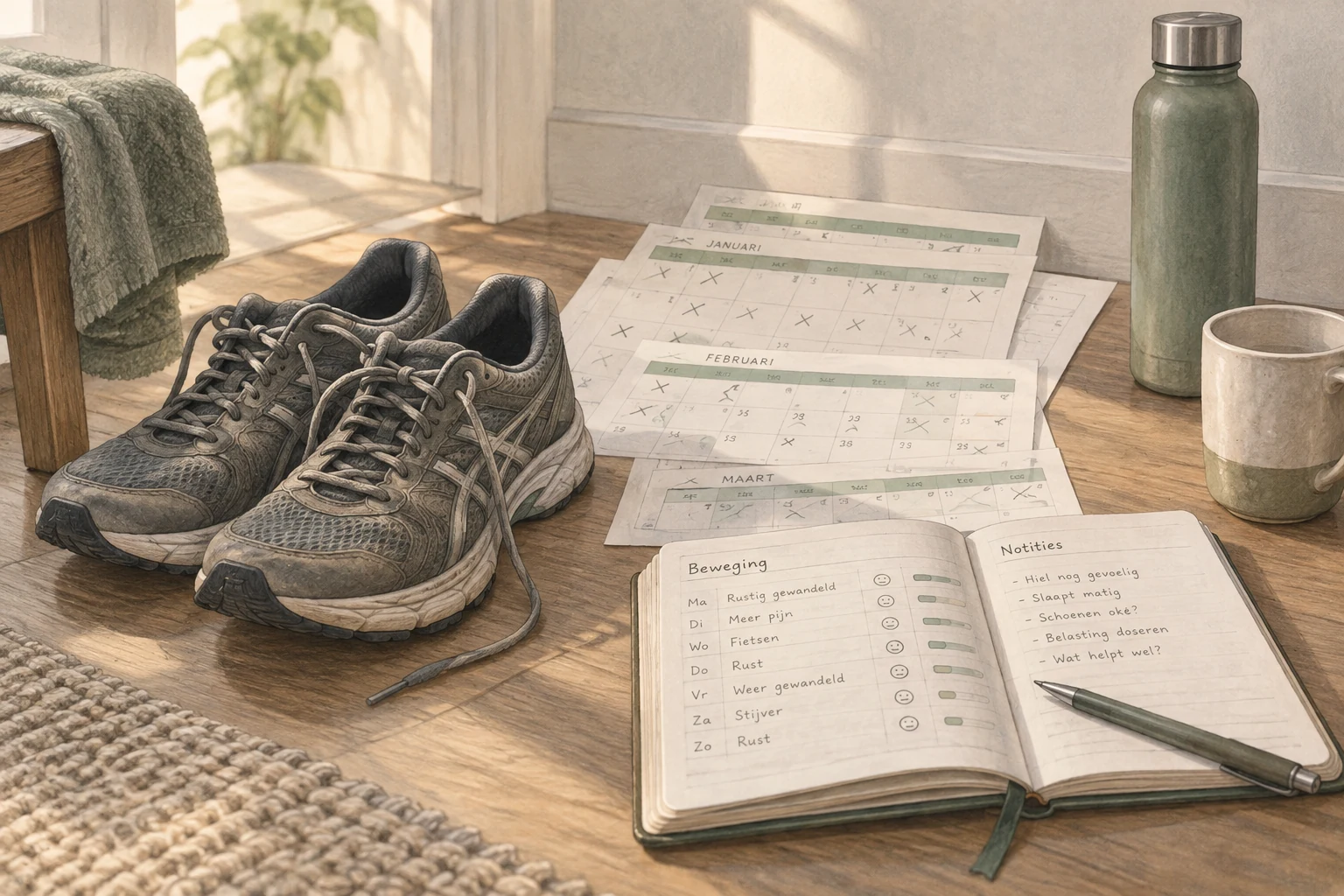
A simple start log without measuring compulsion
During an agreed observation period, select one fixed start time and note briefly:
| What are you writing? | Why can it be useful? |
|---|---|
| What kind of rest period preceded it? | Get up and get out of the car are different situations. |
| Where's the pain? | A new location can change the research question. |
| How did the first few minutes go? | You follow duration and effect on walking, not just intensity. |
| What were you doing the other day? | Long standing, sport and extra walking become visible. |
| How'd the rest of the day go? | You're gonna stop one morning moment from determining everything. |
A few words will do. Registration should support a call; it should not become a new obligation. If measuring makes you more and more worried, discuss a simpler functional goal, such as relaxing to walk to the kitchen.
When should the pattern be re-evaluated?
Let the symptom assess when starting pain continues to increase, your way of walking clearly changes whether daily activities succeed less and less. Even when the original pattern changes, looking again is wise. For example, indicate new pain in rest, sensational changes or a clear injury moment.
A treatment is then not chosen on the grounds of morning pain alone. First of all, it must be clear what is likely to happen and what load is appropriate. Ask in a follow-up appointment what change one wants to see: less pain at the start, faster walking comfortably or better functioning throughout the day. Those individual goals prevent a small improvement from being overestimated or significant progress is not noticed.
Frequently asked questions
Does morning pain mean my heel gets worse every night?
No. A sensitive starting moment doesn't directly tell what's going on in the tissue. The transition to load, previous activities and the overall pattern of symptoms are involved. A recurring worsening trend is, however, a reason to assess the approach together.
Can I take a walk first to warm the heel?
Starting quietly can be practically pleasant, but do not use decreasing pain as proof that unlimited walking through is safe or sensible. Also look at your walking pattern, the reaction later in the day and the limits you have agreed to with your clinician.
Is pain after driving the car the same as morning pain?
Both can be starting pain after rest. Driving also has other conditions, such as shoe pressure and foot position. Therefore, tell me when it occurs, how long you sat and whether the pain is felt in the same place.
Do I have to give my heel a pain rate every morning?
You don't have to. A fixed functional description can be sufficient, for example whether you can walk normally and how long startup takes. Choose a way that provides useful information without constantly measuring.
Sources and evidence
- Thuisarts — I have pain under my foot (hilt trail) (2026) ↗
Recognizable symptoms pattern, movement, footwear and reasons for assessment.
- guideline Fasciopathy plantar — Physical investigation (2026) ↗
Clinical assessment and weighing other causes of helping.
A personal follow-up step
From insight
to an appropriate plan.
At a paid intake, we'll discuss your symptom and do targeted research. ultrasound is included at no extra cost when it makes sense. Any treatments are agreed separately.
View the initial consultation