Choose what you're using the log first
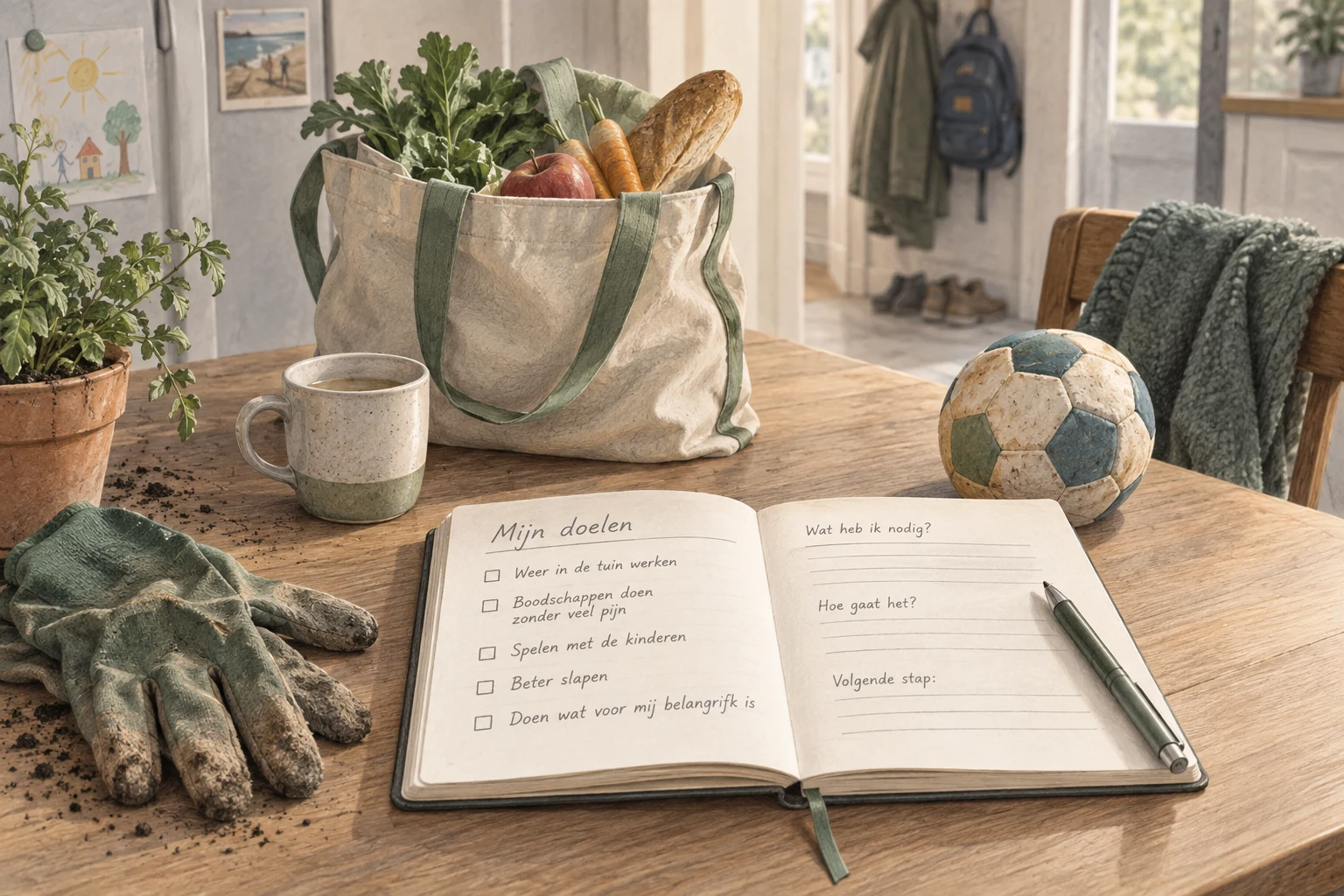
A log is a tool for a question. Do you want to know whether a practice step is appropriate, whether a working day affects the symptom or whether a treatment makes a noticeable difference? Choose one main question before registering.
Without such a question you can easily collect many numbers that give little direction. For example, a long list of pain scores does not tell whether you have become more or less active.
So start with one important goal and one associated activity. You can expand later when additional information is really needed. A small log you use has more value than a complicated file that remains after three days.
Follow activity and response together
International consensus on results in tendinopathy describes, inter alia, functioning and participation in activities as relevant domains. That supports a broader look than pain.
So write down what you've actually done. A pain score after twenty minutes of walking can be interpreted differently than the same score after two hours. The context makes a figure useful.
At Achilles's tendon symptoms, the Dutch guideline on the monitoring of symptoms and function. An own log does not replace a professional review, but can provide information for that call.
- Start with one question
Choose which purpose and what activity you want to follow. It determines what you write down.
- Note activity and reaction
Write down what you did, how much and what you noticed during and after the activity.
- Specify what was different
Think of a longer working day or new exercises. Leave unknown data blank.
- Discuss the pattern
Mark what remains improved, difficult or unclear. Decide together or keep track even helps.
A five-column fill-in model
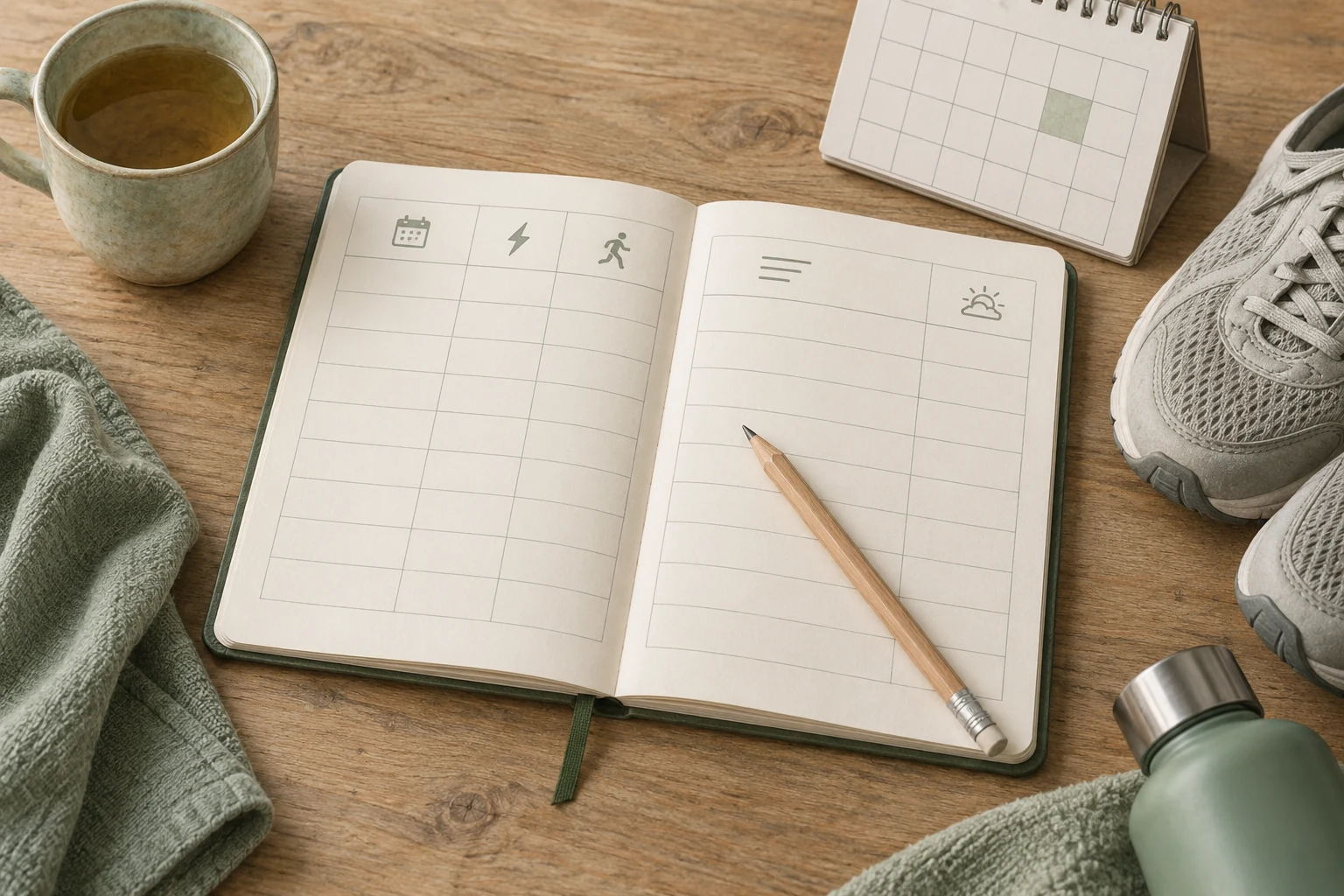
Use this model on paper or in a simple note:
| Date | Activity and quantity | Response during | Response later or next morning | What was different? |
|---|---|---|---|---|
| … | … | … | … | … |
One example is: fixed walking route, slightly longer walking, manageable nuisance, next morning similar to earlier, that day less stood at work. That gives much more context than just a loose number.
You can use words instead of numbers. Easier, more pauses or response lasted longer can be useful information when you keep recording in a similar way. Choose the shape you can hold on to.
Don't fill in any details that you don't remember afterwards. An empty space is fairer than an estimated figure that later seems exact.
How many times is enough?
The frequency depends on the question. With a fixed daily activity a short note can be useful at some agreed moments. With a specific training step, writing around that session can make more sense.
I want you to meet with your clinician... how often you discuss the overview. If no one uses the data, register loses its purpose. The logbook should support a decision, such as adjusting, building or evaluating a treatment component.
Note the load of keeping itself. If you are constantly looking for pain or interrupting movement to measure, a simpler approach is desirable. Less often registration can give better information from ordinary life.
Read trends without identifying causes too quickly
One good day doesn't prove a treatment worked. One bad day doesn't prove that recovery has stopped. Watch several similar moments and note major changes in circumstances.
When you do new exercises at the same time, work less and start an additional treatment, you cannot determine exactly which part makes a difference. The log can show if the total plan fits your goals.
Use the notes to discuss hypotheses. The long working days seem to coincide with more reaction is a useful observation. My work damages the tendon over and over again is a conclusion that the logbook cannot demonstrate independently.
Use the overview for an evaluation
Mark three things before an appointment: what is clearly improved, what remains difficult and what change do you not understand. As a result, the clinician doesn't have to go through every single note before the call gets direction.
After the discussion, ask what details are still needed. Maybe the main question has been answered and the log can stop. Maybe one other activity will become more important for the next phase.
A log isn't mandatory proof that you're doing your best. It's your tool to tell a recognizable story about load and functioning. When it gives more unrest than insight, the plan should be adjusted, just like any other part of guidance.
Frequently asked questions
What pain scale should I use?
That's what you can do with your clinician. A digit from zero to ten can be useful, but is not mandatory. More importantly, you describe similar situations and also record the activity. A figure without context gives limited insight.
Do I need a sports watch or special app?
No. Paper or a simple note may be sufficient. Use technology only if it gathers relevant information more easily. More measurement data do not automatically make the log better and can also derive from the activity that is important to you.
What do I do if I forget days?
Leave those days empty and pick up the registration. Don't fill out exact figures that you don't remember. The logbook does not need to be a perfect research file; it must provide sufficient reliable information for a practical conversation.
When can I stop keeping track?
When the question you registered for has been answered sufficiently or when the notes no longer support decisions. I want you to discuss that in the evaluation. You can register again briefly later if a new build-up step or other concrete demand arises.
Sources and evidence
- Vicenzino et al. – Key domains in tendinopathy (2020) ↗
Pain, functioning and participation in activities as relevant outcome domains.
- guideline Achilles tendinopathy – measuring instruments (2020) ↗
Clinical monitoring of symptoms and functioning; no routine imaging for evaluation.
A personal follow-up step
From insight
to an appropriate plan.
At a paid intake, we'll discuss your symptom and do targeted research. ultrasound is included at no extra cost when it makes sense. Any treatments are agreed separately.
View the initial consultation