A place name is not yet a diagnosis
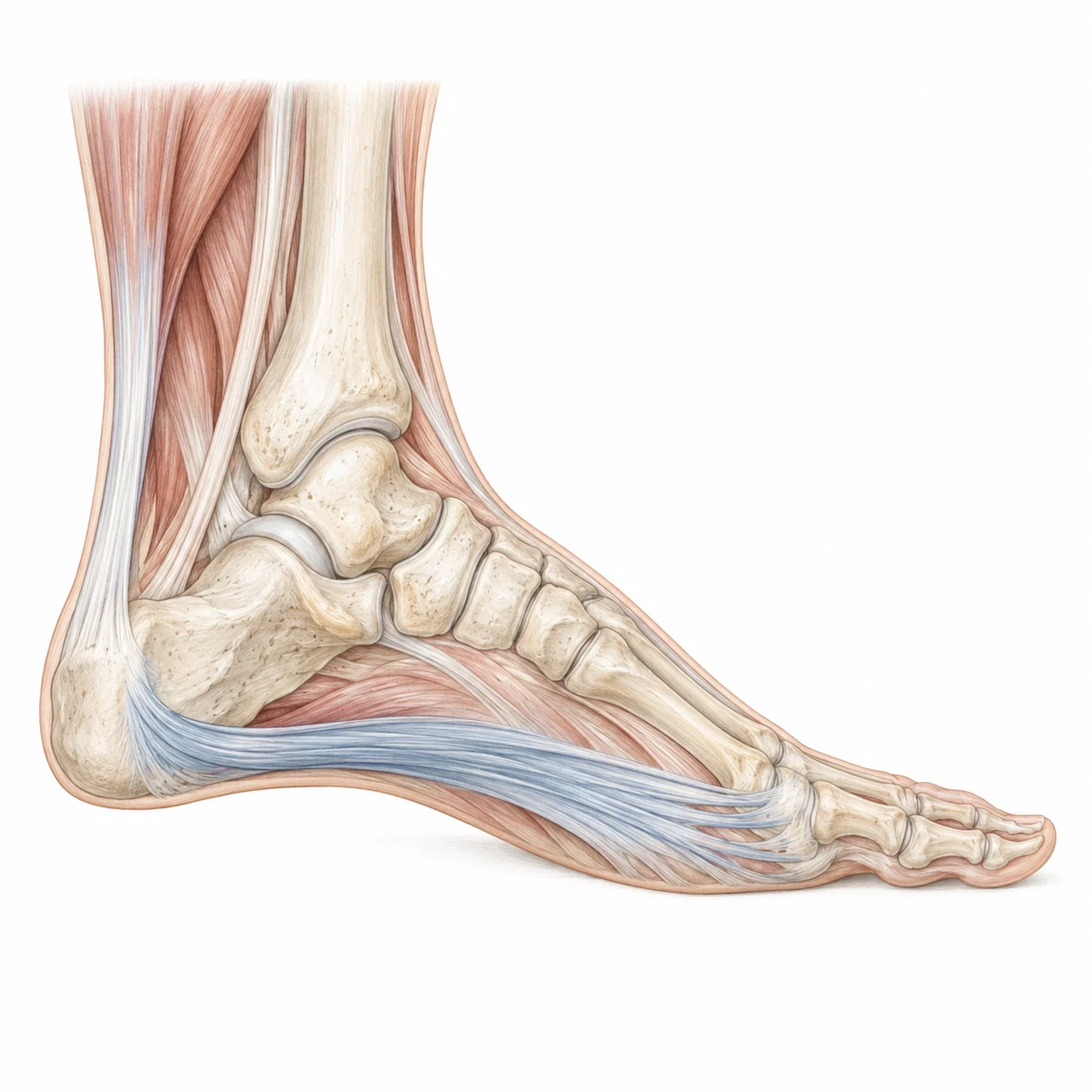
Underneath the heel are different structures close to each other. That makes it understandable that symptoms quickly get the same name. Still, two people who both say "my heel hurts" may have a different pattern. Pain at first steps, pain after a hard landing and burning during long standing do not automatically require the same examination.
The guideline on physical examination pay attention to other possible explanations. It concerns the whole of history and findings. A list of causes on the internet may help you describe your symptom, but is not suitable to identify or exclude a diagnosis with certainty.
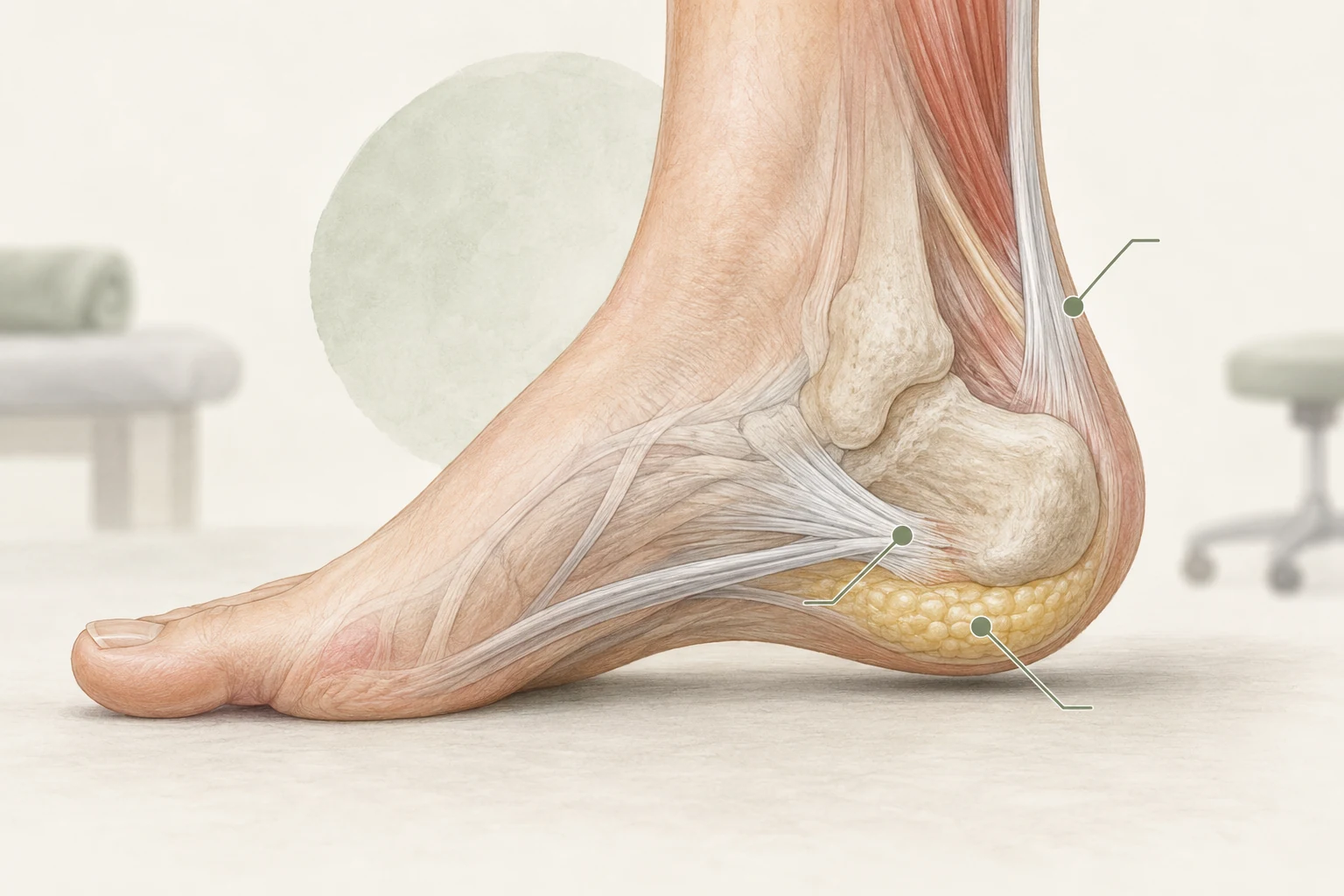
plantar fascia and heel cushion can feel different
In fasciopathy plantaris, attention is often paid to the attachment of the plantar fascia at the bottom of the heel bone. The heel cushion forms a different structure: the soft tissue under the heel that stands and lands. Central pressure pain may give rise to a further assessment of this area. However, only feeling where it is sensitive does not always make the distinction certain.
Tell us if the pain occurs especially on start-up, long standing, walking on a hard surface or a specific impact. Also what gives lighting is useful. A soft shoe that feels comfortable does not prove that only the heel cushion is the cause. Treatment response may add information, but may not replace the full diagnostic reasoning.
Burning, tingling or deaf asks another question
Feeling changes do not fit a local plantar fasciaklacht. A nerve may be involved, but the exact location and cause need to be investigated. Describe whether the feeling remains in the heel, continues to the sole of the foot or is associated with symptoms higher in the leg. Also indicate when it occurs and whether it changes with posture or footwear.
Don't try to fix a nerve problem yourself by pressing hard at one point. That can trigger sensitivity without giving a reliable answer. New or increasing emotional changes are a reason to consult a health care provider. The choice for a local device should wait if the main question first is where the abnormal feeling comes from.
A bone problem requires focused attention
Following a fall or hard landing, a different route of assessment may be required than in the case of gradually occurring symptoms. A recent major change in load may also be relevant background information. That doesn't mean that every athlete with helper has a stress fracture. It does mean that the injury moment, severity and load can be carefully considered.
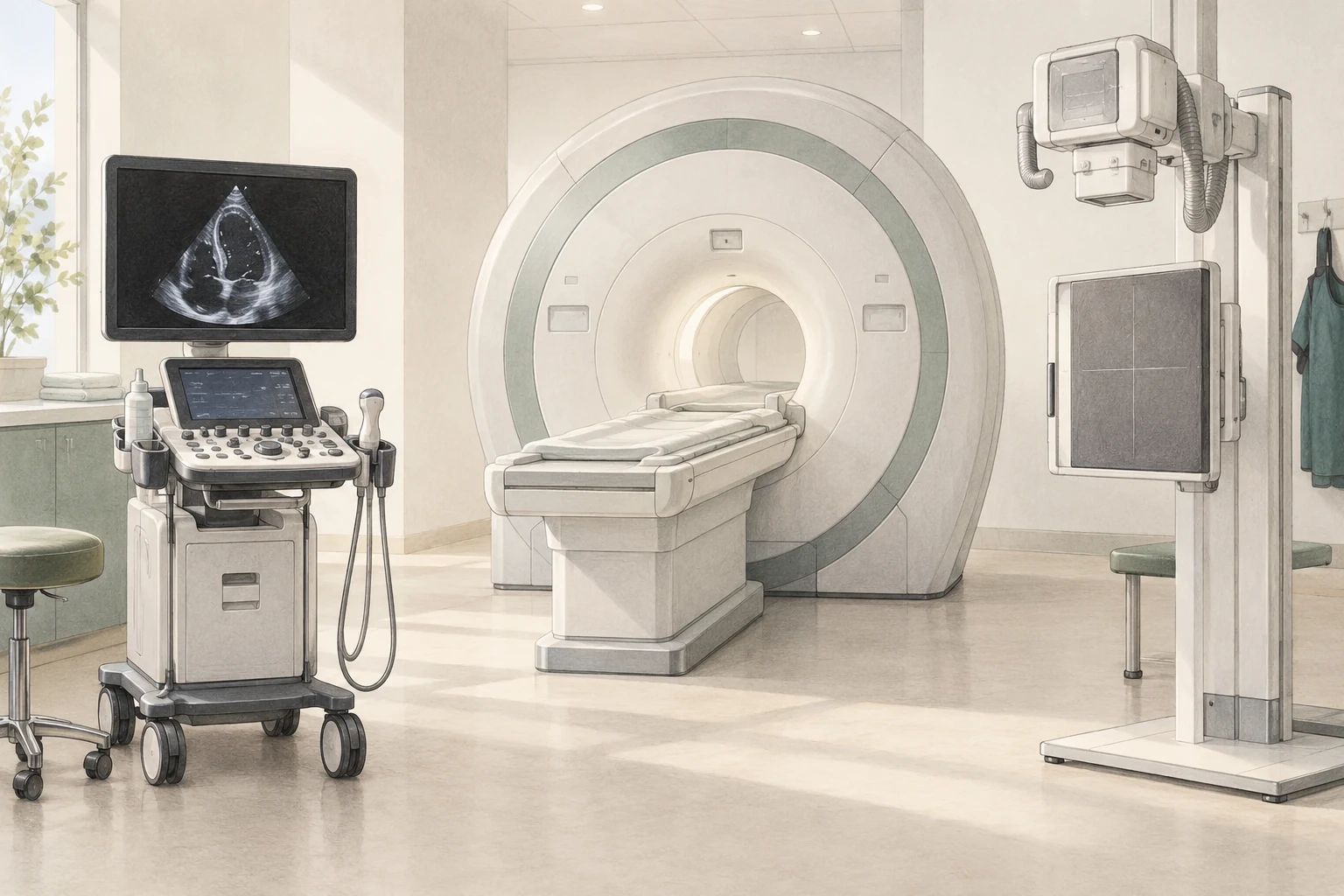
The Imaging guideline links additional research to the probable cause. An ultrasound is not the right study for every question; if there is a suspicion of bone pathology another route may be appropriate. A normal or deviant recording must also match the story. Ask what possibility one wants to explore and what the outcome means for the plan.
Use a description card for your appointment
This equation helps organize your observations. The columns are not a diagnostic test.
| Feature | What you can describe |
|---|---|
| Location | Under the heel, centrally in the pillow, behind or spread |
| Home | Gradually, after changed load or after a clear incident |
| Feeling | Squeezing, stabbing, burning, tingling or reduced feeling |
| One moment. | On start, longer load, touch or rest |
| Effect | Normally walking succeeds, you relieve or you can barely support |
| Other symptoms | Swelling, warmth, back discomfort or problems elsewhere |
Also take with you previous studies and treatments. If treatment did not work, tell how the effect has been assessed and what has actually been performed. This prevents the same assumption from being repeated without further consideration.
When is waiting less appropriate?
In case of a clear injury and effort to support, a remarkably warm or swollen heel, new sensational loss or increasing pain at rest is important assessment. If you have a serious acute picture, please contact your doctor or general practitioner. Specify the combination of symptoms; only saying you have heel tracks can conceal the urgency of a new problem.
Even without acute signals, a new assessment is useful if the diagnosis remains uncertain or an appropriate route does not give a direction. A good follow-up then starts with a concrete question, not automatically with a more powerful treatment. The outcome may be an adapted load plan, additional research or referral. The goal is a statement that fits enough with your symptoms to be able to proceed responsibly.
Frequently asked questions
Can help come out of a nerve?
Yes, nerve involvement is a possible explanation for certain symptoms, especially when tingling, burning or altered sensations are involved. These phenomena have several possible causes. Let's assess where the problem is probably before starting a local plantar fascia treatment.
Is pain in the middle of the heel always the heel cushion?
No. The place can give direction, but symptoms overlap. The beginning, the reaction to physical load and physical examination help the distinction. A self-chosen pressure test or the effect of one shoe does not provide sufficient certainty to exclude other causes.
Can an ultrasound see all the causes of helping?
No. An ultrasound answers certain questions about soft tissue, but is not sufficient for every probable cause. The right research choice follows from the clinical question. Sometimes a different form of imaging or broader assessment is more useful.
Do you want me to run a scan with every new helper?
Not automatically. Often conversation and research give sufficient direction first. In case of atypical course, injury, clear limitations or diagnostic doubt, additional examination may be appropriate. Always ask what decision the result can change.
Sources and evidence
- guideline Fasciopathy plantar — Physical investigation (2026) ↗
Locating heel pain and differential diagnostics.
- guideline Fasciopathy plantar — Image (2026) ↗
Targeted choice of additional research in case of doubt or abnormal course.
A personal follow-up step
From insight
to an appropriate plan.
At a paid intake, we'll discuss your symptom and do targeted research. ultrasound is included at no extra cost when it makes sense. Any treatments are agreed separately.
View the initial consultation