A pain spot is the beginning of the question
You can often point out exactly where you feel pain. That's useful information, but not yet complete diagnosis. Different structures are close together and pain can also radiate from another area.
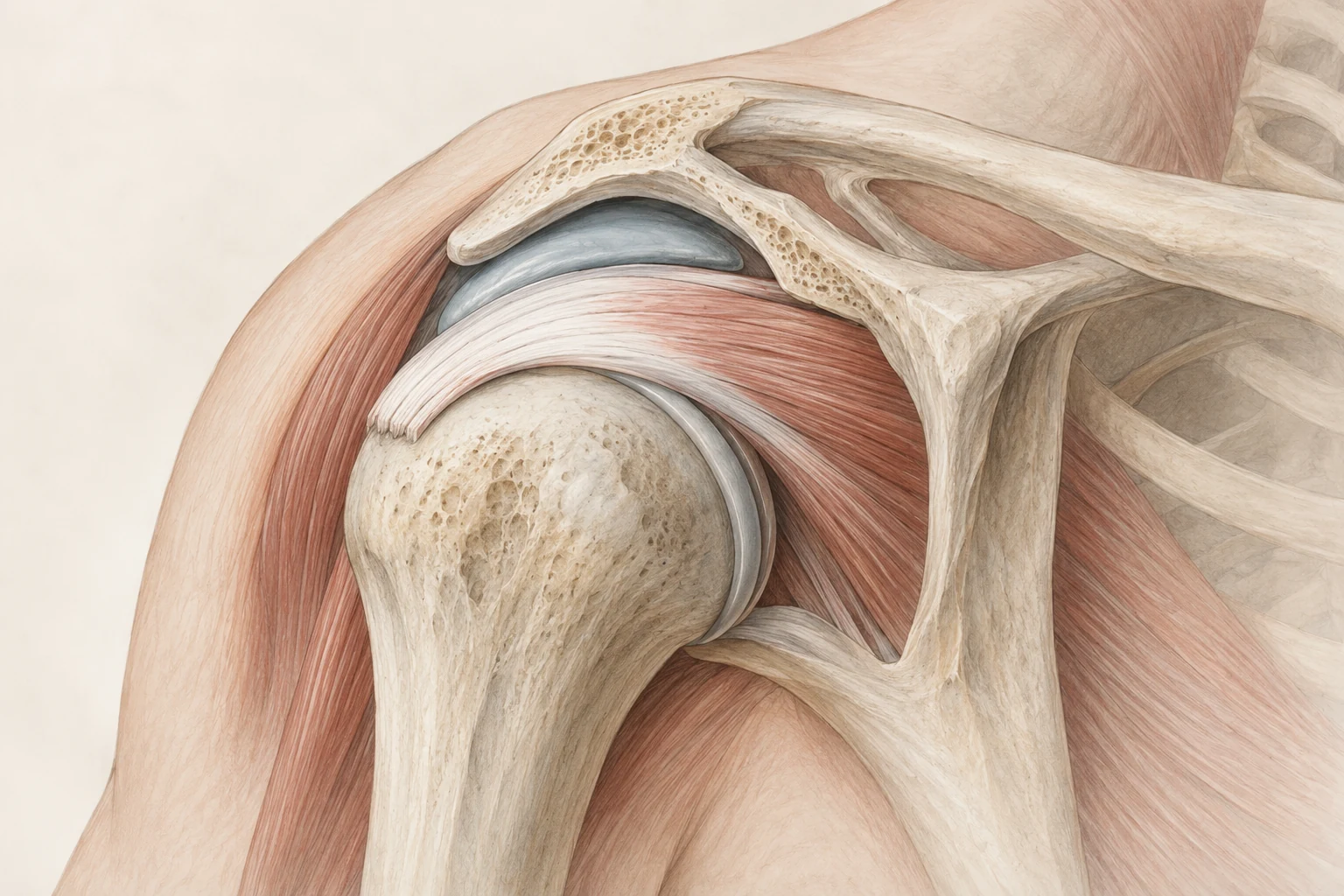
For example, shoulder symptoms do not just look at the shoulder. Home Artist describes that neck movements and the wider symptom story are also assessed. This will prevent the visible or palpable pain spot from becoming the only explanation.
For a treatment is important what is likely to be involved and what uncertainty remains. That assessment may lead to an active approach, targeted research or another care route.
What fits a tendon problem?
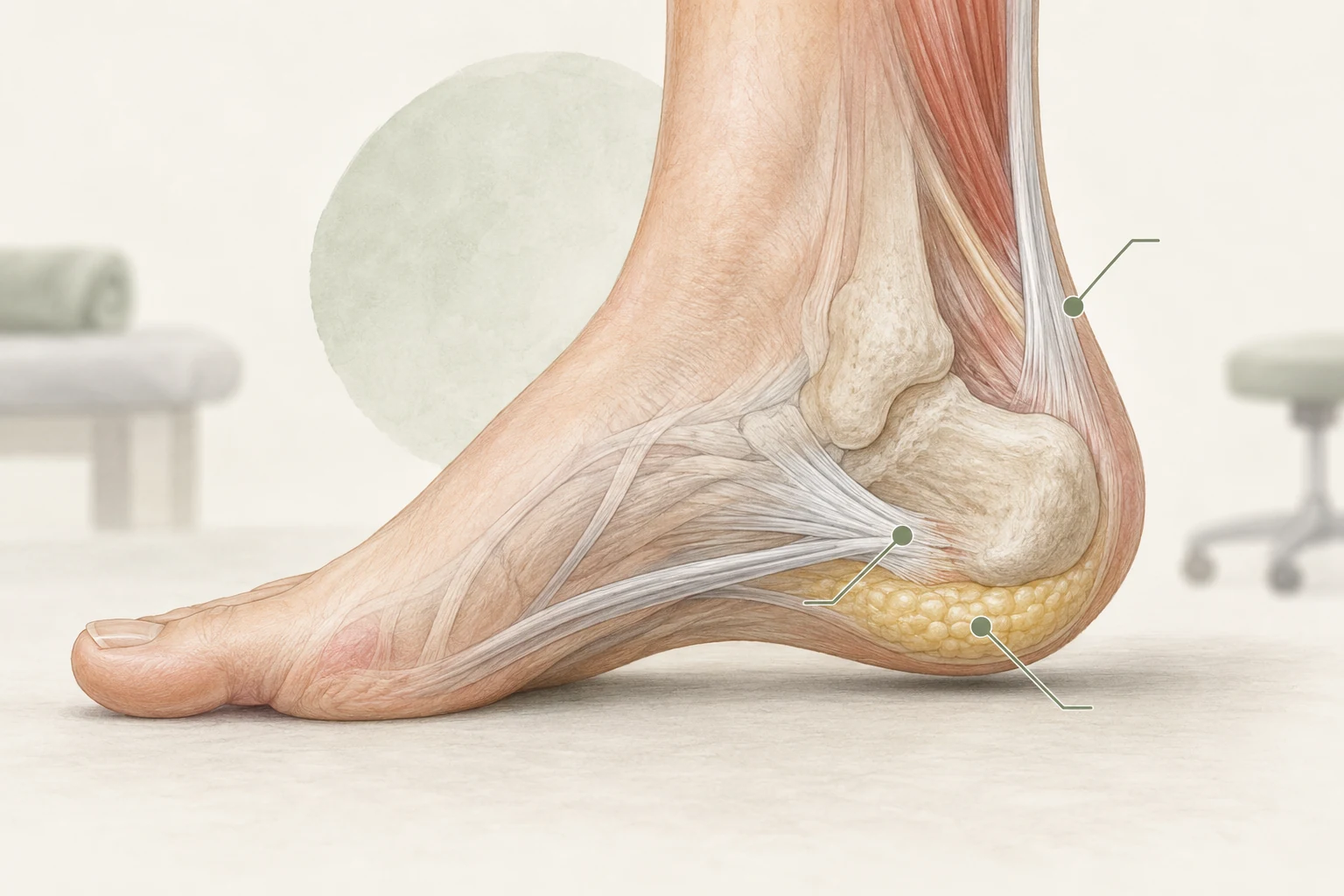
A tendon carries power from a muscle. In case of symptoms of the tendons, the relationship with certain loads can be recognizable, e.g. drop off, grab or lift again. The place and reaction during physical examination help to assess that possibility.
However, a load pattern is not exclusive to tendons. Other structures may also be sensitive when moving. Therefore, different findings should fit together before using a tendon as a main statement.
The Dutch Achilles guideline explicitly discusses alternative diagnoses and ancillary conditions. That's a useful example of why clinical assessment goes beyond treating a sore spot.
What role can a bursa play?
A bursa is located in certain places between moving tissues. Both tendon and bursa may be present in the assessment. In the daily explanation, only one name is sometimes used for an area in which multiple structures may be involved.
An ultrasound can make moisture or other characteristics visible in the environment. Such a finding must still be consistent with the symptoms. More moisture on an image is not automatically the full explanation for all pain.
Ask therefore what changes the term used to the treatment. When the approach consists mainly of appropriate movement and load, the precise proportion of each structure cannot always be determined with certainty. That uncertainty should be explained fairly.
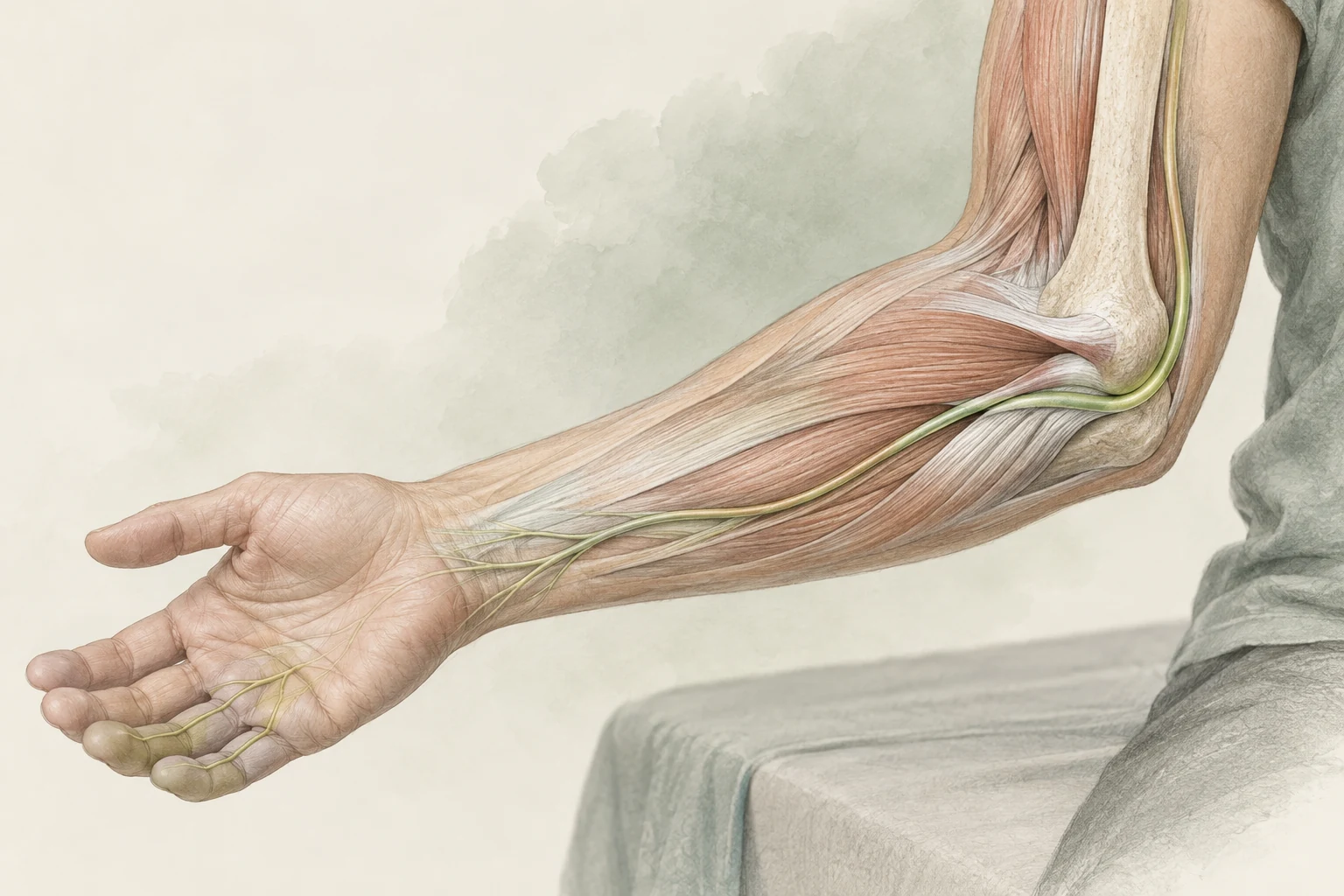
When do you think about a nerve?
Tinglings, burning sensations or altered sensations may be a reason to assess a nerve. Change in muscle control may also be relevant. Thuisarts describes these symptoms in the lower leg nerve constriction..
A burning sensation alone doesn't prove a nervous problem. The pattern, distribution and physical examination determine the meaning. Therefore, do not try to choose your own diagnosis based on one word.
Report new or increasing outages in time. A foot or hand that suddenly doesn't function properly deserves a different assessment than just a normal load pain. A previous label as a tendon symptom should not keep such changes out of the conversation.
Describe differences without diagnosing yourself
A simple overview helps with the intake:
| What stands out? | What can you describe? |
|---|---|
| Load | What action does the symptom lead to? |
| Pressure | Does it hurt to lie down, support or clothing on the spot? |
| Feeling | Are there tingling, deafness or any other skin sensation? |
| Function | Is something painful or is the movement really less successful? |
| Gradient | Does the place stay the same or does the pattern change? |
These questions are not self-tests that allow you to tick tendon, bursa or nerve. They provide information that allows a healthcare professional to choose the right research questions.
Avoid hard and repeated pressure on the pain site to get certainty. This often allows you to collect less useful information than with a quiet description of normal activities and changes.
Why the cause changes the treatment plan
A technique being studied in a specific tendon disorder is not automatically appropriate for nerve problems in the same area. Therefore, diagnostics precede the choice of shockwave or any other additional application.
Sometimes a work diagnosis is sufficient to begin with a plan that will be evaluated later. Sometimes important information is missing and first targeted assessment is needed. Both can be careful when the reason is clear.
After the investigation, ask which explanation is most likely and which signals are likely to give rise to a review. Thus, the treatment plan remains in line with your development, even if not every part of the pain can be assigned exactly to one structure.
Frequently asked questions
Could a tendon and bursa be involved at the same time?
It's possible. They are in some places close together and symptoms can overlap. The investigation needs to assess what findings are relevant to your situation. A treatment plan does not have to pretend that always one structure with absolute certainty is the only cause.
Are tingling always a nervous problem?
Tinglings are a reason to assess nerve function, but do not give a complete diagnosis in itself. Distribution, duration, cause and possible failure count as well. Report them to your intake and seek timely review in case of a clear new or increasing change of function.
Can an ultrasound distinguish all causes?
No. ultrasound can provide targeted information about certain structures, but does not replace the story and physical examination. In some questions, other research is needed; in others, imaging adds little. The choice follows exactly what one wants to know.
Why doesn't treatment of a tendon sometimes help?
An inadequate response may have several reasons, including an inadequate work diagnosis or an incompletely aligned plan. That doesn't directly prove that a nerve is the cause. A re-evaluation will re-examine the entire cartridge before choosing another treatment.
Sources and evidence
- Thuisarts – My shoulder hurts. ↗
Anamnesia and physical examination; imaging is usually not necessary in case of short-standing shoulder problems.
- guideline Achilles tendinopathy – diagnosis (2020) ↗
Clinical diagnosis, targeted imaging and limits of ultrasound information.
- Thuisarts – twitching in the lower leg when exercising or working ↗
Tinglings, burning sensation and changes in function in case of nerve problems; diagnostic assessment required.
A personal follow-up step
From insight
to an appropriate plan.
At a paid intake, we'll discuss your symptom and do targeted research. ultrasound is included at no extra cost when it makes sense. Any treatments are agreed separately.
View the initial consultation