Start with the usual day
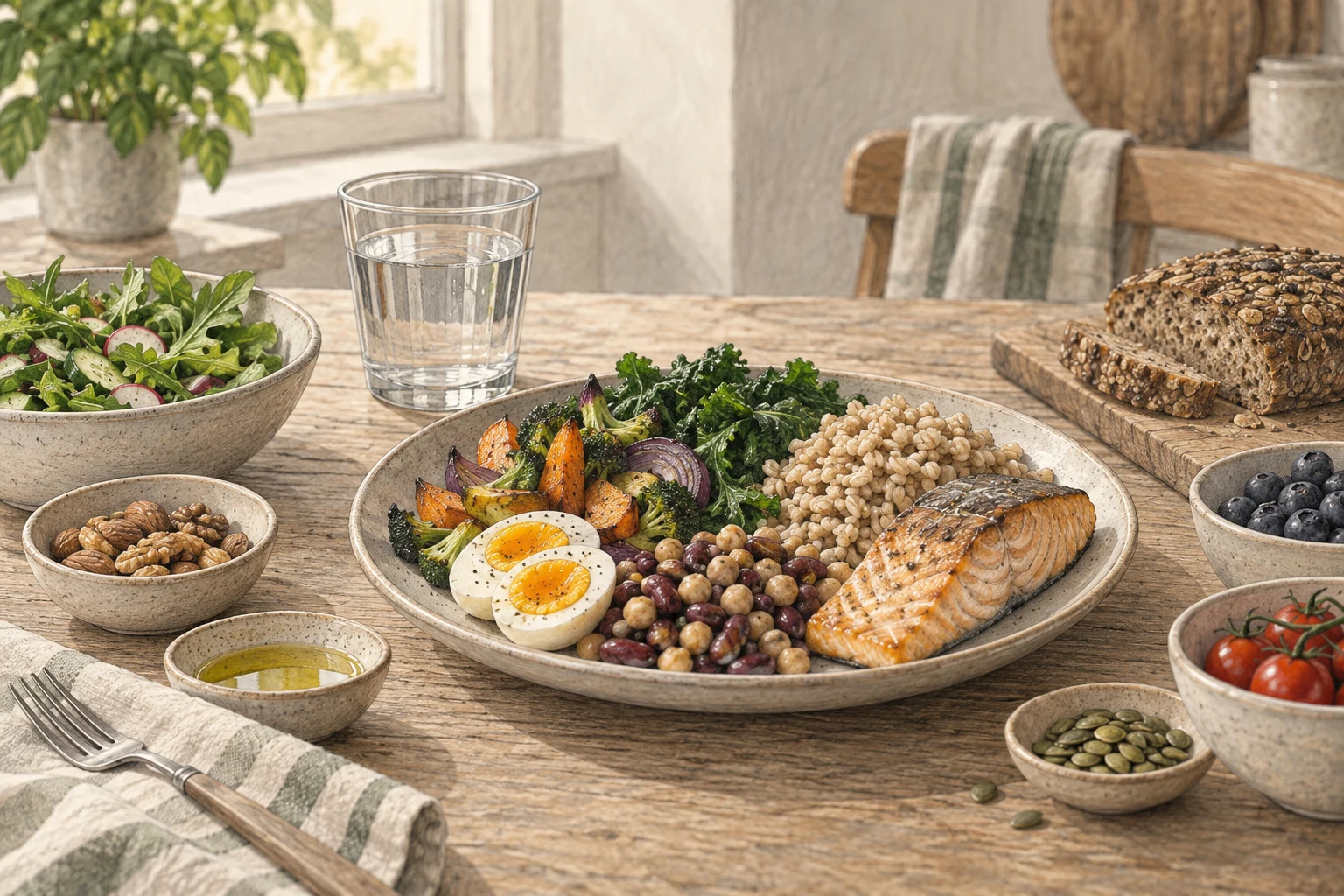
In case of symptoms from the tendons, it is tempting to look for one substance that accelerates recovery. A more practical first question is whether food is still well organized during the changed day. Maybe you're less athletic, working differently or dropping out of a joint lunch. The diet can change without consciously choosing.
The Nutrition center advises athletes first to invest in a healthy diet. Most recreational athletes can thus obtain sufficient nutrients. For intensive sports and specific goals, personal guidance can be useful.
That basic information is not treatment for any tendon symptom. Use it to formulate a specific question: does it manage to eat regularly and sufficiently, how does it fit my activities and is individual nutritional advice necessary? A package with a tendon on the label does not answer those questions.
Proteins are part of a diet
The factsheet of the Nutrition Center describes the role of proteins in building up and restoring body tissue. That's different than evidence that more and more protein heals a painful tendon faster. It's about the whole of what you eat and need, not just one powder.
Therefore, first map out which ordinary products you use and which meals often disappear. Those who hardly organise breakfast or lunch through a modified roster have a different practical question than someone who already eats varied food and wants to add a supplement. A dietician can personally assess the need.
A general blog cannot prescribe an appropriate amount for any age, physique, sports load and medical condition. Especially with a disease, a prescription diet or a major dietary change, the consideration comes from someone who can take your circumstances with you. Bring existing advice and resources to that conversation.
What a well-known collagen study really investigated
One research by Shaw and colleagues eight healthy men. They received gelatin with vitamin C or a control drink in several study periods, combined with short jumping activities. The researchers investigated blood levels and the reaction of farmed ligament tissue to blood serum.
The study found changes that fit processes around collagen production. However, it did not investigate a group of patients with a painful tendon and showed no faster return to work or sport. That difference between a biological measurement point and a noticeable treatment result is essential.
This research may give rise to further research, but does not in itself give a personal supplement recipe. Nor does it support the claim that each collagen product does the same. Composition, participants, comparison and measured outcome must match the promise made.
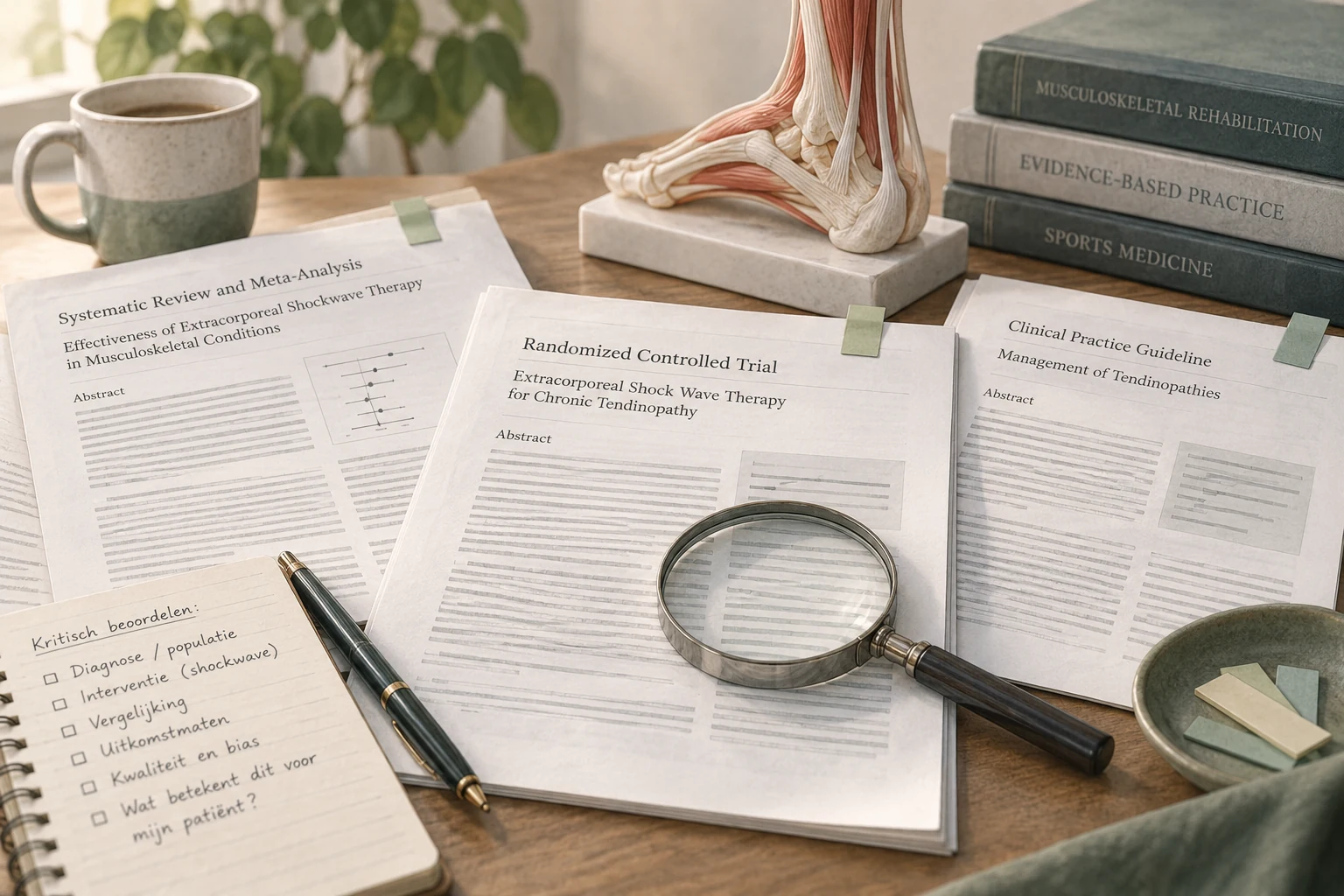
Read a four-step product promise
You don't have to be a researcher to look at a claim more closely. Put the promise next to the foundation and first look for simple differences.
| Question | Why it matters. |
|---|---|
| Who was in? | Healthy subjects are not automatically comparable to people with tendon symptoms. |
| What was compared? | Without a suitable comparison, it is not clear what change lies in. |
| What was measured? | A blood count answers a question other than pain or daily functioning. |
| Does the product fit? | An examination of a particular composition does not prove every brand or mixture. |
Then add a personal question: what noticeable purpose should this support for me? If you are considering a supplement to be able to walk again, only a claim about a laboratory marker is insufficient to support that expectation.
Also note how uncertainty is expressed. Can support and restore your tendon's various statements. An extensive list of ingredients, professional appearance or reference to science does not yet tell how large or reliable a clinical effect is.
Make a food call concrete
Take a short description of a few normal days to a dietician or treatment. Write down meals, changes since the symptom, resources you use, and what you hope to achieve with adjustment. The goal is overview, no assessment of right or wrong eating.
For example, you can prepare these questions: fits my current pattern with my activities, is there any concrete reason to suspect a shortage and what would add a supplement? Also ask if a proposed product fits medication, a condition or other supplements. The same substance may occur in several products.
Discuss costs and practical feasibility. An advice that requires complicated purchases or an unfeasible daily schedule may be less useful than a simple adjustment of an existing meal. Let the choice fit in with what you can really sustain.
Keep nutrition and treatment plan connected
Nutritional attention does not have to wait for perfect research security on every product. You can work on an appropriate daily pattern while the tendon symptom is assessed separately. At the same time, it is careless to present a supplement to replace research, load supervision or treatment that is necessary for your diagnosis.
The Nutrition Centre points out that supplements are not always risk-free. Therefore, discuss what you are using and avoid stacking products because improvement is not possible. A higher price or dose is not a measure of medical fitness.
Finally evaluate the question you started with. Is food better organized? Has a specific nutritional question been answered? And how does the functioning develop within the entire treatment plan? If symptoms don't improve, it doesn't automatically mean you're missing another ingredient. Re-evaluation of the symptom may give more clarity than further searching for a nutrition promise.
Frequently asked questions
Do I have to take collagen in case of symptoms from the tendons?
That doesn't follow from the investigation. The study in eight healthy men investigated biological measuring points and laboratory tissue, no recovery of tendon pain in patients. Discuss any choice based on your diet, purpose, safety and expectations.
Is a protein shake necessary when doing exercises?
Not automatically. The Nutrition Centre places the emphasis on an appropriate basic food. Whether extra support is needed depends on what you already eat and your personal need. A dietician can judge that without using a product as a standard solution.
Does more collagen production prove that my tendon recovers faster?
No. A biological change can be interesting, but does not itself prove less pain, better walking or previous sport resumption. Such a promise requires appropriate studies in people with the relevant symptom and useful clinical outcomes.
What do I discuss if I already use several supplements?
Bring names, ingredients, quantities and the reason for use to pharmacist, doctor or dietician. Also tell us which medicines and conditions are relevant. So one can look at overlap, fitness and what the products actually add to your purpose.
Sources and evidence
- Food centre: Sports and nutrition ↗
Basic nutrition for athletes, role of nutrients and attention to limitations and risk in supplements.
- Shaw et al.: gelatine, vitamine C en collageenaanmaak (2017) ↗
Small study in eight healthy men with gelatin, vitamin C, biological outcomes and cultivated ligament tissue; no clinical recovery from a tendon study.
A personal follow-up step
From insight
to an appropriate plan.
At a paid intake, we'll discuss your symptom and do targeted research. ultrasound is included at no extra cost when it makes sense. Any treatments are agreed separately.
View the initial consultation