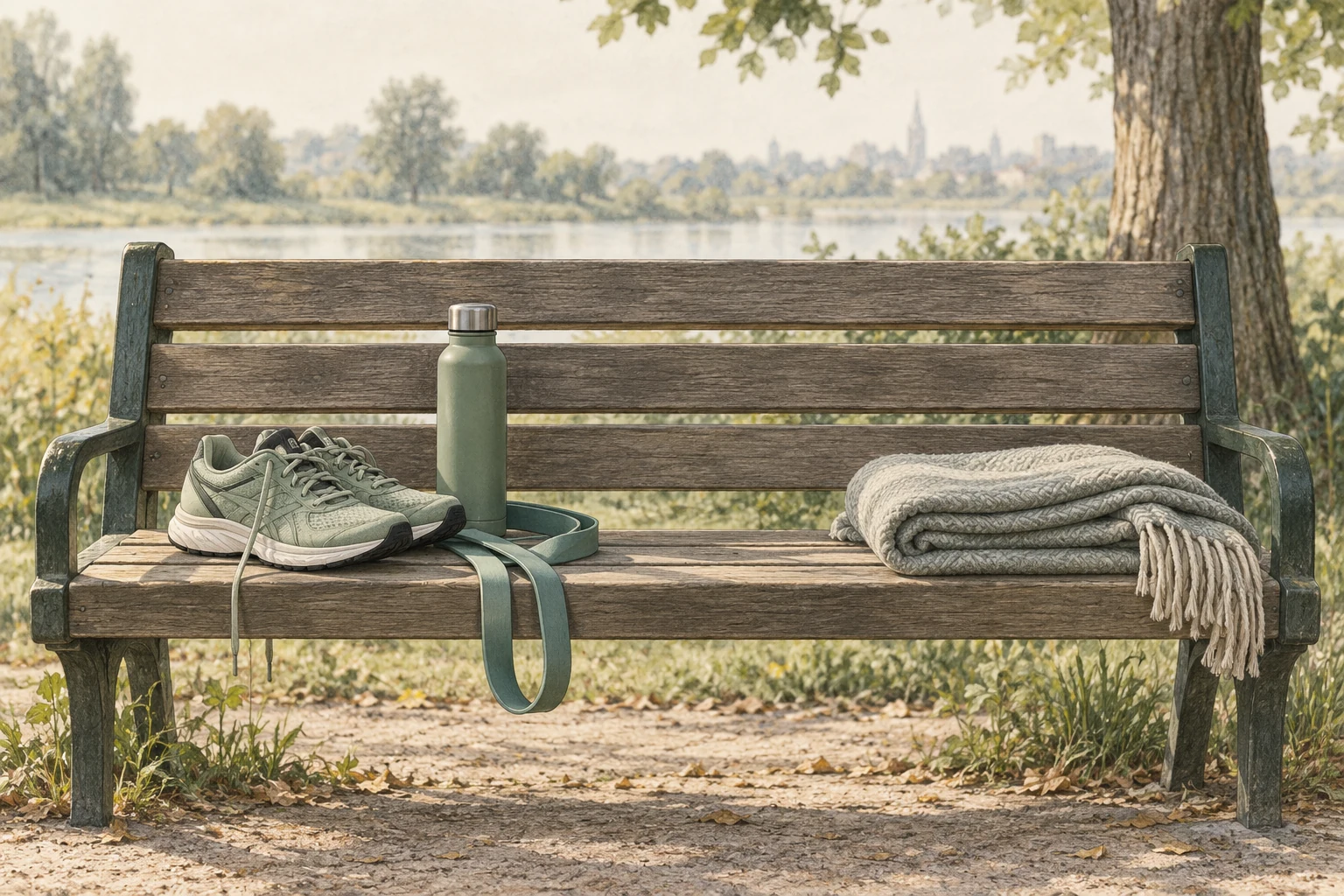
Rest can mean different things.
Rest is often presented as a single, clear recommendation, but people understand it very differently. One person stops running; another hardly moves at all. A treatment plan needs to specify which activities to reduce and which to continue.
Relative rest means that you especially adjust the load that strongly provokes the symptom. This may be a change in duration, intensity or week-by-week distribution. It is not automatically the same as complete standstill.
If you are advised to rest, ask what comes next. Knowing only what you should not do leaves the route back to your goal unclear. A useful plan also includes ways to stay active and a way to build activity up again.
Why load is part of the approach
Tires perform a function when moving and transferring power. A recovery plan should therefore ultimately reflect what you want to be able to do again. Just waiting for every signal to go away, you don't prepare yourself for that load.
The Dutch Achilles guideline recommends an active approach with explanation, load advice and constructive exercises. The exact execution is tailored to the person. That is not a universal program for every painful tendon.
In the case of an acute injury or another diagnosis, other limitations may apply. Therefore, it is important that it is sufficiently clear first what symptom you have. A general advice on continuing to move does not replace that assessment.
Your total week counts
Exercises are only part of the load. Work, household tasks, walking and sports can appeal to the same area. A modest practice session can therefore come on top of an already difficult day.
Make a weekly review of the main activities. You don't have to calculate an exact load number. The goal is to see where peaks occur and where space exists to distribute activities differently.
Suppose as an example that someone tolerates a tendon exercise on a quiet day, but not after a long work shift. Then the exercise doesn't necessarily have to be inappropriate. The combination and planning can be the first question.
How do you recognize a useful step in the construction?
One step has to be in line with what you can do now and with the reaction you get afterwards. Do not change time, weight, speed and frequency without reason. Otherwise, it will be difficult to understand why something goes better or less well.
One small randomised study in Achilles tendon symptoms Continue in-depth sports within a pain monitoring model in addition to rehabilitation. No adverse outcome of that controlled approach was demonstrated. That's not permission to pursue any sports load indefinitely.
The practical lesson is that activity and guidance must be assessed together. It is not just about sports or not sports, but about the form, quantity and response within the overall recovery plan.
A load overview that you can create yourself
Use three columns:
| Activity | What does this ask of me? | What adjustment is negotiable? |
|---|---|---|
| Work | The same action long in succession | Alternate tasks or divide breaks |
| Sports | High peak load or many repeats | Change temporary form, duration or intensity |
| Practice | Targeted stimulus next to the rest of the day | Moment and dose adjustment |
This overview is intended to discuss options, not to remove all load independently. Choose together which change can make the most difference and how long you follow it.
Also pay attention to what you want to keep. Moving can be important for contact, fitness and fun. A plan that only lists limitations lacks that value and is often more difficult to sustain.
Switchback is part of learning
A less good response can give information about the chosen step. That does not mean that all progress is lost. See what changed and discuss whether temporary adjustment is sufficient.
Make a distinction between a recognizable response to more physical load and a new symptom. A sudden feeling of beauty, acute loss of strength or a distinctly different pattern requires assessment and should not only be solved with a smaller training schedule.
An appropriate recovery plan therefore has room for both building and updating. You don't have to do every week to make progress. The direction is determined by your functioning over time and the feasibility of the plan in your daily life.
Frequently asked questions
Is complete rest good for a painful tendon?
Depends on the diagnosis. An active approach with load adjustment is used for much longer-standing symptoms of tendons. Completely stopping everything is not automatically necessary. In the event of acute injury, other appointments may apply; therefore, first let us assess what is going on.
How soon can I raise load?
This is not a reliable percentage that applies to everyone. It depends on current possibilities, activity and response. Agree with your clinician which variable you change and which signals indicate that the step is appropriate or too large.
Does walking at work count as training?
It is in any case load that can count in the total load of an area. That makes it relevant when planning exercises and sports. A working day and a workout can appeal to the same tendon in different ways.
Should I start over after a relapse?
Not automatically. See what change might explain the reaction and what possibilities are retained. Sometimes a temporary adjustment is enough. In case of a new or unexpected symptom, re-evaluation is useful before you simply resume the old plan.
Sources and evidence
- guideline Achilles tendinopathy – Conservative treatment options (2020) ↗
Education, stress and exercises as a basis; consideration of additional treatments.
- Silbernagel et al. – continue sport with pain monitoring in Achilles tendon symptoms (2007) ↗
Small randomised study to accompany sport during rehabilitation; no license for unlimited pain.
A personal follow-up step
From insight
to an appropriate plan.
At a paid intake, we'll discuss your symptom and do targeted research. ultrasound is included at no extra cost when it makes sense. Any treatments are agreed separately.
View the initial consultation