What does the specialist guideline advise?
The guideline module on shockwave after a serious period of basic care. That distinction is important. Having 12 weeks of symptoms is something other than 12 weeks of appropriate explanation and practice therapy. For example, a practice sheet that is unused in a drawer tells little about the effect of an actual program.
A second condition is that you have not been treated with shockwave during the same period of this heel symptom. Sustained pain after a previous shockwave course is therefore no automatic reason to repeat the treatment under this recommendation. Take a previous course with you in the re-evaluation.
The guideline describes a possibility that is considered together with the patient. It shall not require shockwave once a calendar limit has been reached. There may be reason to re-assess the diagnosis, exercise load or feasibility of the daily plan. Sometimes this changes the follow-up step without the need for additional treatment.
Why can you also read a different Dutch advice?
The recommendations are not the same everywhere. Thuisarts, based on the GPs guideline, advises that shockwave should not be done due to insufficient evidence for benefit and possible side effects. The specialist guideline will consider additional application under conditions. That difference must remain apparent in an honest treatment interview.
Ask which recommendation the clinician follows, why it fits your situation and how uncertainty is taken into account. The difference isn't proof that one treatment is definitely working for you or definitely not working. It underlines that shockwave is not a self-evident standard step and that a joint decision on alternatives deserves explanation.
What counts as a usable basic treatment?
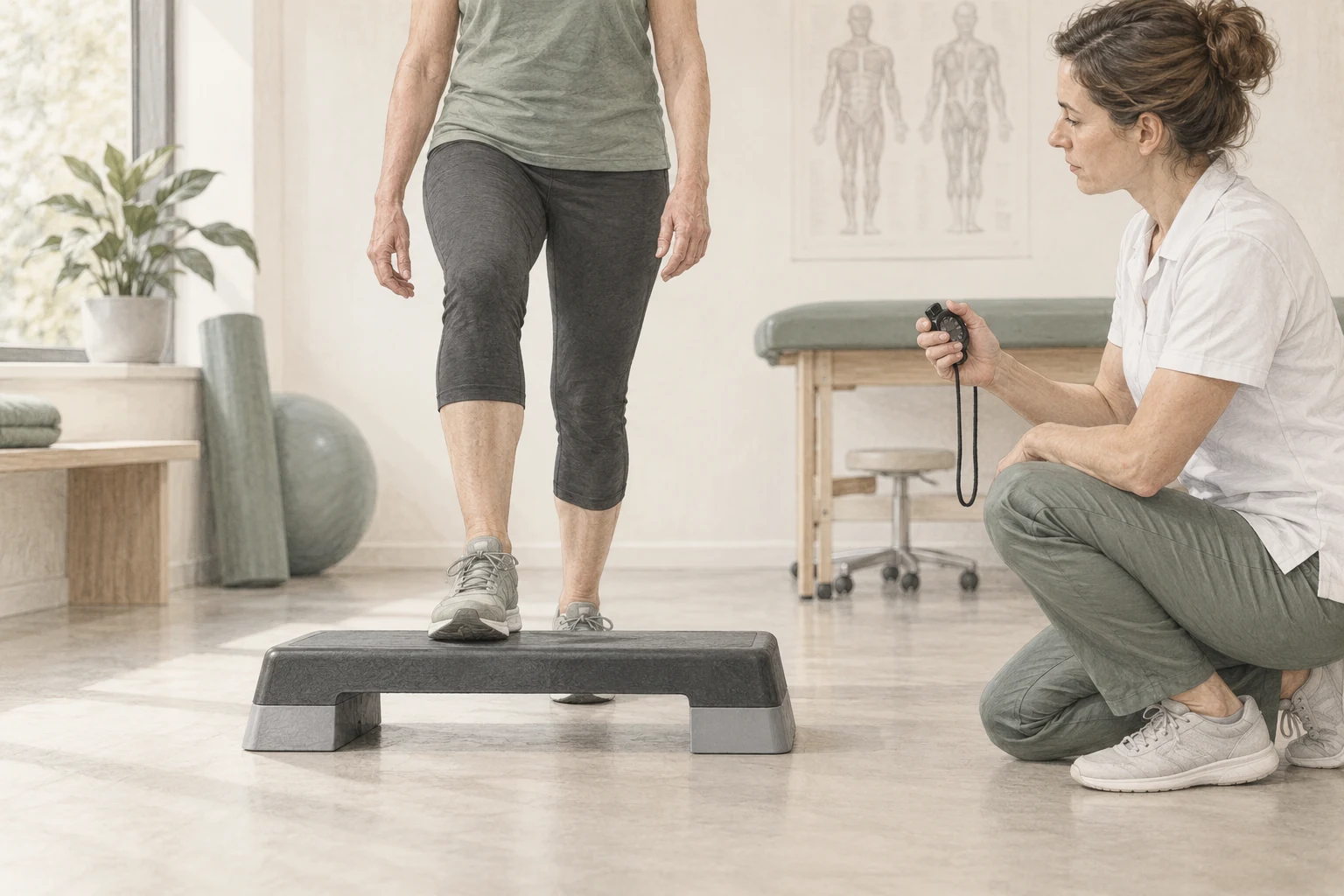
Good basic care makes it understandable what the symptom means, how daily walking and standing are tuned and what the practice goal is. A choice of practice must be feasible in addition to work and home. Those who cannot endure any exercise through pain have a different question than those who consistently practice but fail to achieve their goal.
The guideline on practice therapy Allow space for stretching or building strength exercises, chosen with attention to preferences and daily functioning. So take the actual route: which exercises, how adapted, what succeeded and on which was evaluated? That's more useful than counting the number of appointments.
How sure is the expected effect?
Research is about average differences between groups. It can help with the choice, but does not accurately predict how much improvement one person will experience. The guideline also weighs uncertainty in the studies. A potential benefit for pain or functioning does not mean that any treated heel recovers or that any other care can stop.
So ask for an expectation that fits your situation. Is the goal better to walk, less starting pain or a better working day? How is it determined whether the change is meaningful? A percentage on a website without a clear population, comparison group and measurement time offers little guidance. Also a favorable experience of someone else does not replace this information.
Focused, radial and number of appointments
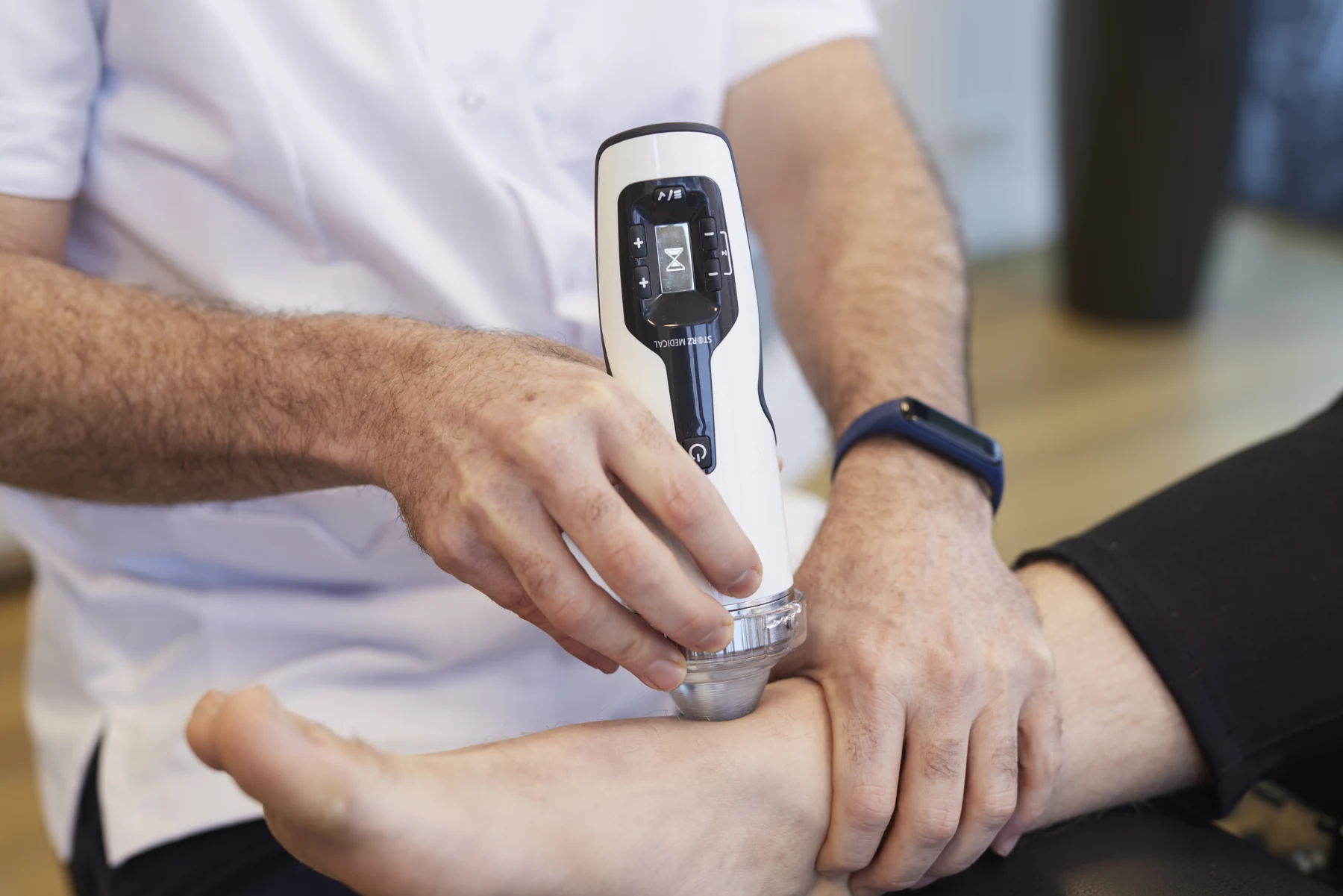
The Recommendation allows both radial and focused application. This does not mean that every institution, device or combination has been examined equally. A trader must be able to explain why the technique chosen fits the indication and his/her own method. More energy or a more painful session is not a simple quality feature.
The guideline mentions considering up to three sessions. That is a reason to look critically at a pre-sold long standard package. A trader can explain the individual consideration, but the number of agreements should remain linked to support and evaluation. Ask before starting what happens at insufficient effect. Additional sessions are not a self-evident solution for an unclear treatment outcome.
A decision card for the conversation
Use these questions to make the proposal concrete:
- Is fasciopathy plantar sufficiently plausible, or is there still a diagnostic doubt?
- What basic care has been tried and what was the effect on my main activity?
- Have I had shockwave in this disease episode, and what does that mean for a new proposal?
- What's the reason for adding shockwave now?
- What technique is used and what practical burden does this entail?
- What are the costs of the proposed start-up and any follow-up arrangements?
- When do we assess the result and when do we stop or change the approach?
Write down the answers side by side. One example: if your main problem is three hours in a row, the plan has to discuss that load. Only a pain rate immediately after a session does not answer whether the treatment brings your goal closer.
Treatment and evaluation are one deal
Discuss possible sensitivity during treatment and temporary reactions afterwards. Please agree who is available if the response is different than expected. The existing advice on stress and exercises can remain part of the plan; shockwave makes matching important.
Set a starting point before the first session and choose a suitable follow-up measurement. Avoid that any good or bad day is immediately seen as proof of success or failure. If the expected improvement is not achieved, a new consideration should follow. This can be about the diagnosis, the contribution of work, the performance of exercises or the usefulness of another route. A careful process also gives a clear answer when further treatment adds little.
Frequently asked questions
Is shockwave the first choice as soon as I get help?
According to the Dutch guideline, appropriate education and practice therapy is first central. In the event of permanent symptoms, shockwave may be considered further. A short duration of symptoms, only a bone protrude on a photograph or possession of equipment is not in itself an indication.
Do I have to wait exactly 12 weeks?
The guideline covers at least 12 weeks of adequate basic treatment without sufficient effect, not just waiting. In case of doubt about the diagnosis or an abnormal course, it is more appropriate to assess. Discuss with the clinician what still needs to be figured out in your journey.
Are three treatments always enough?
There's no guarantee of that. The guideline mentions considering up to three sessions, but a guideline number does not predict an individual result. It is particularly important that treatment target, evaluation and possible reasons to deviate from the recommended approach are clear.
Should I stop exercising when shockwave starts?
Not automatically. Shockwave is discussed as an additional option. Align the exercise load, any temporary reactions and daily activities with the operator. Even changing several parts at the same time also makes it more difficult to understand how symptoms change.
Sources and evidence
- guideline Fasciopathy plantar — Shockwave Therapy (2026) ↗
Conditions for additional shockwave and uncertainties in the evidence.
- guideline Fasciopathy plantar — Practice therapy (2026) ↗
Joint choice for stretching or building strength training and evaluation.
- Thuisarts — Choosing heel track and treatment for a long time (2026) ↗
Night splint, tape and uncertainty about treatments in long-term helping.
A personal follow-up step
From insight
to an appropriate plan.
At a paid intake, we'll discuss your symptom and do targeted research. ultrasound is included at no extra cost when it makes sense. Any treatments are agreed separately.
View the initial consultation