Decide what return means to you
Back to sports can mean that you want to train again, play a full game or get an old level of performance. Those are different goals. The Bern consensus on sport resumption therefore describes return as an ongoing process with different levels.
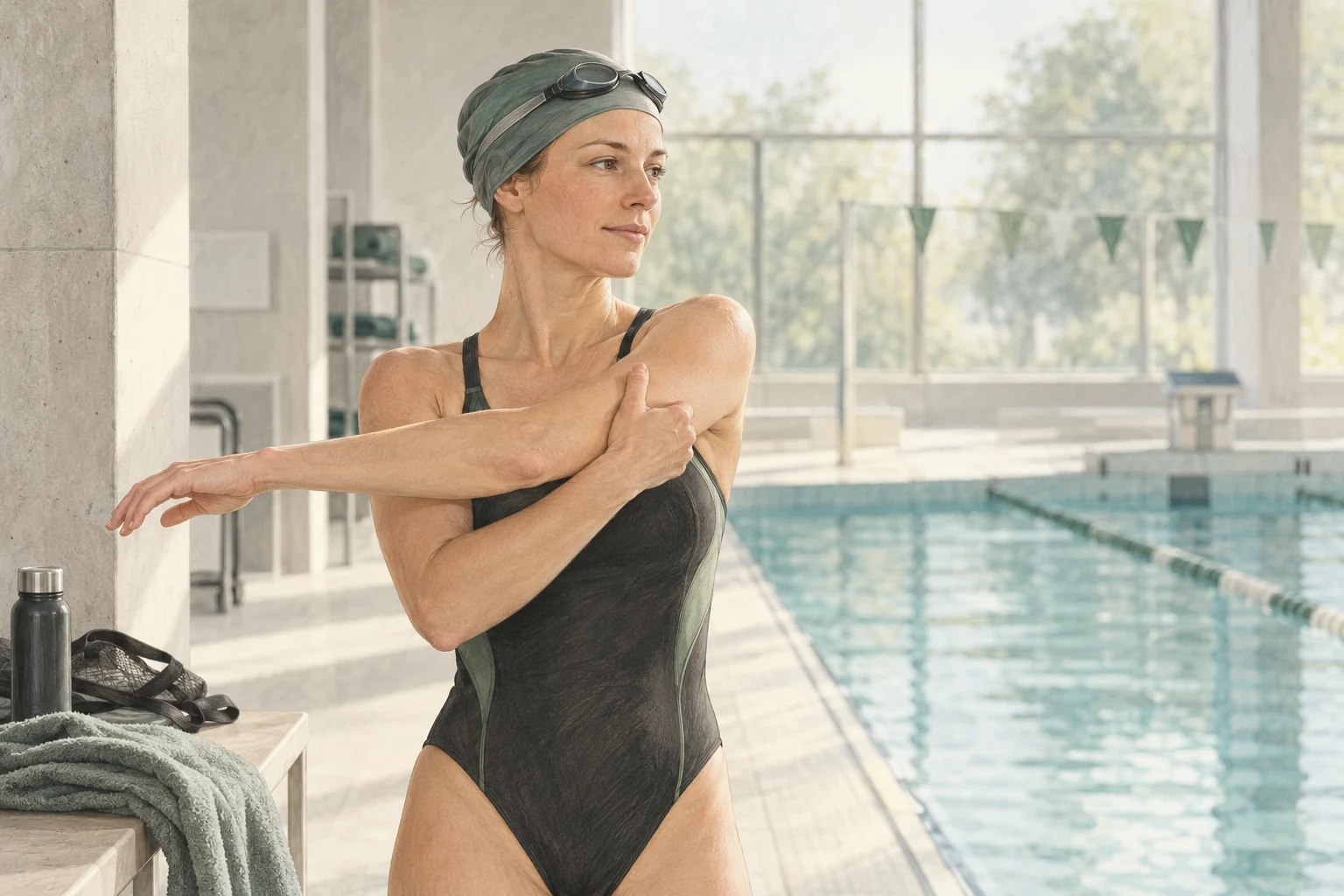
Write down your desired level concretely. For example, swimming is about which stroke and which training duration; in tennis it is about quiet rallying, serving or competition. A general statement that you are allowed to exercise again leaves those important differences open.
Also determine which parts you can temporarily miss. If you can participate in a modified part of the training, sport does not need to be on or off alone. This is a joint consideration and depends on your diagnosis and possibilities.
What are the demands of your sports on the shoulder?
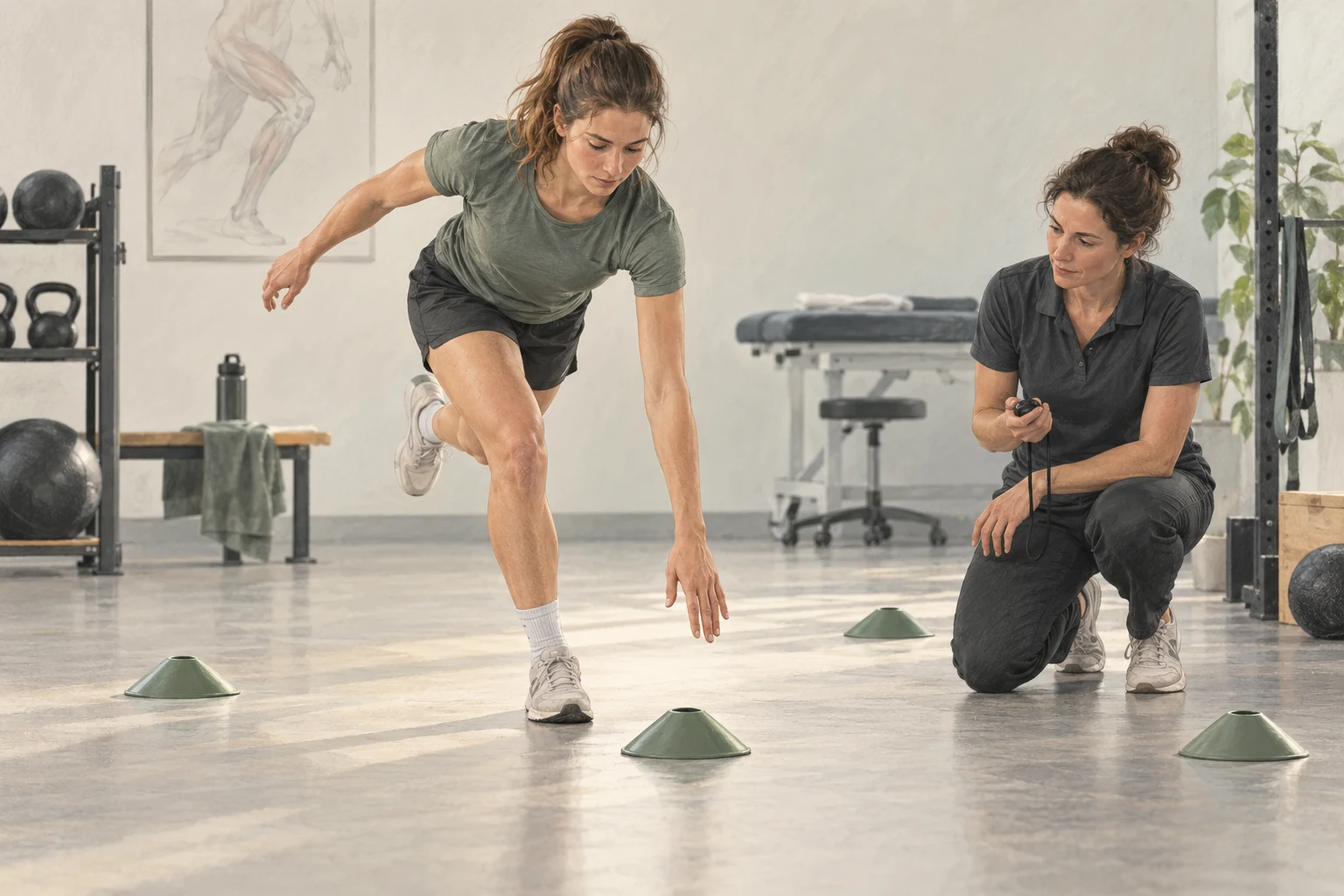
Look at the movements, speed, strength and repetition that your sport demands. A controlled exercise in the treatment room is something other than responding to an unexpected ball. Also contact with an opponent or a fall risk may be relevant.
The shoulder consensus from 2022 stresses that good research is limited for many decisions. The recommendations therefore help to discuss load and risk in a structured way; they do not deliver a universal moment when each shoulder is safe.
Make a task analysis together. Which movement is common, which is most burdensome and which can be adjusted temporarily? Let a trainer explain what a usual training really means. The clinician doesn't have to guess from the sports name how much your shoulder will do.
Look beyond pain alone
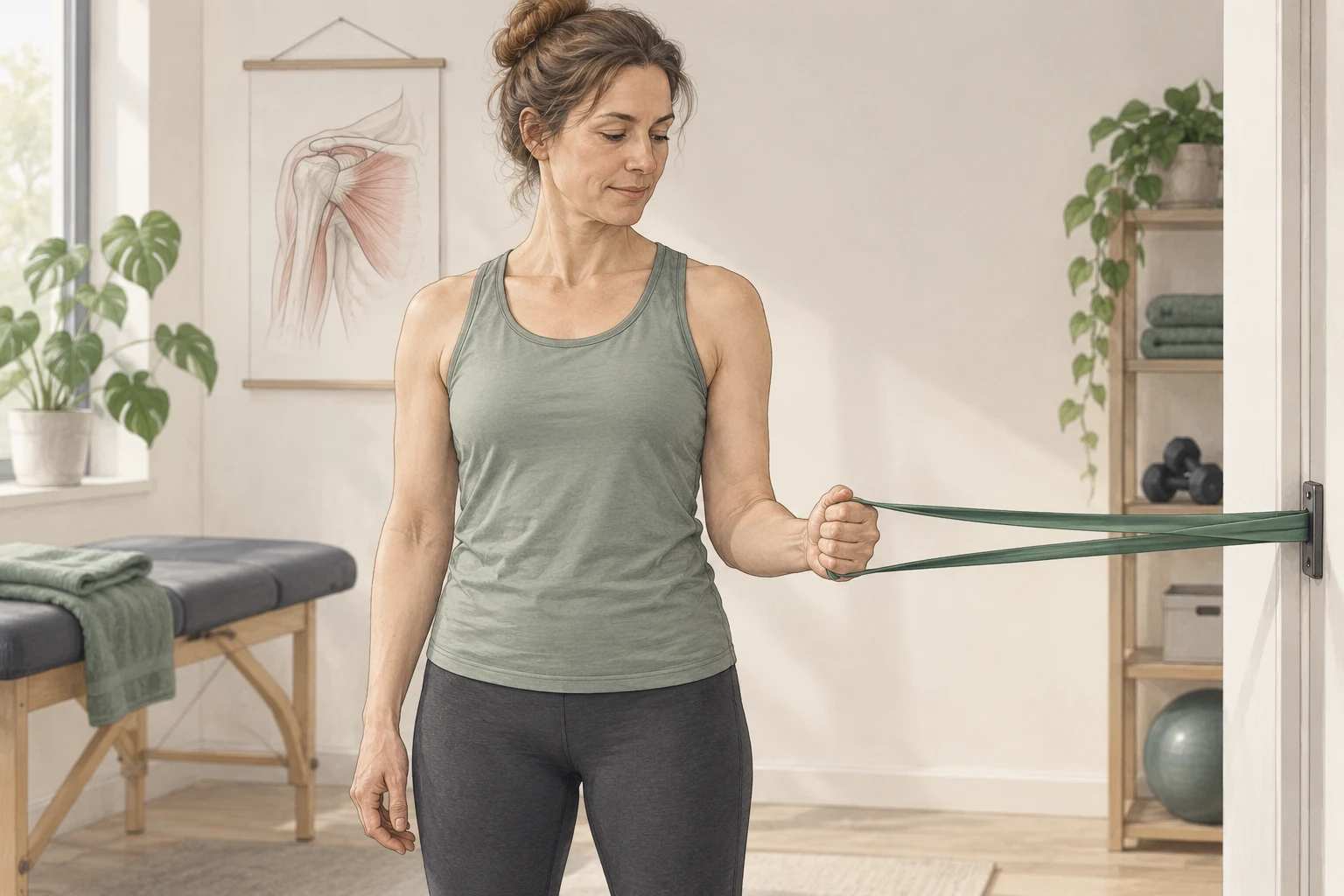
The Rotator Cuff guideline refers to the strength and function of the shoulder as parts of a sport resumption plan. In addition to pain, movement possibilities, strength and sports-specific performance can be monitored.
Discuss what a test tells you and doesn't. An equal power result on the left and right can give information, but does not automatically say that you can handle the repetition of a full training. Nor does a pain-free morning prove that a competition with maximum actions is appropriate.
Take your trust with you. Are you especially afraid of one movement, missing explanations about the diagnosis or does the sports environment feel too unpredictable? Those are different questions. A build-up becomes more useful if that threshold is also named instead of just adding an additional strength test.
Make intermediate steps that are recognizable
A practical construction can start with an agreed part of the sport. Then one or a few requirements will be increased. Which order is appropriate depends on the sport and the shoulder symptom.
Example: first controlled ball exercises without maximum throw, then more speed or a larger number of repeats, and later a less predictable game situation. This is not a schedule to take over on its own. It shows that again training consists of separate parts.
Decide which reaction is reason to stay equal, switch back or contact us. Avoid a fixed percent rule that would apply to everyone. A calendar can arrange appointments, but it does not determine independently whether you can handle the next sports task.
A sports card for you, trainer and clinician
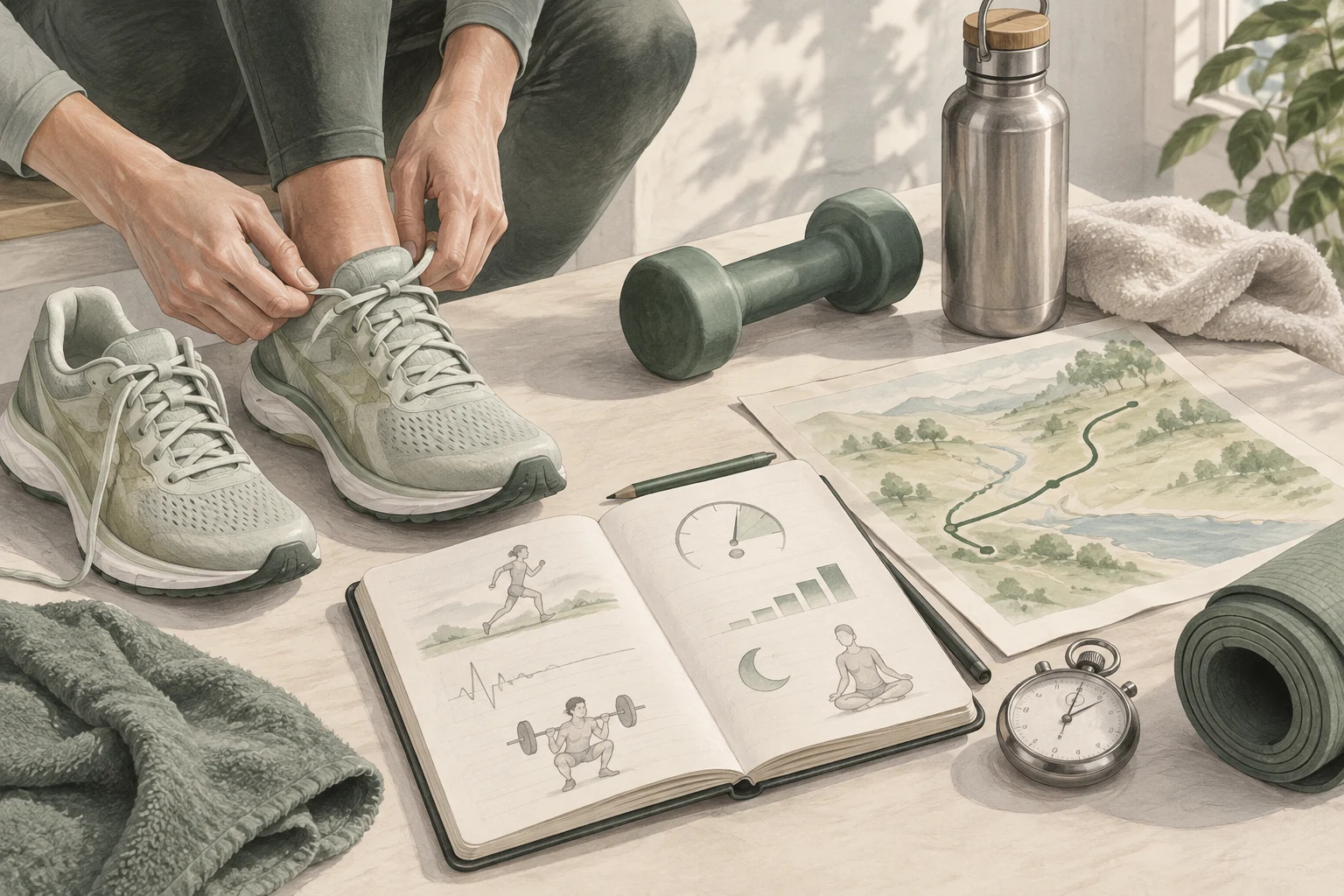
Put the most important appointments in one place:
| Component | Appointment |
|---|---|
| Purpose | What sport and what level do you want to achieve? |
| Current participation | What's working out in practice? |
| Next step | What part changes? |
| Border | What do you do in case of an adverse reaction? |
| Responsibility | Who decides to change? |
| Evaluation | When do you discuss execution and response? |
Watch hidden changes. A training can be longer because you stay for an extra batch. A quiet exercise can be intensive through competition with a teammate. Make it clear what kind of arrangement will remain in such a situation.
Tell the trainer what's agreed, as far as you want to share. Medical diagnosis is not always necessary to understand practical boundaries, but uncertainty about participation easily leads to unintentional pressure.
Continue to follow after the first resumption
The first training is a moment in the trajectory, not automatically the end. Also see how you work the next day, whether work and sport remain feasible together and whether confidence grows.
If the goal changes, the plan has to change. Recreational participation requires a different consideration than suddenly registering for a tournament. Discuss that change before the training load increases unnoticed.
In case of a new loss of strength after an incident or a clearly altered pattern of symptoms, medical assessment is required. A previously approved sports step does not apply indefinitely to new information. The most useful plan, therefore, not only makes progress clear, but also the route back to consultation.
Frequently asked questions
Do I have to be completely pain-free before I exercise?
That depends on the diagnosis, sports duties and agreed criteria. Being pain-free is not the only measure of strength; ignoring clear pain is also a general rule. Discuss what reaction suits your construction and when a step is adjusted.
What test determines if I'm finished?
There is no test that gives certainty for all shoulders and sports. A combination of symptoms, function, load tolerance and sports-specific tasks can help. Ask why a test is chosen and which decision depends on the result.
Can I do only parts of the training first?
That could be a discussable intermediate step if it suits your situation. Make concrete what parts, duration and intensity are meant. Without such appointments, it is possible to participate in a fully-fledged training program without notice. Involve the trainer in the execution.
Is a recurring reaction after sports immediately new damage?
You can't deduce that from pain alone. Look at the course, the function and any new incident. Discuss persistent or increasing symptoms. In case of sudden power loss or other new phenomena, an assessment is important before you build up.
Sources and evidence
- Bern-consensus: return to sport (2016) ↗
Sport resume as a process of participation, sport and performance; shared decision-making.
- Bern Consensus on shoulder rehabilitation and sport resumption (2022) ↗
Shoulder-specific consensus, limited evidence quality and load and risk management.
- Rotator Cuff Tendinopathy: Clinical Practice Guideline (2025) ↗
Function and strength as parts of sport resumption in rotator-cufftendinopathy.
A personal follow-up step
From insight
to an appropriate plan.
At a paid intake, we'll discuss your symptom and do targeted research. ultrasound is included at no extra cost when it makes sense. Any treatments are agreed separately.
View the initial consultation