What technique is behind the abbreviation?
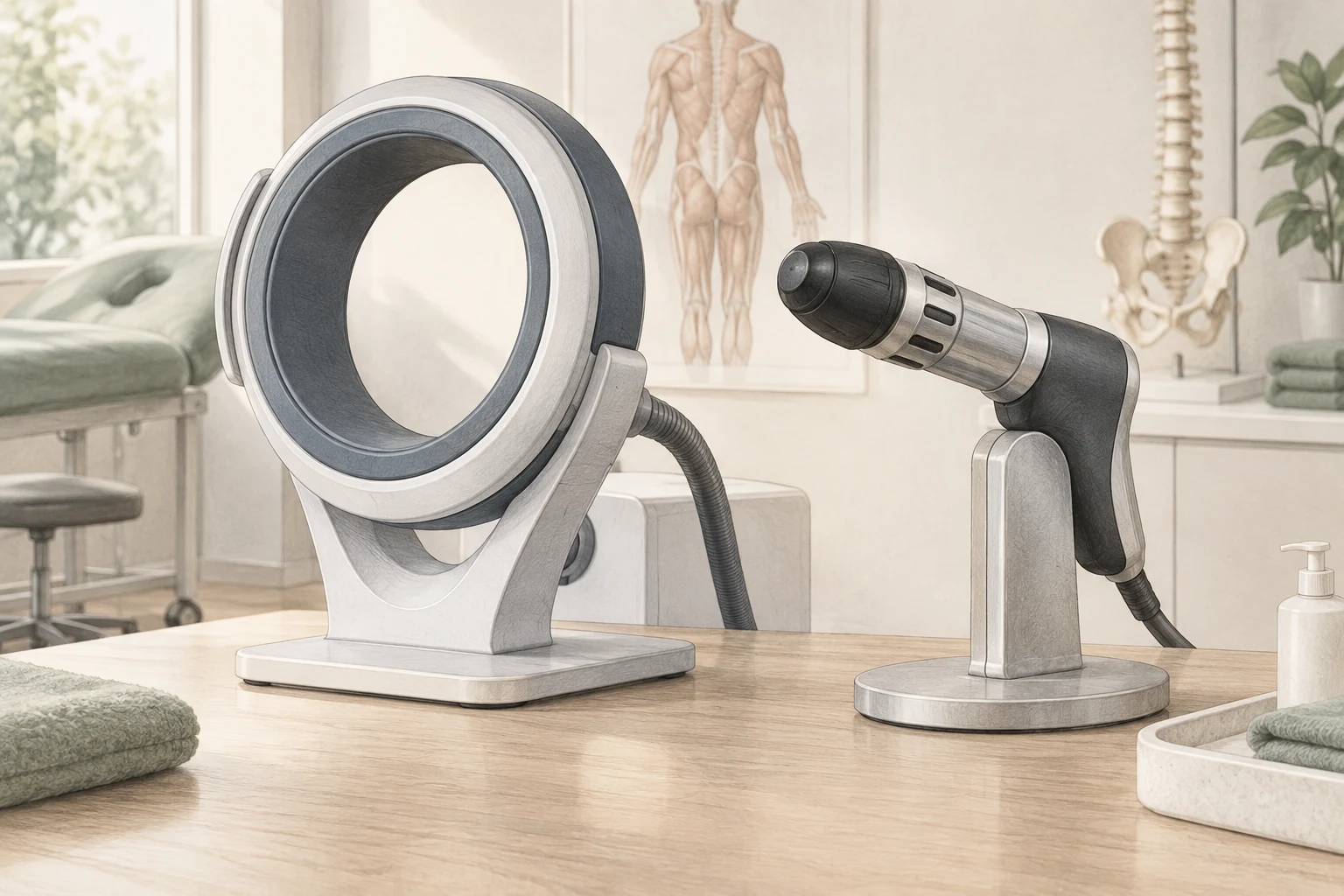
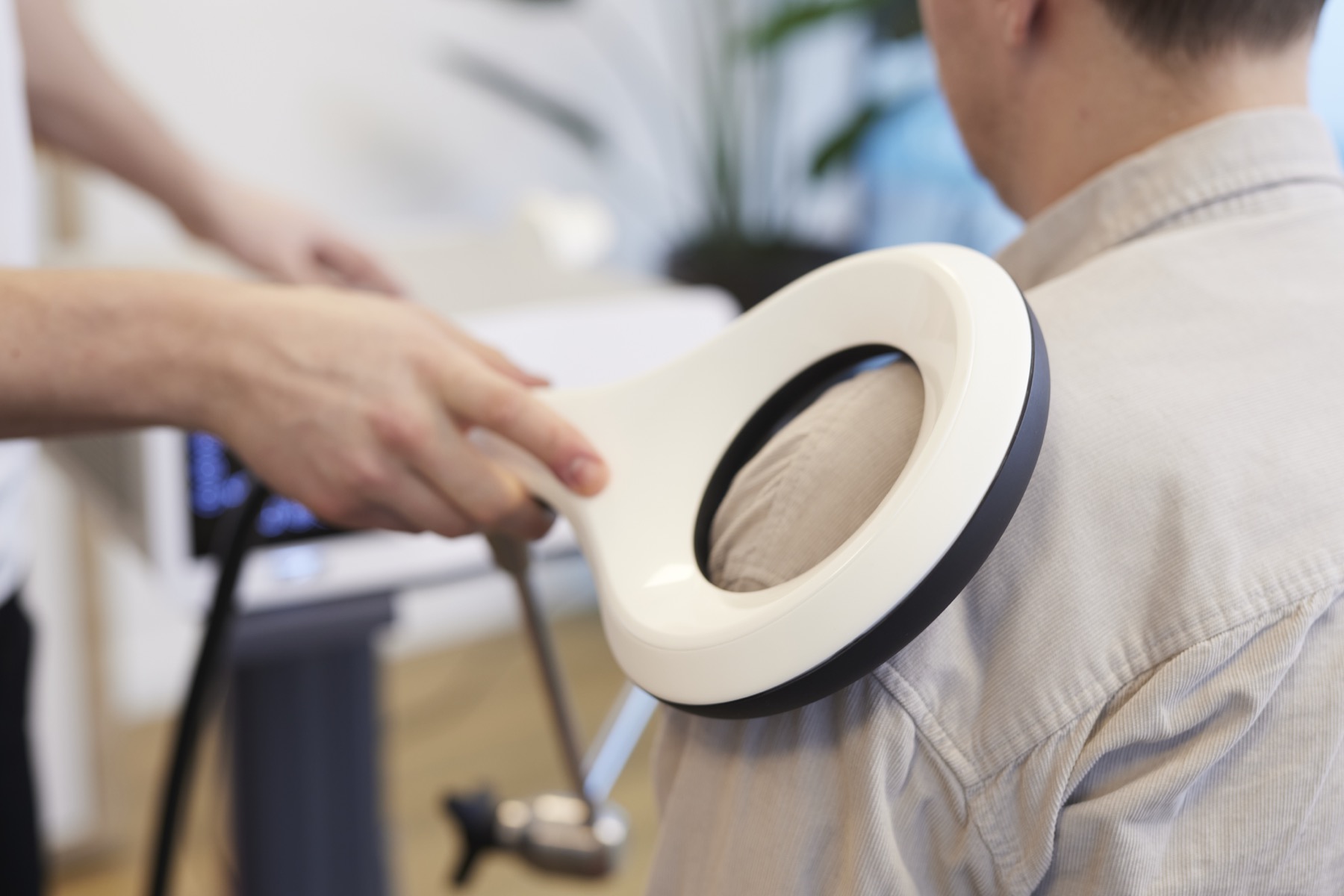
With EMTT, an applicator is placed at the treatment area. The device uses electromagnetic pulses. That is a different principle than shockwave, whereby mechanical waves are transmitted. The manufacturer's product information describes EMTT technology, but a technical description is not an independent proof of effectiveness.
For a treatment choice, it is not necessary to control all physical terms. However, it is useful to know that investigations into different magnetic applications are not automatically interchangeable. The abbreviation PEMF includes, for example, a wide range of pulsed electromagnetic fields.
Therefore, ask which application is proposed and which research is included. Only the presence of a magnetic field is not sufficient to take over results from another device or protocol.
What is the intended result?
Treatment is usually discussed with the aim of improving symptoms or functioning. These are measurable clinical outcomes. Words about rebooting cells or guaranteed tissue regeneration go further and ask for separate evidence.
For you, what should change in everyday life is relevant. Do you want to use an arm better, experience less discomfort while walking or tolerate a practice program better? A concrete objective makes it clearer whether an additional treatment has value.
Also distinguish between less pain and tissue recovery on a scan. One doesn't automatically follow from the other. A pleasant feeling after a session is not yet proof that a tendon has changed structurally or that surgery has been prevented.
What's recent research showing?
One placebo-controlled study of Hollander and colleagues EMTT was studied in 126 participants with various musculoskeletal disorders. The results for pain and physical function were more favourable than placebo at the measurement moments studied. Follow-up was up to 12 weeks.
That's relevant information, but the research doesn't prove all the applications. A mixed study group is not individually convincing evidence for each diagnosis. Also long-term effects and comparison with all common treatments have not been established.
Ask a proposal how well your situation looks like to the application examined. A reference to scientific research will only become useful when the clinic can explain the agreement and the border.
What does EMTT mean besides shockwave?
Another research question is whether EMTT adds anything to shockwave. The shoulder examination of Klüter is about a specific group with prolonged rotator-cuff symptoms without calcification. It does not prove that any shockwave treatment improves by adding EMTT.
Nor can a combination study determine what EMTT would have done only if such a group has not been studied. That limitation is important when assessing a multi-tech package.
An additional proposal should therefore give a reason for each component. Ask what EMTT adds to the existing plan and what additional time, costs and load are included. The number of techniques used is not an independent measure of quality.
Safety is assessed in advance
Electromagnetic treatment requires its own safeguards. Report implants, medical devices, pregnancy or possible pregnancy and relevant conditions. You cannot simply apply safety information about shockwave to EMTT.
The current instructions of the device used and your personal situation determine the balance. An old manual or general internet list is not enough to give yourself permission. Take available data with an implant, so that the clinician can check directed.
During treatment, tell me what you're experiencing. Also a technique that is usually described comfortably requires attention for unexpected warmth, pain or other discomfort. The ability to stop or adapt is part of a careful plan.
Make a conscious choice about a supplement
A useful call contains four questions:
- What symptom or limitation do we want to influence with EMTT?
- What research does this application support?
- What remains the role of active guidance and load building?
- When do we decide whether the supplement has sufficient value?
Write down your answer to the first question in plain language. For example, what day-to-day action you want to improve. In this way, the objective remains understandable when the technical explanation is extended.
When the basis for your symptom is limited, that should be part of the choice. You can then weigh the uncertainty against time, costs and preferences. An honest proposal gives room to opt for a different approach without suggesting that you lack a necessary chance of recovery.
Frequently asked questions
Is EMTT the same as shockwave?
No. EMTT uses electromagnetic fields; shockwave uses mechanical waves. They have different security conditions and research backgrounds. The fact that they can be offered together does not mean that the operation or justification of one technique automatically applies to the other.
Has EMTT been proven for all symptoms of the tendons?
No. The studies cover certain groups and treatment programmes. You cannot extend a beneficial result to any tendon, device or combination. Ask which data is specifically relevant to your diagnosis and what uncertainty remains.
Does EMTT hurt?
Treatment may not be palpable, but experience differences and discomfort is possible. Report unexpected sensations immediately. Comfort is a practical advantage if the treatment fits, but it does not in itself prove that a technique is effective or safe for everyone.
Does EMTT replace my exercises?
That doesn't follow from the available research. Discuss how a possible addition fits in with your active plan. The aim is that the different parts have a clear role to play and that the construction of daily activities and workings is not out of the picture.
Sources and evidence
- Manufacturer documentation – EMTT technology ↗
Description of EMTT technology; manufacturer source, no independent evidence of efficacy.
- Hollander et al. – EMTT versus placebo in musculoskeletal symptoms (2026) ↗
Study in 126 participants, without shockwave combination, with outcomes up to 12 weeks.
- Klüter et al. — ESWT plus EMTT for non-calcific rotator cuff tendinopathy (2018) ↗
Randomised study to add EMTT to focused ESWT in 86 adults; specific population and follow-up up to 24 weeks.
A personal follow-up step
From insight
to an appropriate plan.
At a paid intake, we'll discuss your symptom and do targeted research. ultrasound is included at no extra cost when it makes sense. Any treatments are agreed separately.
View the initial consultation