A name doesn't yet tell how to work
Expertise center is a powerful indication, but for your choice it is especially important what you notice. Is the diagnosis explained, is previous treatment considered seriously and is there room for advice other than shockwave? Those are characteristics you can test for yourself.
An extensive device list may be interesting, but does not say much about the quality of the decision. The same technique can be used carefully or routinely. The added value is also in recognizing situations where treatment does not fit.
See not only what a center offers, but also how it describes its way of working. A good story makes it clear how research, treatment and evaluation are connected.
Ask for the clinician and his role
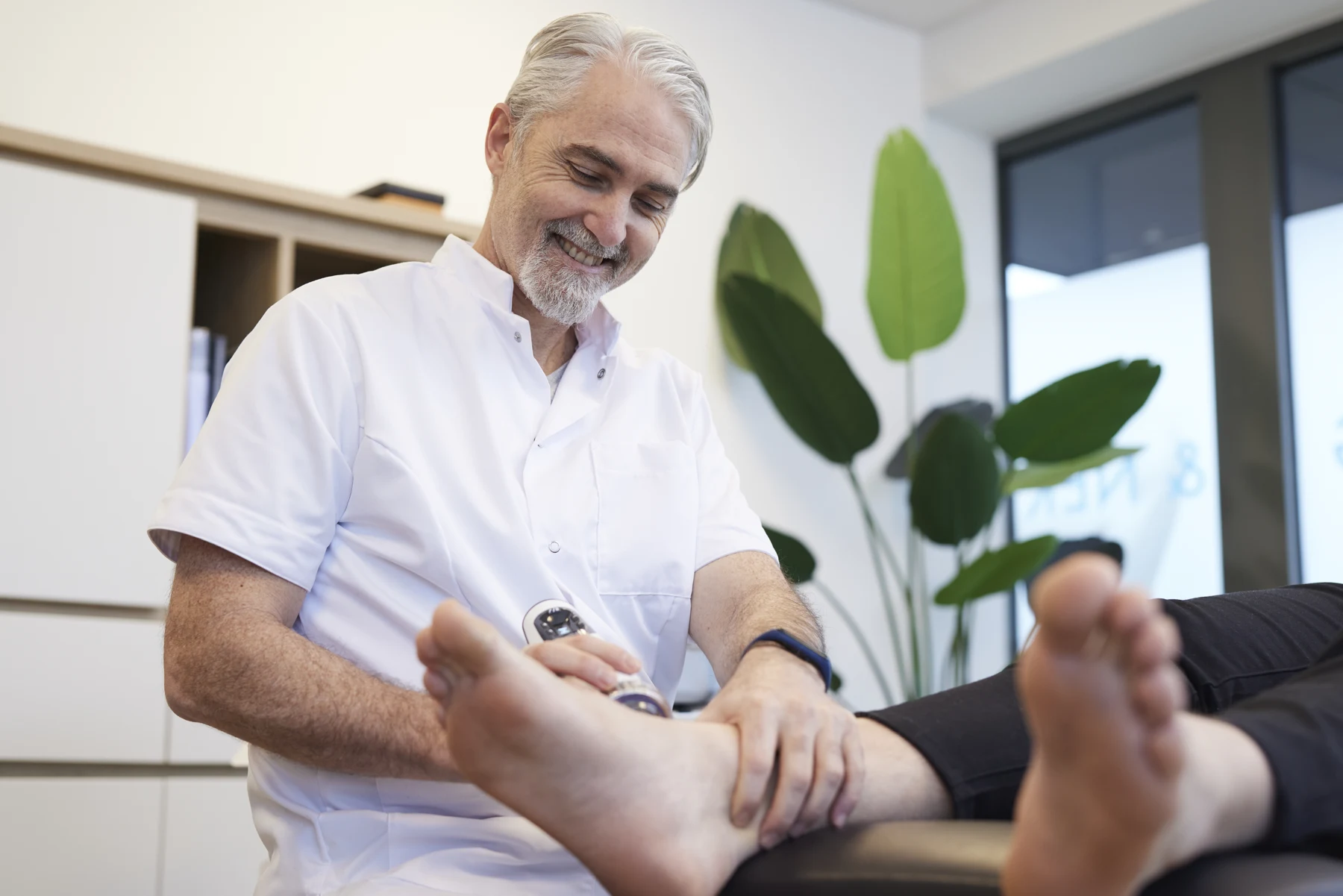
You need to know who's doing the intake and who's doing the treatment. Ask for relevant training, experience and professional registration. A centre should be able to give this information concretely, without having to guess what general terms mean.
The ISMST highlights clinical assessment and qualified application. Those international recommendations are not the same as a Dutch legal list of jurisdiction. They do show that a device is not a substitute for skill.
Also ask who is responsible if diagnostic doubt arises. Sometimes consultation with another health care provider is necessary. A recognizable route for consultation or referral is more useful than the suggestion that one center can solve any cause of pain independently.
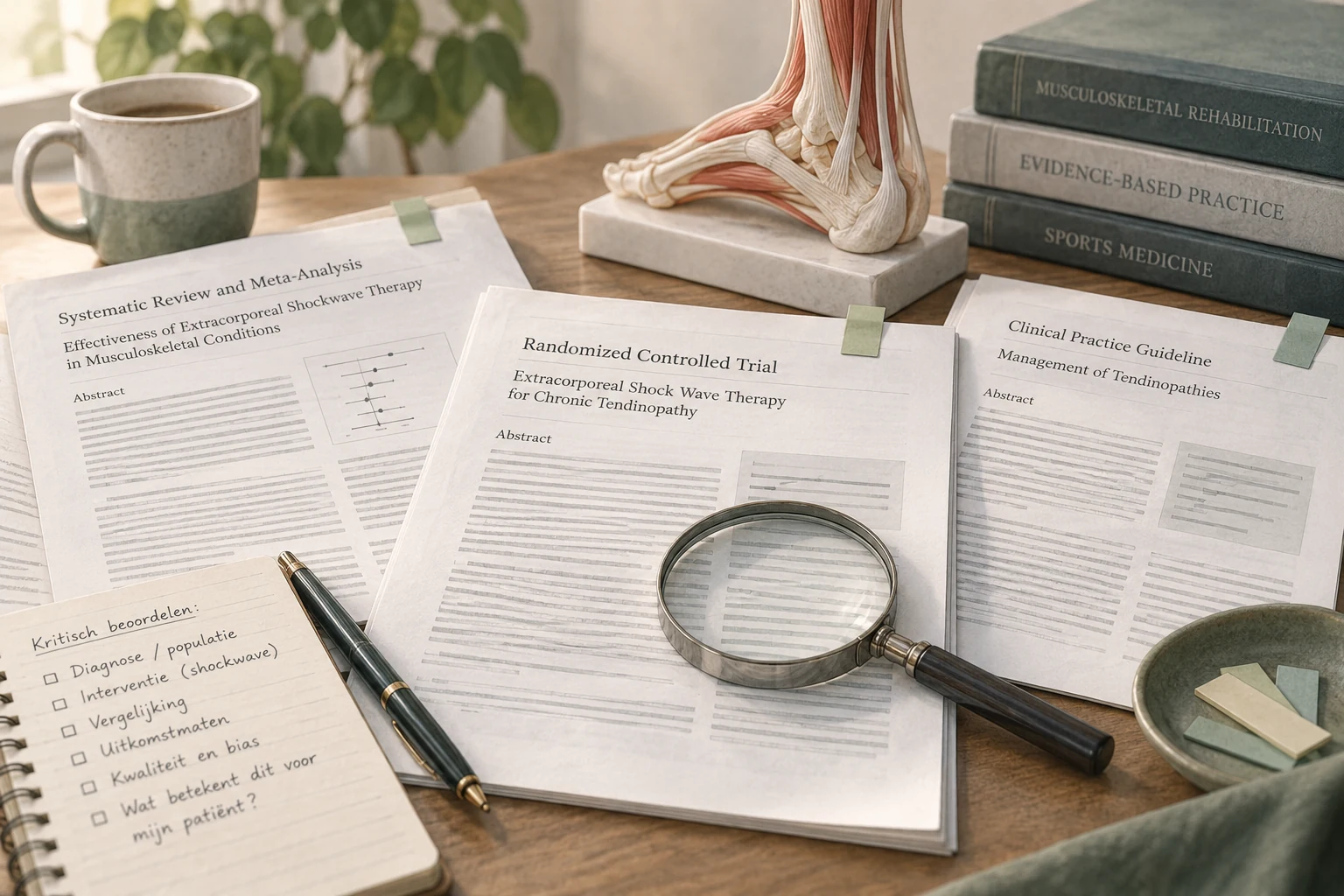
Watch how evidence is explained
A centre that mentions only positive research results does not give a complete picture. Evidence may vary per tendon, technique and comparison. Ask whether this study fits your diagnosis and whether there are any less favourable guidance advice.
You don't have to fully assess scientific articles yourself. A good explanation translates the main question: how sure is the potential added value and what does that mean for my decision? A trader may indicate that the knowledge is limited.
Be wary of universal success rates without explaining about participants, moment of measurement and meaning of success. A group that reports less pain is not the same as a group that has fully recovered. Concrete definitions make a claim verifiable.
Research should answer a question
Imaging can be valuable when it supports a decision. However, routine scanning is not proof of better care. Ask what the research adds to the conversation and physical examination.
A relevant explanation may be that a finding helps to assess another cause or plan an application. Less clear is an explanation in which any visible deviation automatically requires treatment.
Make sure that the results are discussed in an understandable language. You need to know what was seen, what that might mean and what the scan can't predict. This is how technology is used to support your choice.
Use a call score without false precision
After a first contact, you can pass five points:
| Point | Could I understand this? |
|---|---|
| Problem | Which explanation is likely? |
| Choice | Why is this treatment proposed? |
| Alternative | What can I do if I don't choose this? |
| Evaluation | How do we decide on the follow-up? |
| Costs | What can I pay for myself? |
The goal is not a report rate for a health care provider. The overview helps you to identify which information is still missing. A missing answer may be a reason to ask, not immediately to write down a center.
Ask for an overview in advance at cost. The NZa describes that possible financial consequences should be discussed in good time. Clear information is part of the quality of the decision.
Look at collaboration and the ability to quit
symptoms of the tendons are sometimes accompanied by several caregivers. Ask how the centre handles an existing training program and who coordinates the construction. Good cooperation prevents you from getting different, contradictory assignments.
A careful center can also explain when it stops an additional treatment. This may be because the goal has been achieved, the added value is insufficient or new information indicates a different route. Stopping can be a sign of substantive evaluation.
Finally, choose a place where you can understand and get answers. Trust doesn't have to mean that all uncertainty disappears. It means that you know what consideration is being made and that the plan can change when your situation so requires.
Frequently asked questions
Does the latest device prove a center is better?
No. Equipment offers possibilities, but the choice and execution remain decisive. Ask what relevant experience the controller has and why the device fits your diagnosis. A technical feature does not automatically prove a better clinical outcome.
Does a specialist always have to give a direct diagnosis?
Not every symptom can be declared final during one appointment. Carefulness can mean that a work diagnosis and remaining uncertainty are appointed. However, it should be clear what information is missing and what the next step is to answer that question.
Are patient assessments sufficient to choose?
Reviews can tell you about experiences with contact and organization. They are less suitable to prove efficacy or diagnostic quality. Combine experiences with concrete information about handling, working methods, supporting and financial conditions.
Can I ask for a second assessment?
Yes, you can indicate that you want to understand the proposal better or to hear a different opinion. Bring reports and the treatment plan. A second assessment is particularly useful when the new operator knows which question is still open.
Sources and evidence
- ISMST – Recommendations and definitions ↗
Technical differences, clinical selection and safety balances in shockwave.
- Dutch Healthcare Authority – information on own risk ↗
Inform ahead of time about rates and possible own payment.
A personal follow-up step
From insight
to an appropriate plan.
At a paid intake, we'll discuss your symptom and do targeted research. ultrasound is included at no extra cost when it makes sense. Any treatments are agreed separately.
View the initial consultation