First determine which hip pain is meant
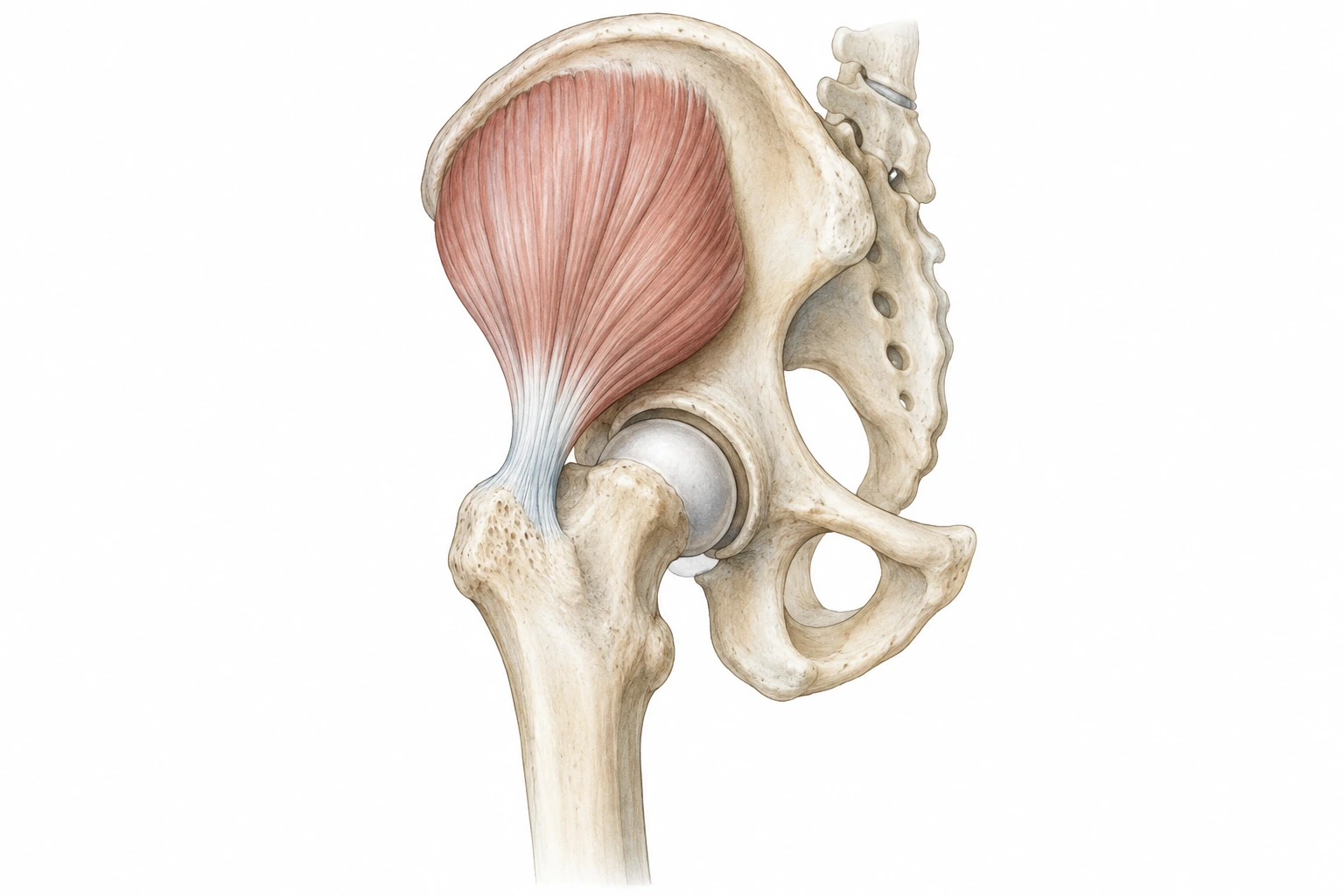
The term lateral hip pain means pain on the outside of the hip. Investigations often use the name greater trochanteric pain syndrome, or GTPS. The tendons of the buttock muscles and structures in the surrounding region may be involved. It is not automatically the same as osteoarthritis, groin pain or pain radiating from the back.
That distinction determines whether research results are relevant. A study in long-term GTPS can show no effect on all types of hip pain. So ask which diagnosis has been made and why the study used fits your symptoms. A painful place or the word bursa on an old report is not enough in itself.
The previous journey also counts. What has changed about load and what exercises have been performed? A complementary treatment will be better assessed when it is clear what the basic approach was and where it was stuck.
A positive study with focused shockwave
In a randomized 2020 study with 103 participants People with chronic GTPS were given focused shockwave or low-energy control treatment. Both groups followed the same training program. The active treatment group had on average less pain and more favourable outcomes on various questionnaires after two months; the follow-up was up to six months.
That is a relevant indication of possible added value within that protocol. It is not a personal probability calculation and does not say that every technique, institution or combination gives the same result. A success rate from such a study should not be presented either as if it were a clinic's own results.
An important detail is the combination with exercises. The study does not support that practice can be skipped when shockwave is available. Anyone who mentions the device alone leaves some of the treatment examined out of the picture.
A radial study gave a less convincing picture
One other randomised study with 120 participants Compared three sessions of radial shockwave to a recommended dose with a minimum dose. Participants had long-term symptoms and insufficient results from previous rehabilitation. Both groups received a training program and were followed for up to six months.
Both groups improved, but the recommended dose did not have measurable added value above the minimum dose. This does not mean that every radial treatment is useless: the control treatment was also a low dose of shockwave. The result shows above all that improvement within a group cannot automatically be attributed to the chosen intensity.
The focused and radial studies together do not constitute a direct match between the techniques. The participants, comparison and protocols were different. To conclude that focused is always better, would go beyond what these studies show.
How does this fit alongside practice and load advice?
One education and exercise studies in gluteal tendinopathy supports an active approach with explanation about physical load. The combination was compared with injection and waiting, not directly with shockwave. So you can use that study for the basis of a treatment plan, but not for a reliable ranking in which each treatment has been compared.
Practically this means that the demand for shockwave is next to other questions. Is the daily load manageable? Are the exercises feasible? Is the diagnosis still consistent with the symptoms pattern? Without that information, a new technique can be added while the main obstacle remains unknown.
For example, one person may mainly have pain at night when lying on their side and may not yet have tried practical changes in position. Another may have pain when walking despite a carefully followed treatment plan. Both may ask about shockwave, but their starting points and underlying questions differ.
Information must also include uncertainty
The British NICE recommendation on shockwave in persistent GTPS calls the evidence limited and calls for particular attention to consent, training and outcome control. NICE also identifies pain during or after treatment and possible worsening of symptoms. This is a British recommendation, not a Dutch legal rule.
This restraint is useful for the conversation: a treatment can be investigated and available while there is uncertainty as to who benefits. Ask which uncertainty is most relevant to you, which side effects are discussed and what the alternatives are, including continuing or adjusting the basic care.
Also, a combination with EMTT should not be promoted as a proven enhancement for symptoms of tendons in the hip based on a study with a tendon in the shoulder. Combining different techniques does not make the foundation stronger. The specific combination and indication should have been examined before broad impact claims match.
Make a test possible
When you choose shockwave after consultation, determine in advance what is a meaningful result. For example, choose a permanent walking route, a daily staircase or a specific sleep restriction. Write down what succeeds at that time and what response follows, so that the evaluation is more than a general impression of the last session.
Discuss four appointments: the purpose, the duration of the trial, the total cost and the reason to stop or re-evaluate. Take with you what exercises continue and what other changes occur. If several parts change at the same time, improvement can be valuable without knowing which part was responsible for it.
In case of insufficient effect, endless repetition is not self-evident. The assessment should then go back to diagnosis, physical load and alternatives. A careful centre of expertise should be able to explain the limits of a technique as clearly as possible.
Frequently asked questions
Does shockwave work in a hip bursitis?
That name is often used for various symptoms on the outside of the hip. Research is usually about GTPS, where tendons can play along. First, it must be clear what problem you have; the studies do not show any guaranteed effect for each bursa symptom.
Is focused shockwave better than radial for the hip?
That doesn't follow from comparing separate studies. A positive focused study and a less convincing radial study used other participants and protocols. A reliable judgement on mutual superiority requires an appropriate direct comparison.
How do I know if improvement is due to shockwave?
This is often not certain for one person, especially when exercises and loads change at the same time. A starting state, a concrete objective and a planned evaluation will help to determine whether the entire route is sufficient. Improvement alone doesn't prove which part worked.
Can I expect a fixed success rate?
No. Research rates belong to specific participants, definitions and measurement moments. They are not a personal guarantee or a personal clinic result. Ask what is a realistic goal, how the uncertainty is explained and when the plan is adjusted.
Sources and evidence
- Ramon and colleagues: focused shockwave for GTPS (2020) ↗
RCT with 103 participants: focused shockwave plus exercises versus low-energy control plus same exercises, follow-up six months.
- Wheeler and colleagues: radial shockwave versus minimal dose in chronic GTPS (2022) ↗
RCT with 120 participants: no measurable added value of recommended above minimum radial dose; both groups practiced.
- Mellor and colleagues: education plus exercise in gluteal tendinopathy (2018) ↗
RCT with 204 participants supports the combination of education and exercises; different outcomes at eight and 52 weeks.
- NICE HTG248: shockwave in persistent growth trochanteric pain syndrome ↗
United Kingdom recommendation on limited evidence, information on uncertainty and possible pain, education and evaluation.
A personal follow-up step
From insight
to an appropriate plan.
At a paid intake, we'll discuss your symptom and do targeted research. ultrasound is included at no extra cost when it makes sense. Any treatments are agreed separately.
View the initial consultation