First name what has not changed
It doesn't help can mean different things. Maybe the pain stayed the same, you couldn't do it anymore or kept improving but short. Sometimes it was never agreed exactly what the treatment was supposed to yield. So start with the original goal.
Compare a recognizable activity prior to treatment with the same activity now. Also note if you've been doing more or less. Less pain with much less activity is a different outcome than the same pain with a greater load.
A clear answer doesn't have to be complicated. I still can't walk ten minutes without stopping describes the problem better than a general disappointment about the technique. This allows the clinic to focus on which part of the plan requires further attention.
Check that the working diagnosis still fits
A diagnosis is a substantiated explanation that can be re-examined during the course of the procedure. If the symptoms change unexpectedly or the pattern does not fit properly, additional research may be useful. The Dutch Achilles guideline identifies such reasons for re-evaluation and imaging.
A scan is a means to answer a question. It is not automatically the next step with every disappointing treatment. Ask what uncertainty exists and what a possible outcome to the policy changes.
Also tell me about new symptoms. Other appearance, loss of feeling or sudden change of strength should be assessed separately. It is not enough to continue placing all new symptoms under the original diagnosis.
- What remained the same?
Compare the original goal with your pain and function now, including changes in activity.
- Does the statement still fit?
Have the work diagnosis re-evaluated when the course deviates or there are new symptoms.
- Was the plan feasible?
Discuss how exercises, work and sports connected together and where you got stuck.
- What changes now?
Choose together for adaptation, targeted research or completion. Additional sessions are not an automatic follow-up.
Look at the active approach without looking for guilt
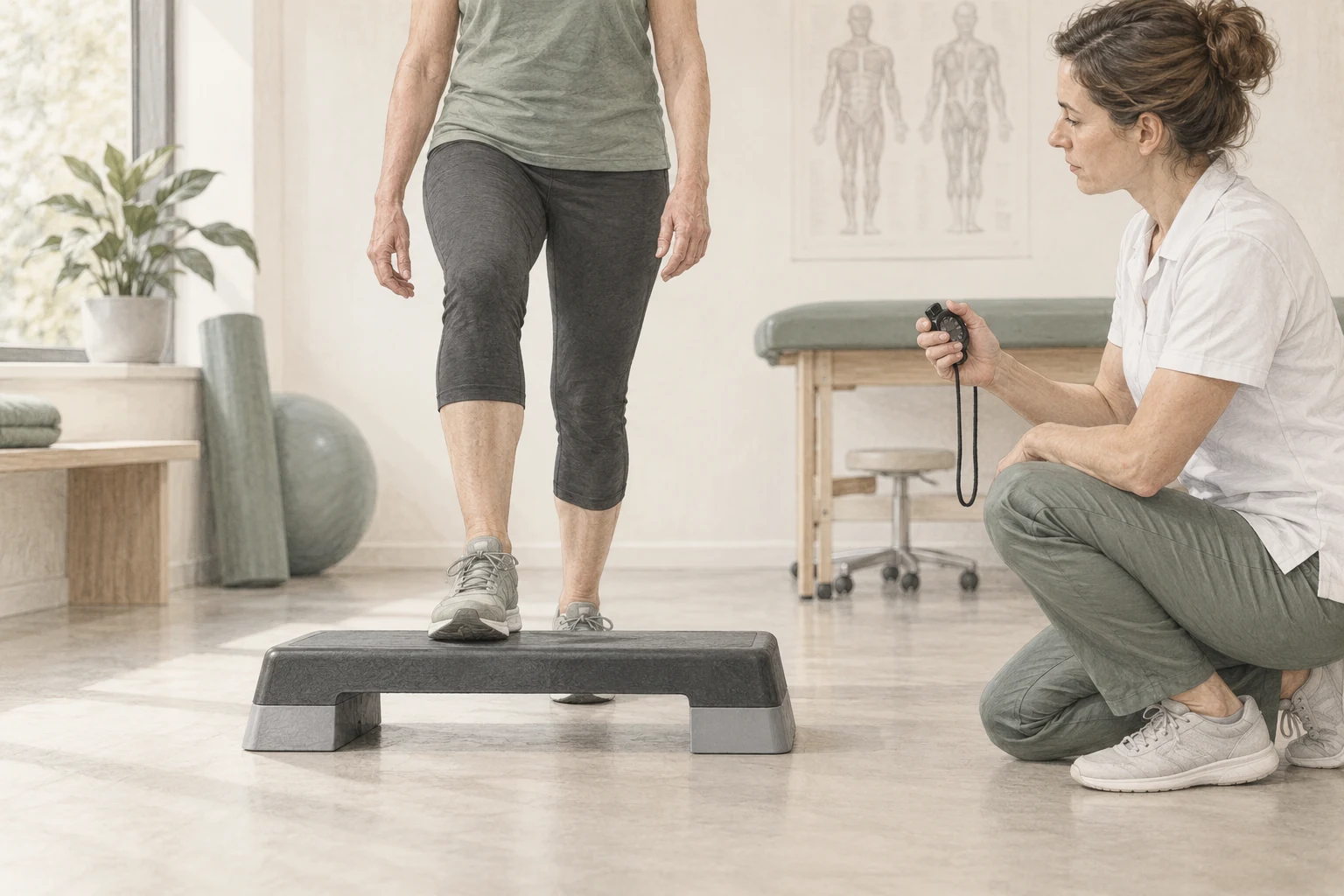
In the case of symptoms of the tendons, it is relevant how exercises and daily loads connected. Were the exercises feasible, did you understand when you could build and could adjust workload? Problems are information for a better plan.
The Achilles guideline places active treatment at the centre. That doesn't mean you're to blame for the lack of results. A plan can be too complicated, insufficient to match your capabilities or too little to be evaluated.
Make concrete what really happened. I practiced less because the reaction continued to increase for two days tells something different than I often forgot it by changing shifts. Both situations require a different solution. It's not gonna help with a symptom about counseling.
Re-assess an additional proposal
After a disappointing result, other techniques can be offered. The same questions apply as at the first choice: what problem is dealt with, what is the justification and what outcome is followed? The previous investment does not automatically make a new treatment meaningful.
Be careful with statements that are not testable, such as that your body has yet to be activated without any clear evaluation. A proposal becomes more useful when there is a specific reason for change and a limited follow-up.
A combination treatment deserves additional explanation. That one part didn't help, doesn't prove that adding a second part will help. Ask if research into the combination fits your diagnosis and the techniques actually used.
Make room for time and a decision
Recovery may take longer than a short treatment series. Still, giving time is something other than treating it indefinitely. You can stop using an additional technique and continue with an active recovery plan.
Make a distinction between the evaluation of the device and the evaluation of your total functioning. The device can have insufficient added value while you are still making progress with customized guidance. This prevents all possibilities from being written off because one treatment did not help.
I want you to figure out what's gonna be different in the next period. Without change in approach or questioning, many agreements can continue without new insight. A targeted trial period has a purpose and an evaluation time.
Prepare the follow-up consultation aimed at
Please include an overview of the following points:
- The original diagnosis and the main treatment target.
- What sessions you've had and what technique has been used, as far as we know.
- The change in pain and functioning.
- The performance and tolerability of exercises.
- Important changes in work, sport or health.
- Your question for the follow-up: explanation, adaptation, research or second assessment.
A second assessment may be useful if there is persistent doubt as to whether the plan does not remain sufficiently clear. Bring earlier reports, so that the conversation builds on what is already known.
The aim is not to give the former clinician right or wrong afterwards. You're looking for an actual explanation and a next step that fits in with the information that's in there right now.
Frequently asked questions
Should I try more sessions if the first sequence didn't help?
That's not an automatic follow-up. Ask which new information justifies additional sessions and how the result is assessed. If the added value remains unclear, quit shockwave and continue with a different approach can be more logical.
Doesn't it mean that the tendon is severely damaged?
No, you can't derive that from the treatment response. Treatment can have little effect for various reasons. The condition of the tendon and other possible explanations should be assessed on the basis of the overall pattern of symptom and investigation.
Is an MRI necessary?
Only if there is a question that needs to be answered with imagery and the result can change the policy. Sometimes re-examination and a better plan are enough. Ask which diagnosis or decision an MRI should clarify.
Can I get another shockwave later?
This calls for a new assessment; an earlier set of relevant information. In some diagnoses, guidelines limit recurrence within the same episode. Therefore, first discuss why repeating would be different from earlier and which alternatives are available.
Sources and evidence
- guideline Achilles tendinopathy – diagnosis (2020) ↗
Clinical diagnosis, targeted imaging and limits of ultrasound information.
- guideline Achilles tendinopathy – Conservative treatment options (2020) ↗
Education, stress and exercises as a basis; consideration of additional treatments.
A personal follow-up step
From insight
to an appropriate plan.
At a paid intake, we'll discuss your symptom and do targeted research. ultrasound is included at no extra cost when it makes sense. Any treatments are agreed separately.
View the initial consultation