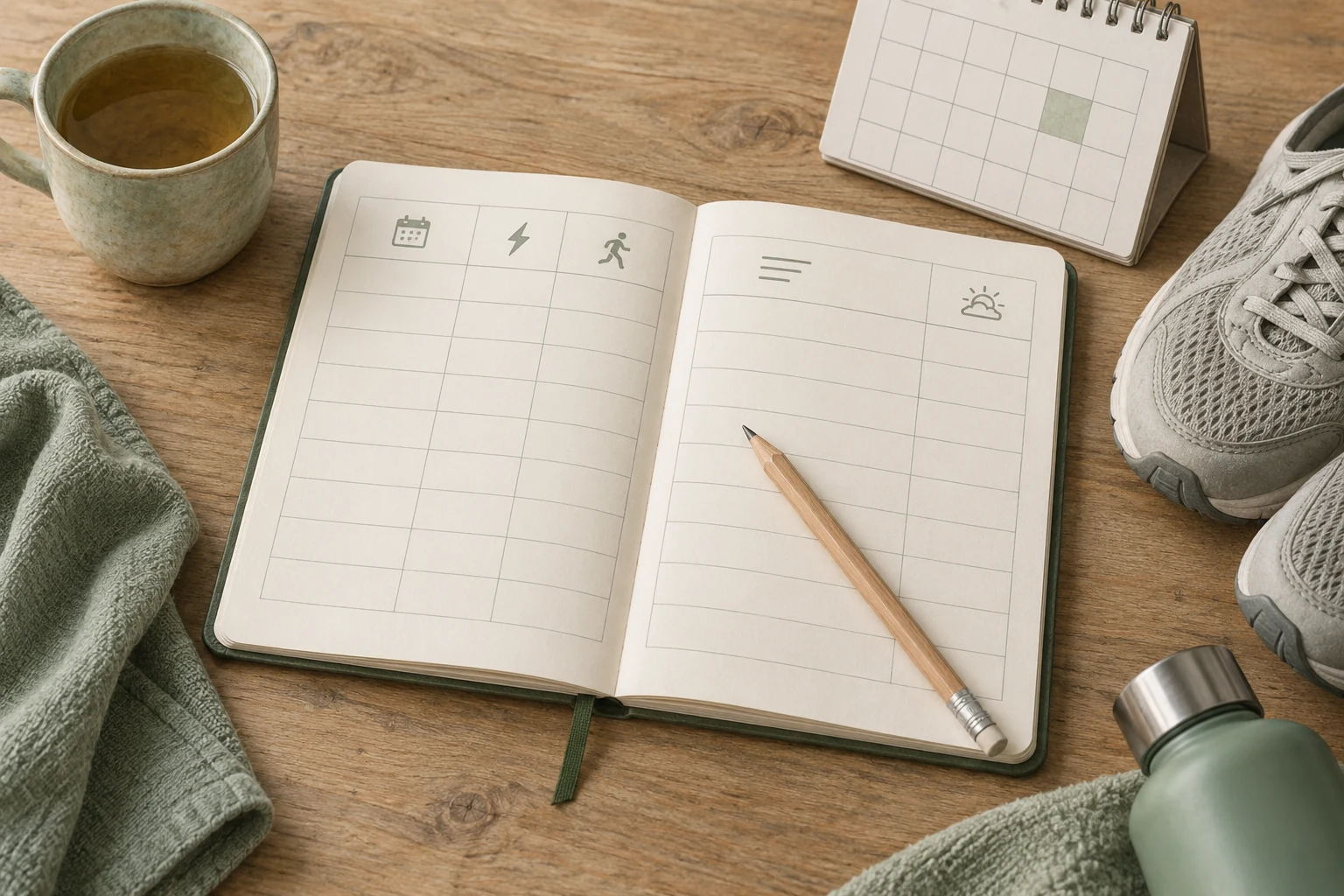
Write the gradient on one page
Start with when you first noticed the symptom. Was there a clear event or did the nuisance gradually arise? Then record some important changes. A long diary text is not necessary; the moments when something changed are usually the most useful.
Think of a different sports load, new work, a period with less activity or a relapse after improvement. Also indicate whether the pain site remained the same or shifted. That helps us understand the pattern.
The Guidelines for rotator-cuff symptoms highlights a broad history, with attention to, among other things, origin, daily requirements, prior care and goals. Although the details vary, this broad preparation is a useful starting point for your conversation.
Describe what you can and can't do
An intake isn't just about pain. Tell us what activities are limited and what is still successful. That gives a better picture of your functioning than just the highest pain score of the last month.
Choose two or three identifiable tasks. For example, walk to a store, use stairs or take something above shoulder height. Describe duration, effort and response later. It's about information from your ordinary life, not testing yourself extensively before the appointment.
Also indicate what you've been avoiding. Sometimes the symptom seems calmer while you've dropped important activities. This is relevant to the treatment plan and to the way progress is assessed later.
- Create a short timeline
Note the beginning of the symptom and major changes in work, sport or symptoms.
- Describe your daily life
Choose identifiable tasks: what succeeds, what do you avoid and how do you react afterwards?
- Collect relevant information
Bring previous treatments, available reports, medications and other medical details.
- Write down your main question
Name your main goal and practical boundaries. After the call check what's next.
Make previous treatment just enough
Write briefly by previous approach what you did, how long and what it yielded. In exercises it is useful to mention whether you had guidance and how you could build up. With device treatment you can call the technique if you know it.
For example, use this format:
| Previous step | What are you writing? |
|---|---|
| Exercises | What kind, how feasible and how built up? |
| load advice | What kind of activity actually changed? |
| Treatment | What was done and what effect did you notice? |
| Research | What question was investigated and what was the conclusion? |
The goal is not to assess previous concerns with a report figure. The information prevents repetition without reason and helps identify which parts have not yet been worked out.
Bring relevant medical data
Medication, other conditions, surgery and implants may affect diagnostics or treatment choices. Bring a current review if you have it. Also report new symptoms that do not directly relate to the tendon.
In Achilles's case, the Dutch guideline that sometimes an underlying condition or other explanation should be considered. That's a reason not only to discuss the painful place.
Previous reports are often more useful than a loose picture of a screen. Take the conclusion and date. You don't need to pre-order new investigations everywhere; during the intake it is assessed which information is really missing.
Choose your main question and preferences
Before the meeting, think about the purpose of the conversation. Do you want to understand the diagnosis, review a blocked trajectory or discuss the location of shockwave? This helps to use the available time in a targeted way.
Also identify practical limits. How much time can you spend on exercises, what can you change at work and what costs are feasible? A plan that does not take that into account can sound good but difficult to implement.
Write one main question at the top of your preparation. If the conversation provides a lot of information, you can come back to that. An example is: What first step will help me work safely towards my usual walk?
Check at the end what's agreed
An intake is only clear when you know what the probable explanation is, what the next step is and when will be evaluated. Repeat the plan in your own words if necessary. That makes it visible whether something is still unclear.
In the case of proposed research, ask which question will be answered. At Shockwave Clinics the intake is paid, with free ultrasound when clinically meaningful. This means that not everyone automatically gets an ultrasound or shockwave treatment.
Departure with an overview of the plan, any exercises and contact arrangements. If there's another report to be requested, see who does it. For example, the preparation is followed by a concrete next step rather than just a collection of opinions.
Frequently asked questions
Do I need to know in advance which tendon hurts?
No. Describe where you can feel symptoms and what activities. You don't have to make anatomical diagnose yourself. The clinician uses your information and research to assess which structure or other explanation is likely to be involved.
Should I take all the old research footage?
Take what you have available, especially reports with date and conclusion. The clinician can decide if the images are necessary. Do not arrange on your own initiative new research only to complete the intake; the clinical question comes first.
Can someone come with me?
That can help if you expect a lot of information or have trouble remembering everything. Pre-match practical possibilities with practice. You can also write down your questions and have the plan confirmed in your own words.
What if I couldn't keep up with earlier exercises?
Tell us what caused that, for example pain reaction, unclearness, time or practical problems. That information helps to make the next plan better. The conversation should not be about guilt, but about an approach that you can actually implement.
Sources and evidence
- Desmeules et al. – Rotator-cufftendinopathy guidance (2025) ↗
Diagnostics and active treatment of rotator-cuff symptoms; ESWT not recommended without calcification and possible option for calcification.
- guideline Achilles tendinopathy – diagnosis (2020) ↗
Clinical diagnosis, targeted imaging and limits of ultrasound information.
A personal follow-up step
From insight
to an appropriate plan.
At a paid intake, we'll discuss your symptom and do targeted research. ultrasound is included at no extra cost when it makes sense. Any treatments are agreed separately.
View the initial consultation