Start with the question to be dealt with
Those looking for shockwave soon encounter a comparison of devices. For a patient, the most important comparison begins earlier: are both proposals about the same symptom and the same probable cause? A treatment for fasciopathy plantar cannot be compared one by one with a proposal for nerve pain under the foot.
Ask first which diagnosis is used and what findings support it. If there is still important doubt, it should remain visible. A technically precise treatment does not solve diagnostic uncertainty by itself.
The treatment goal also helps. Do you want to tolerate a particular activity better, break a recurring pattern or weigh another treatment option? The more specific the question, the easier it becomes to assess whether a technique fits.
What's different in physics?
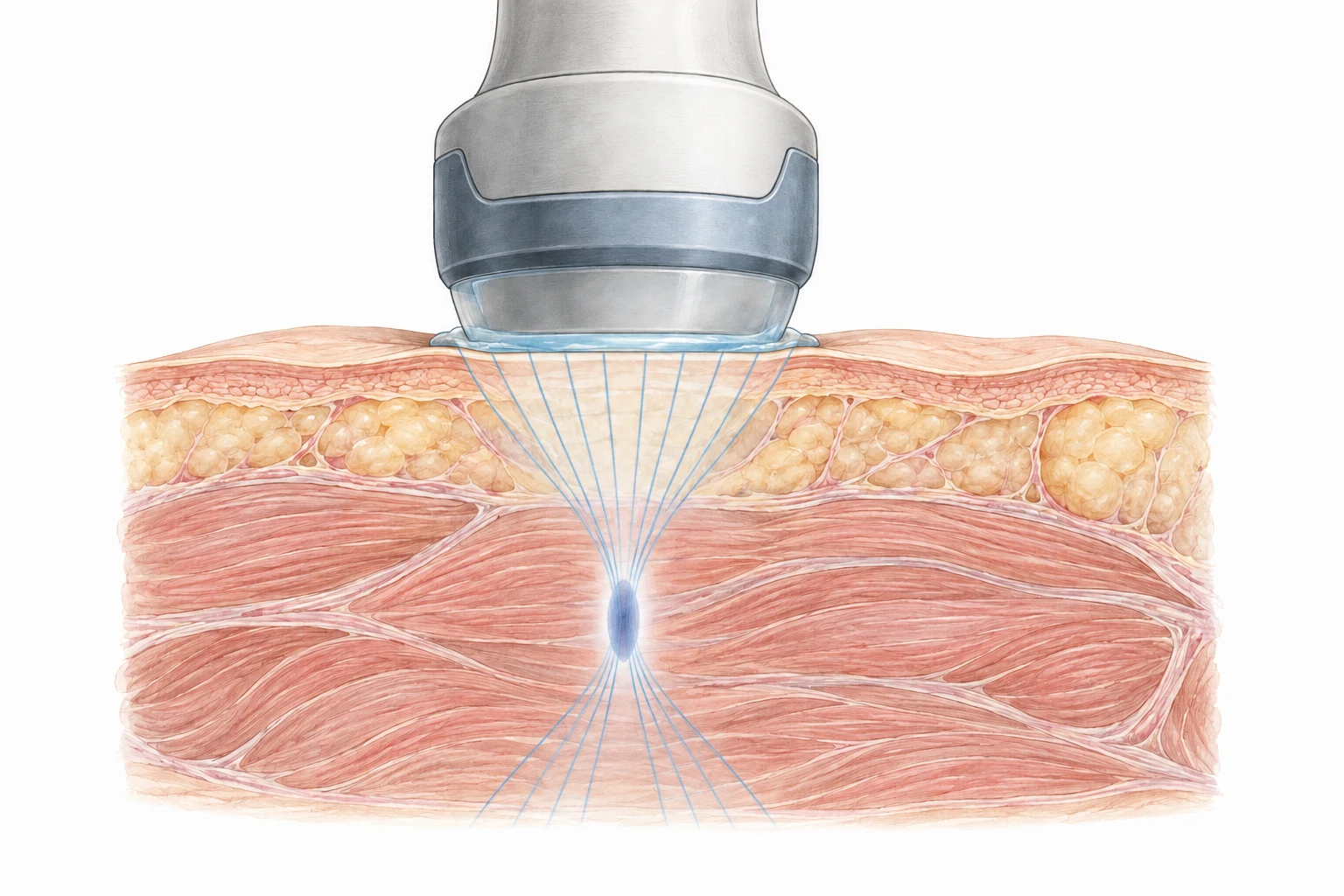
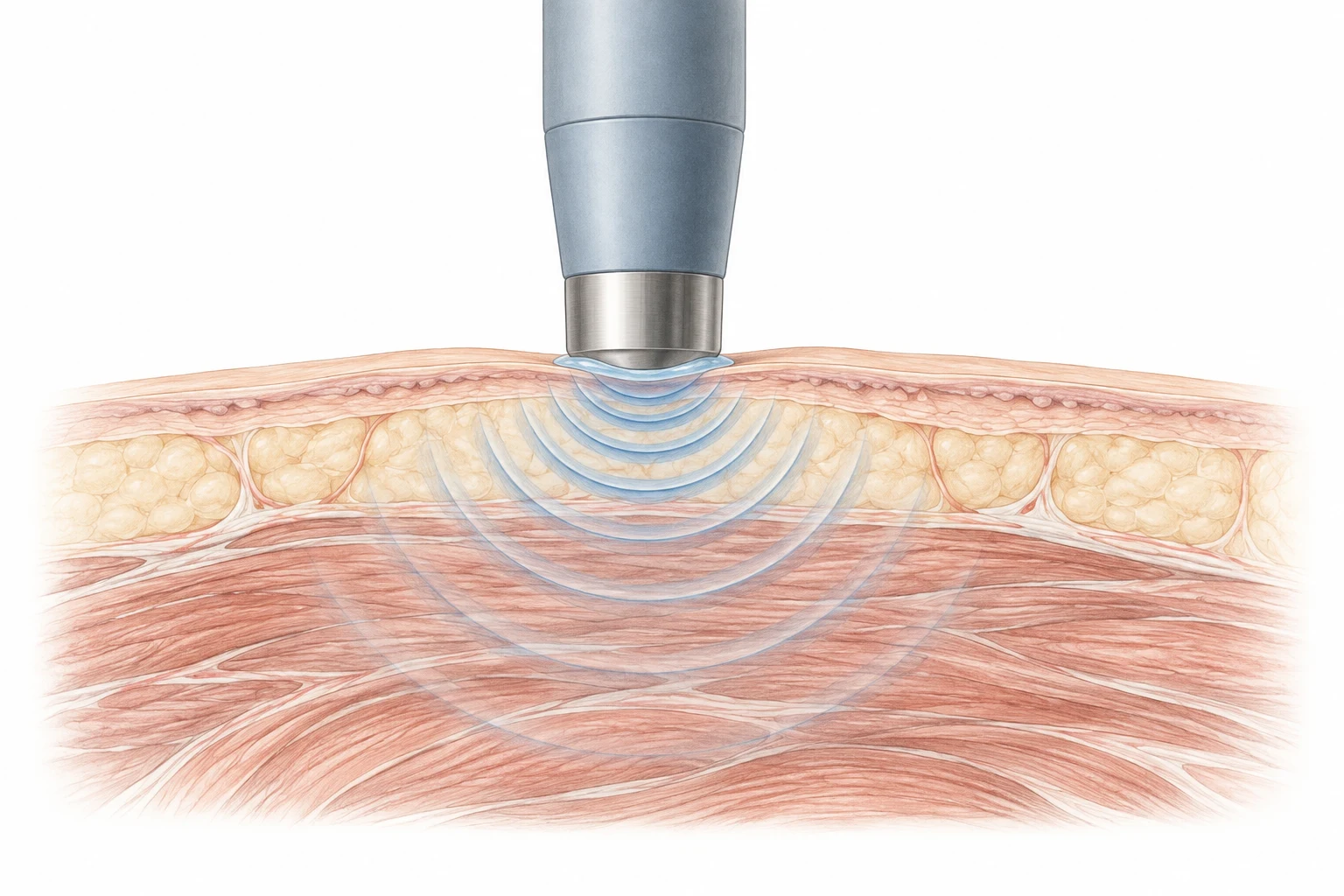
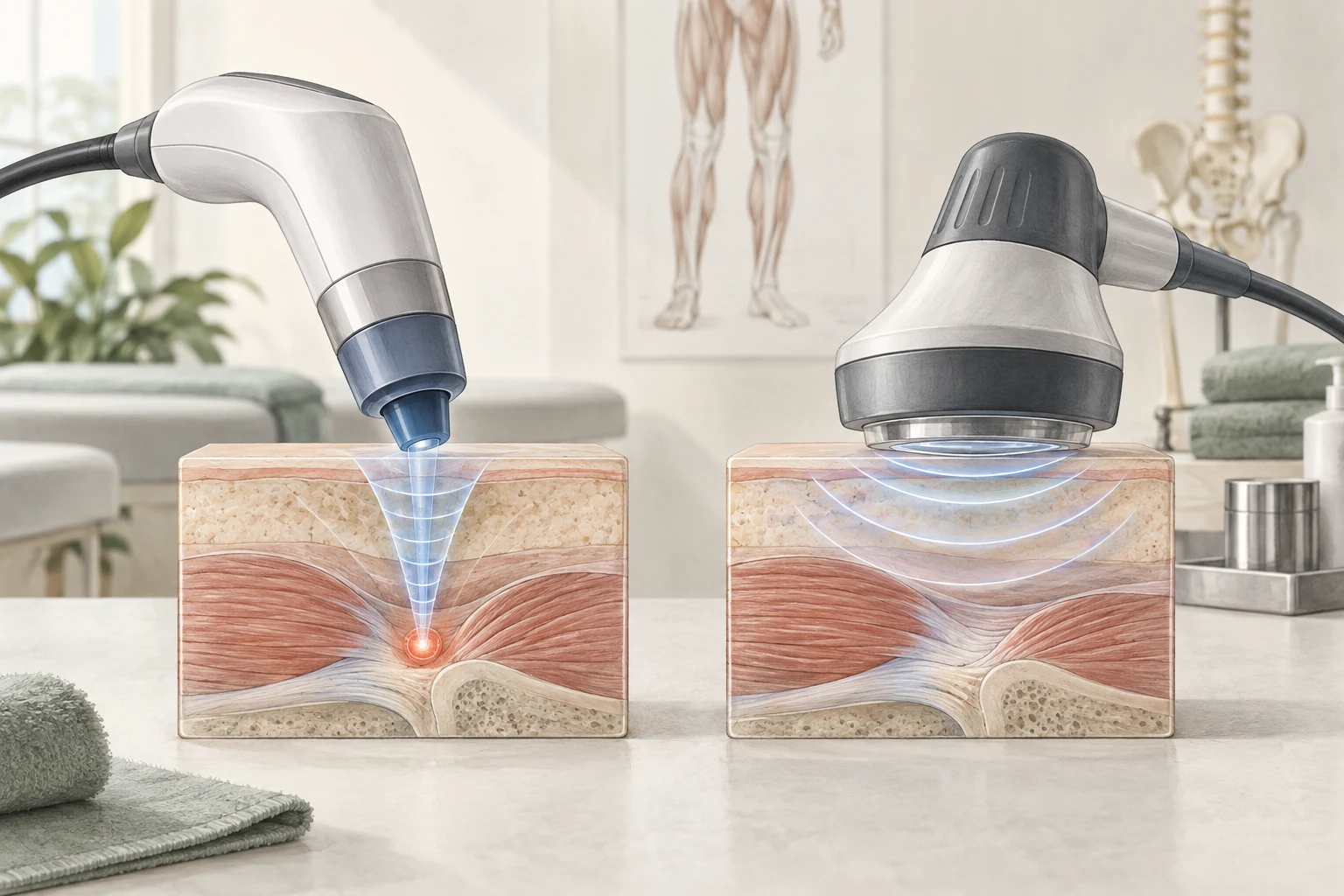
Focused shock waves are beaming energy into a target area. Radial pressure waves are spreading from the point of contact. The ISMST appoints both as different techniques. This includes differences in the generation and description of the institutions.
A number on one device cannot be compared to a number on the other. The words high and low also get meaning within the technique and application used. For the treatment choice is relevant why a certain distribution of energy would be needed.
A table can organize the conversation without identifying a winner:
| Question | Why it counts |
|---|---|
| Where's the target area? | The location and size must be appropriate to the application. |
| What technique has been studied? | Evidence may be technical and diagnostic. |
| What can you bear? | The feasibility is included in the treatment plan. |
| How do we follow results? | The choice needs to be re-evaluated later. |
What does research say about the choice?
Studies differ in participants, treatment institutions and additional care. A study in which people also do exercises answers a question other than a study in which only a device treatment is given. So watch the whole treatment program.
In heel pain by fasciopathy plantaris calls the Dutch guideline of 2026 both techniques within a defined additional approach. That supports a conversation about choice. It does not prove general superiority of one technique for all symptoms.
A careful centre can therefore sometimes say that the security is limited. That is useful information: you can then consider costs, load and personal preferences without assuming a guarantee. Hiding uncertainty behind device names makes a decision less clear.
Opinions shall not be unanimous: Thuisarts doesn't recommend shockwave with long heel spur. Discuss this difference with your clinician; an additional option is not a self-evident standard treatment.
Three examples of thinking to recognize differences
Let's say two proposals for heel pain use the same diagnosis. One clinician first advises a more elaborate practice program, the other directly shockwave. Then the first discussion is not focused on radial, but on whether the basic approach has already been sufficiently implemented.
Then suppose you have shoulder pain and a scan of calcification. Then it has to be explained whether that finding fits your symptom and what evidence is part of this diagnosis. An investigation of symptoms from the tendons in the shoulder without calcification does not automatically answer the same question.
A third example is a combination proposal. Focused, radial and an additional technique are offered together. Then ask for each part what separate purpose it has. More parts make a proposal more comprehensive, but the added value still needs to be argued.
In case of symptoms of tendons in the shoulder without calcification, the JOSPT guideline from 2025 Shockwave off. An indication per diagnosis should therefore also be substantiated.
How do you weigh your own preference?
You can attach importance to travel distance, tolerability, time or cost reduction. Those preferences are legitimate, as long as you understand what they mean for the choice. The technically most comprehensive treatment is not automatically the best connection to your goal.
Put three priorities on paper for a conversation. For example: you want to continue to be able to do your job, you don't want to go through endless loose treatments and you want to understand what you can do for yourself. This gives a personal framework to the assessment.
Also ask what happens if you don't choose a shockwave for the time being. A good conversation contains an understandable alternative and a moment to revisit the choice. You can agree to that on the basis of content, without the feeling that there is only one chance of recovery.
When is a proposal sufficiently clear?
You should be able to explain in your own words after the conversation which structure is probably involved, why a technique has been chosen and to which improvement is measured. If that is not possible, additional questions will make sense.
Check whether the evaluation can also result in discontinuation or adaptation. Treatment does not automatically become more appropriate because it has already been invested in time and money. The original goal remains the starting point.
Keep the explanation, any research results and your own questions. It helps to coordinate with other operators. It also prevents a subsequent choice from revolve around a device, while the most important conversation is about your symptoms, functioning and capabilities.
Frequently asked questions
Is focused shockwave the professional variant of radial?
Such a ranking is misleading. They are different techniques with different properties. Professionalism is mainly demonstrated by diagnostics, support, safe execution and evaluation. The presence of a focused device in itself does not indicate how carefully the care is decorated.
Can my preference be decisive?
When more than one reasonable option exists, your preference should be considered. First, the potential benefits, limitations and practical consequences must be clear. You don't have to make a technical choice alone; the clinician has to explain which options medically fit.
Why does another clinician recommend anything else?
Dealers may differ in diagnosis, interpretation of evidence and assessment of previous care. Ask which assumption leads to the other proposal. This often results in more than just trying to determine which device or the clinician is right.
Is a combination always more thorough?
A combination can have a logical purpose, but requires justification. Each additional part can add time, cost or load. Ask what improvement you expect from this and how will it be assessed if that addition really has value for your situation.
Sources and evidence
- ISMST – Recommendations and definitions ↗
Technical differences, clinical selection and safety balances in shockwave.
- guideline Fasciopathy plantar – shockwave therapy (2026) ↗
Place of ESWT after education and practice therapy; effects, evaluation and adverse reactions in fasciopathy plantar.
- Thuisarts – long-term heel track and treatment selection (2026) ↗
Patient advice in sustained heel pain; negative advice on shockwave differs from the specialist guidance.
- Desmeules et al. – Rotator-cufftendinopathy guidance (2025) ↗
Diagnostics and active treatment of rotator-cuff symptoms; ESWT not recommended without calcification and possible option for calcification.
A personal follow-up step
From insight
to an appropriate plan.
At a paid intake, we'll discuss your symptom and do targeted research. ultrasound is included at no extra cost when it makes sense. Any treatments are agreed separately.
View the initial consultation