Name what you're afraid of.
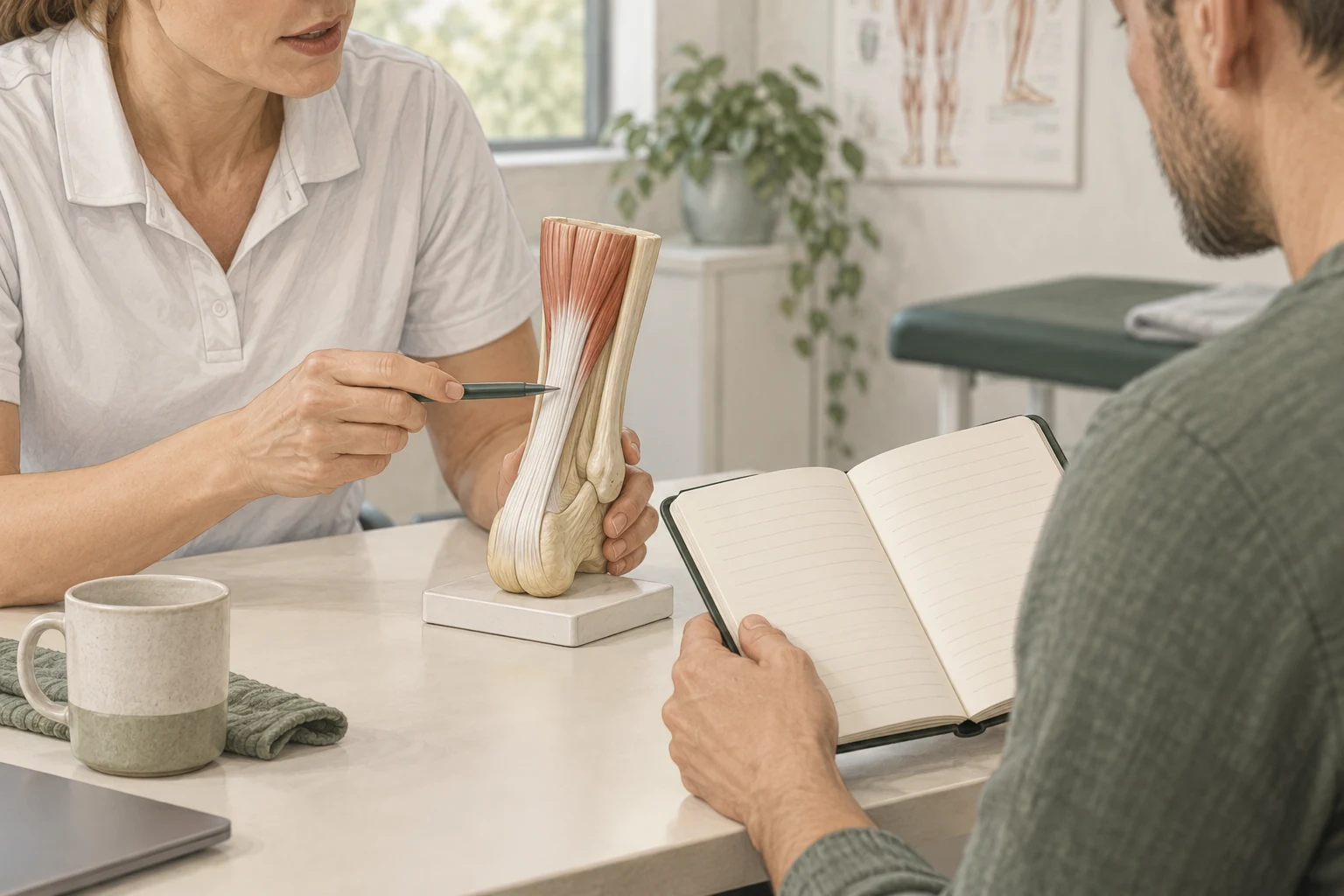
I don't have the courage to exercise anymore, but there are a lot of concerns. Maybe you're afraid of a tear, you're expecting after pain for days, or you're afraid of missing work again. Write down the expectation in your own words. A trader can respond better to a concrete concern than to the general question of whether moving is good.
It may also be that earlier explanations sounded contradictory. One person said peace, another said perseverance, and a scan report used an unclear term. Tell me what verdict you got stuck with. Ask for an explanation that matches your symptom and the movement you want to resume.
You don't have to wait until you can express yourself convincingly. An example from everyday life is enough: leaving a bag standing, avoiding stairs or canceling training. It reveals what the uncertainty does to your day.
Pain and confidence are part of one assessment
The IASP describes pain as a personal experience in which biological, psychological and social factors can play a role. Someone's pain must be taken seriously. The influence of concerns or circumstances does not make the experience any less real.
At the same time, a general explanation of pain can never determine that your specific movement is safe. This requires the symptom story and, if necessary, research. Ask what has already been assessed, what uncertainty still exists and what change is the reason to contact again.
That clarity can prevent you from constantly deciding whether a sensitive moment means a warning. A useful plan gives both room to move and limits for re-evaluation. Neither need be filled in with great certainty or reassuring slogans.
Make a big concern a small research question
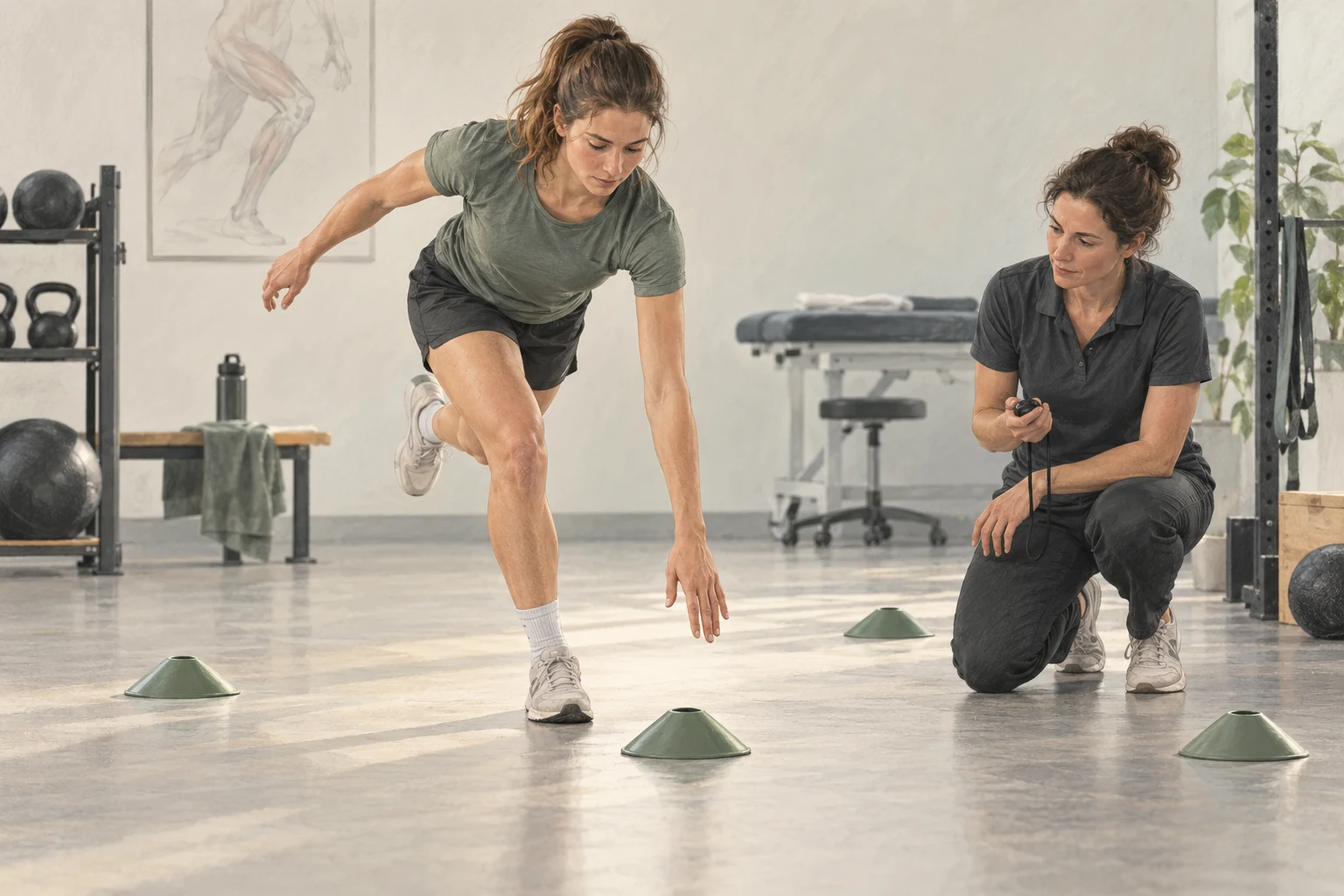
Choose one activity that you think is important. Then describe a simpler version that you can discuss with the clinician. The goal is to gain experience with a targeted question, not prove that you have nothing to be afraid of.
| Question | Example of a fill-in |
|---|---|
| What do I want to do again? | Join a part of a training course |
| What do I expect? | I think the symptom is getting worse right away. |
| What step are we discussing? | An agreed, predictable exercise |
| What are we following? | Implementation, trust and response afterwards |
| When do we evaluate? | At a prearranged time |
The interpretation is an example of thinking, not a sports schedule. In the case of another symptom, the first step may be a domestic act. Keep the step meaningful: an exercise becomes easier to understand when it is clear what daily activity is associated with it.
Also discuss which support is desired. Sometimes explanation helps; sometimes you want someone to be present at the first performance. That's useful information for guidance.
Keep collecting information without constantly checking
After an agreed activity you can look back briefly: came the expected response, what went differently and what does that mean for the next step? Even when an attempt was difficult, it can provide information about the chosen task or guidance.
Avoid any movement becoming a new maximum test. Always looking up the most sensitive place can make it difficult to follow the course. A pre-selected task under identifiable circumstances results in a clearer conversation than dozens of separate control moments.
Thuisarts on long-term pain recommends maintaining meaningful activities, pacing activity and seeking help if movement becomes difficult. Applying this advice remains individual. Discuss which activities fit your diagnosis and what to do if symptoms clearly worsen.
Give the environment a useful role
Well-meant reactions can take over from anything to encourage you to push harder. Tell your neighbors what kind of help fits the appointments you made with your clinician. For example, performing a planned activity together or reminding you of an agreed evaluation, without assessing each movement.
In sport, a trainer can make the task predictable. At work, a concrete task agreement can give you a rest. Do not ask these people to make a diagnosis; ask for help in implementing a clear plan.
If care and anxiety affect mood, sleep or daily life, discuss it with the GP. Thuisarts also mentions support by a practical supporter or psychologist in long-term pain. Such help can exist in addition to physical guidance. You don't have to prove which part of the symptom is physical or psychological.
Trust doesn't grow according to a fixed calendar
A planned step can go well one time and be more difficult later. That doesn't mean you're failing or the whole plan is worthless. See together what changed and if the step is still appropriate. An adjustment may relate to the task, circumstances or explanation.
New obvious weakness, other pain or loss of functioning should be re-evaluated. Do not use an earlier reassurance as a reason to ignore changes. On the other hand, a known fluctuation does not automatically result in a new scan or a complete ban on movement.
In addition to pain, evaluate what you choose to do again. Do you dare to perform an agreed act, understand the response better and do you know when to ask for help? Those are concrete points of discussion. The goal is more useful security in everyday action, without requiring all doubt to disappear first.
Frequently asked questions
Does movement fear mean the pain is between my ears?
No. Pain is a real, personal experience in which multiple factors can play a part. Fear can be caused by pain and confusion. Discuss both, so that physical assessment and support in confidence complement each other.
Do I just have to move through the pain?
A general task to continue is not enough. First, discuss the diagnosis, activity and response you wish to follow. An appropriate step has clear commitments; new or strongly changing symptoms call for a re-evaluation.
What if I can do an exercise technically but I can't?
Tell me what concrete outcome you fear. Perhaps a simpler version, more explanation or guidance will help with the execution. The goal is to gain experience, without doubt to wave away or force a movement.
When can psychological counseling help?
Discuss this with the GP when fear, gloom or powerlessness has a lot of influence on your life. Support may exist in addition to handling the physical symptom. She doesn't mean that any further physical examination is never necessary.
Sources and evidence
- IASP: revised definition of pain (2020) ↗
Pain as personal experience with biological, psychological and social influences; respect for experience.
- Thuisarts: pain that lasts longer ↗
Support for care and functioning, meaningful activities and additional guidance for long-term pain.
A personal follow-up step
From insight
to an appropriate plan.
At a paid intake, we'll discuss your symptom and do targeted research. ultrasound is included at no extra cost when it makes sense. Any treatments are agreed separately.
View the initial consultation