The first minutes are an observation, not a final result
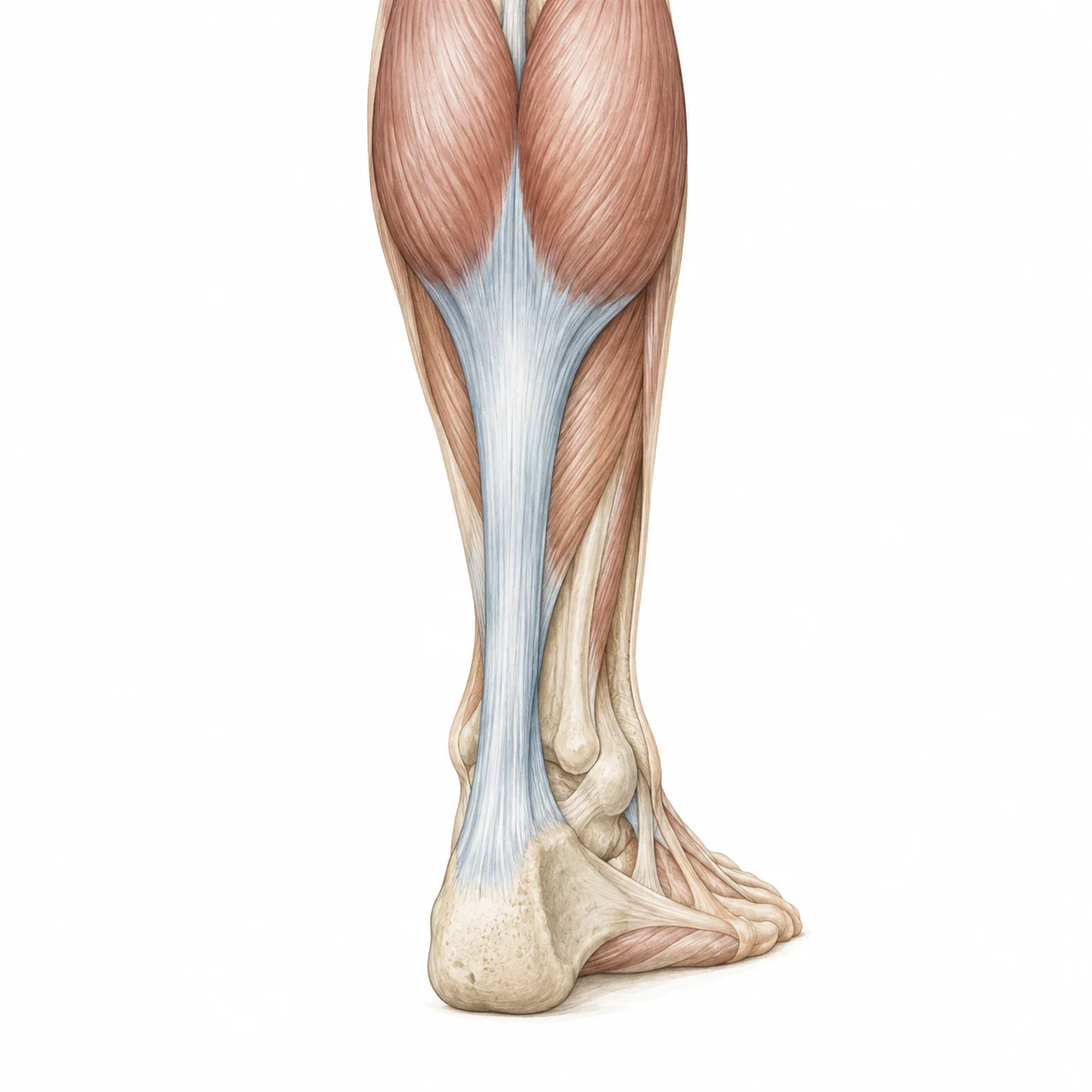
When standing up, the back of the ankle can feel stiff. Sometimes the first steps are sensitive and then walk easier. This recognizable pattern is also described in the information from Thuisarts. It may fit Achilles tendon symptoms, but it is not enough to make a diagnosis on its own.
The practical value is mainly in a comparison with your own usual situation. Is starting about the same as last week, or do you notice a marked change? Look at the rest of the day, too. A short stiff start with good functioning is a different story than increasing relief when walking and difficulty dropping off.
Place and feeling help to choose words exactly
Stiff can mean that the movement feels limited, that the first steps hurt or that you are afraid to move on. Try to break up those experiences. Point out whether it's with the heel bone or higher in the tendon. Also indicate whether you notice a thickening, shoe pressure or a changed sensitivity.
The diagnostics guideline uses multiple clinical characteristics together. A grievance word like morning stiffness therefore has meaning within a larger whole. When you tell me exactly what you mean, the clinician can ask more targeted questions. You don't have to test yourself how much pain a one-legged exercise evokes before you go to the appointment.
Connect the morning to what really happened.
Training from the previous day is often the first thing you think about. Nevertheless, walking, a busy service, long standing or an unexpected sprint to the train can be relevant. Note special changes without distracting a cause from every detail. Coherence becomes clearer when the same pattern returns more often.
One example: after a quiet running practice, the morning is usually similar, but after a day's work plus the same training, starting is clearly more difficult. Then the sum is a better interlocutor than the conclusion that running is always wrong. It can help change the timing or total quantity. What adjustment is appropriate follows from your response and goals.
Use a small observation log
A morning log doesn't have to be an extensive project. Choose a limited number of points:
- Where do you feel the usual symptom?
- Can you normally start walking or can you spare the foot?
- Will the start-up take about the same time as before?
- What was the exceptional load that preceded it?
- How does a permanent activity go later, like walking to work?
One short note per measurement time selected is often sufficient. The goal is to feed a treatment conversation, not control the tendon all day. If you notice that registration is mostly troublesome, choose a simpler goal together. For example, a fixed route can run with less adjustment. That's also information about functioning.
A stiffer morning does not automatically require more rack
The tendency may arise to stretch the Achilles Tendon further and further until the tight feeling subsides. That reaction is not sensible for every type of symptom. In case of a pain in the attachment, deep ankle bending can be unpleasant. The first choice of practice should therefore be in line with the assessed location and loadability.
Discuss how to make the transition to walking practical. Start quietly, prepare suitable footwear and not immediately plan a rushed heavy task are possible adjustments. They shall not replace a training programme where necessary. The goal is also not to start the day completely numbly every morning, but to learn to recognize a predictable reaction and act appropriately in the event of changes.
When is the morning a reason to contact?
Ask for assessment when stiffness and pain continue to increase significantly, your daily functioning deteriorates or the pattern changes suddenly. symptoms to both Achilles tendons or other painful joints may be relevant additional information. Report such details without assuming a systemic condition yourself.
A sudden snap followed by difficulty pushing off is different from ordinary morning stiffness and needs immediate assessment. For gradually developing symptoms, the overall trend matters. At review, compare morning symptoms, daytime function and whether the exercise plan is manageable. This prevents a single measurement from defining the whole recovery process.
Frequently asked questions
Is a stiff Achilles Tendon always tendinopathy in the morning?
No. It is a characteristic that can fit Achilles tendon symptoms, but the diagnosis requires more information. The exact location, relationship with load, research and any other phenomena together determine which explanation is plausible.
Does being stiff means I did some damage the other day?
You can't tell that directly from that. A changed response may be a reason to discuss the total load. Look at repetition and functioning instead of seeing one morning as evidence of damage. If there's a marked deterioration, you'll be re-evaluated.
Do I have to measure the duration in minutes every day?
That's not necessary. A simple description such as shorter, approximately equal or clearly longer may be sufficient. Choose an observation that stays useful and you do not constantly deal with the symptom. Discuss the trend at an appropriate time of evaluation.
Can't I work out with morning stiffness?
This depends on the complete situation, including pain, function and response to previous loads. The morning alone doesn't decide that. Tune personal criteria for training, adjusting or pause and take a clear change in the pattern seriously.
Sources and evidence
- Thuisarts — I'm suffering from my Achilles Tendon (2026) ↗
symptom pattern, morning stiffness and various advices on attachment symptoms.
- guideline Achilles tendinopathy — Diagnosis (2020) ↗
Distinctive insertion and centerpiece and clinical diagnostics.
A personal follow-up step
From insight
to an appropriate plan.
At a paid intake, we'll discuss your symptom and do targeted research. ultrasound is included at no extra cost when it makes sense. Any treatments are agreed separately.
View the initial consultation