Kilometers only tell part of the load
A quiet flat kilometer and a kilometer with short gears are not an identical task for your body. The same applies to a route with climbing, descending and bends. If you only compare the distance, part of the training change remains out of the picture. This difference is particularly relevant when restarting after symptoms from the tendons.
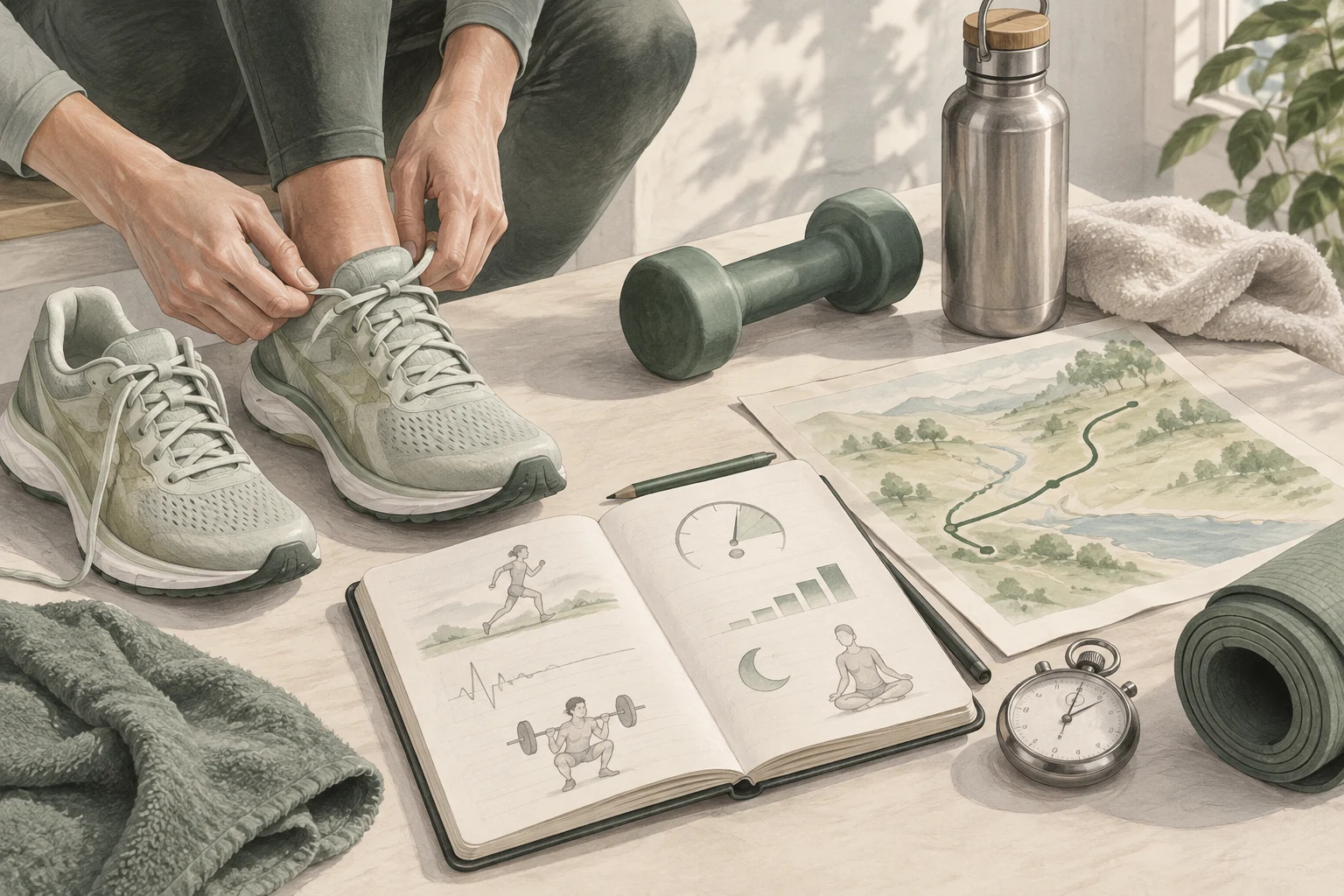
Therefore, in addition to distance, note the meaning of the session: walking quietly, accelerating, hillwork or a combination. You don't have to make a complicated math model out of that. The point is that a new stimulus is recognizable when you discuss the reaction. A training can be short on paper and still ask a lot different than your usual round.
Shows some research on speed
In a biomechanical research in recreational runners Calculated tension and rack of the Achilles tendon increased at higher speed. The researchers used measurements and a model to estimate the forces. This supports the importance of speed as a separate variable, but does not predict an individual injury risk or safe top speed.
Sprints are also more than a fixed higher speed: accelerating and repeated powerful shutting down is part of the process. Tolerating a quiet run doesn't prove that you can handle a series of fast droppings. The practical conclusion is to build speed consciously and not add unnoticed because the distance remains low.
A slope is not a simple button for more tendon'
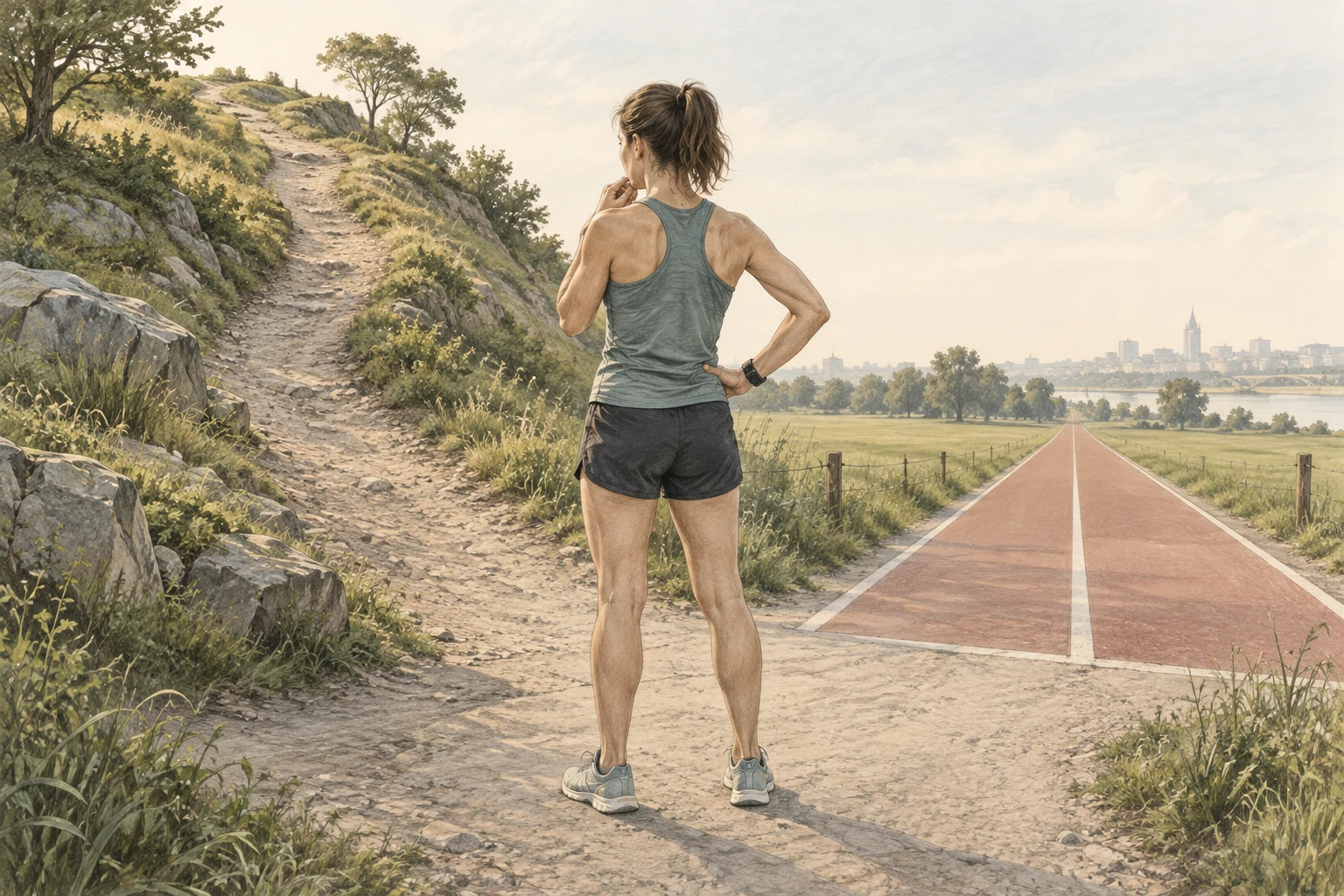
Walking up the mountain changes your attitude and take-off, but people often adjust their pace as well. As a result, the statement that each hill always gives a fixed amount of extra Achilles load is too simple. Downhill may increase other forces and control requirements. The subsurface, steepness and chosen speed influence the equation.
One small study on flat, uphill and downhill did not find a clear difference in the acute change in tendon diameter between the slopes with equalised energy load. That is not a treatment study, nor is it proof that hills for a painful tendon are always safe. It mainly shows why one biomechanical measure does not give a simple ranking of routes.
Make the first change small and recognizable
When a clinician or trainer finds hills or speed appropriate again, agree which part changes and what remains the same. A familiar route with one chosen element is easier to evaluate than at the same time more distance, faster pace and new terrain. Also the fatigue with which you start the session belongs in the conversation.
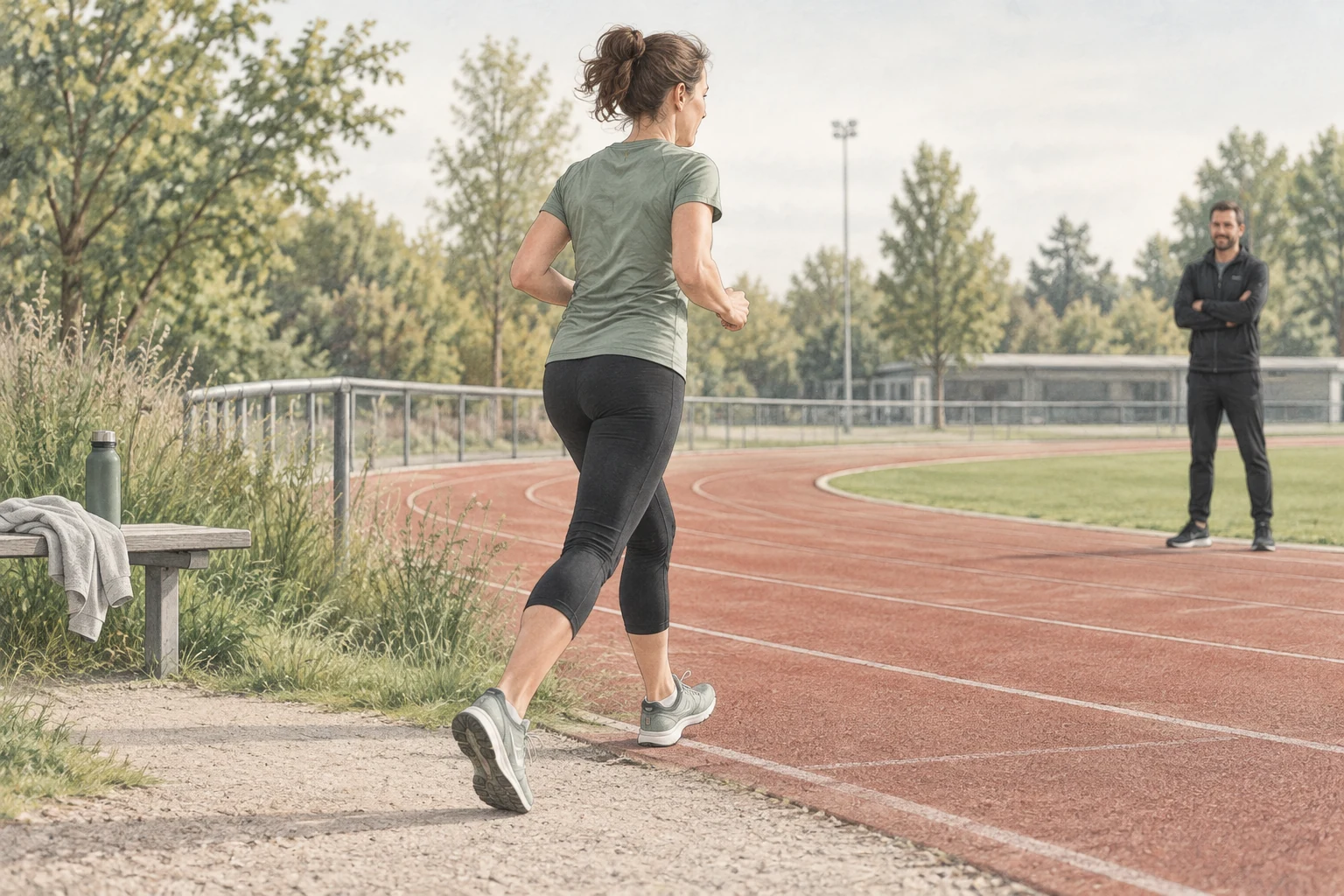
One example: you walk quietly again without a clear setback and want to go with your group to a hill training. The joint training can contain much more repetitions than you expect. A pre-arranged adapted part and a clear alternate route prevent social dynamics from determining your plan. The example shows how planning helps; it does not prescribe a training dose.
Use a comparison before and after training
| Component | Before the session | After the session and the next start |
|---|---|---|
| Speed | What gear are we adding? | How did it go off and keep walking normally possible? |
| Slope | How steep and how long is the chosen piece? | Did the known pain site change or start stiffness? |
| Repeat | How do we unintentionally prevent extra rounds? | Was the response repeatable compared to previous sessions? |
| Total Day | What work or hiking load preceded it? | Should daily tasks be adapted? |
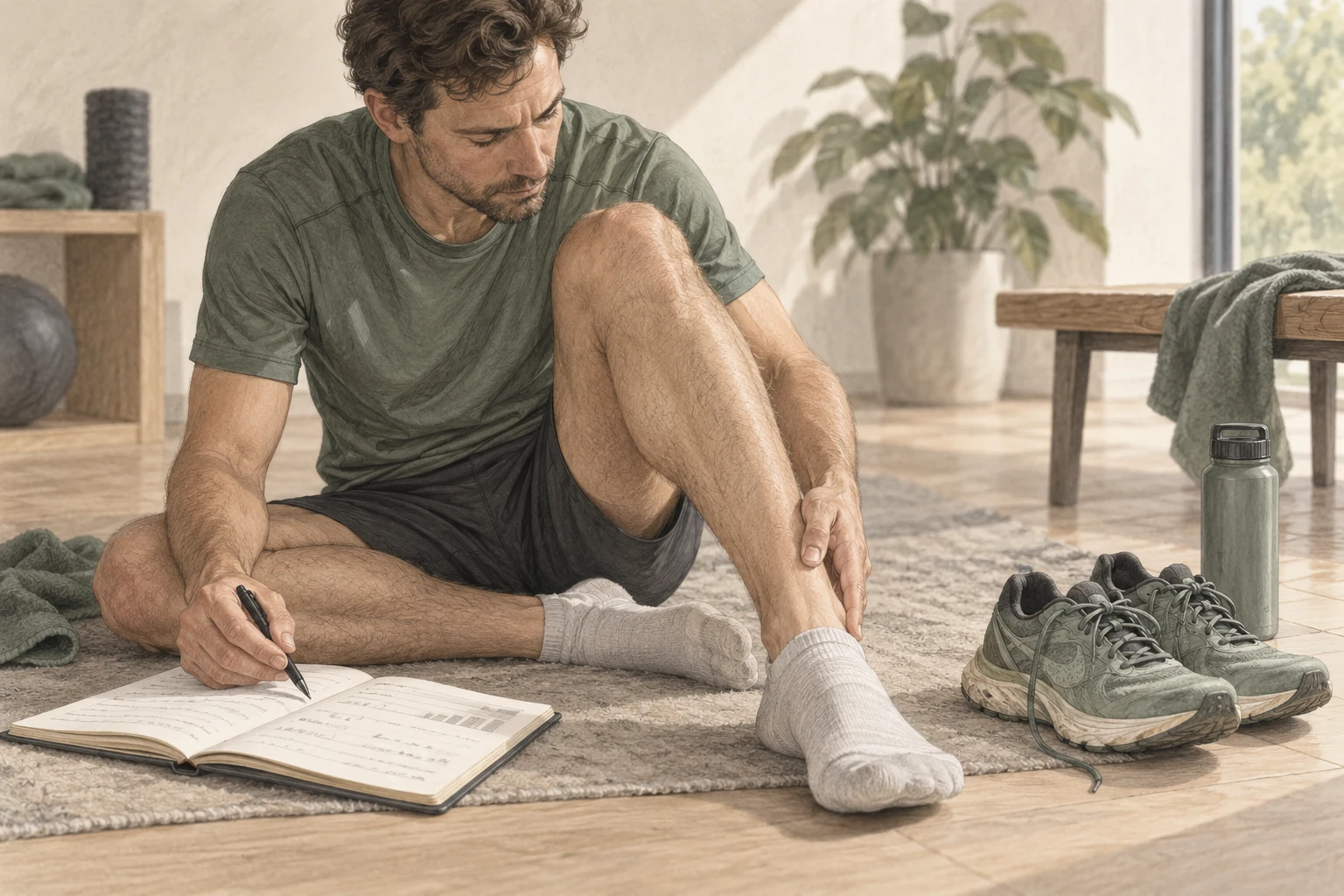
These questions give structure without having to monitor each pass. Discuss in advance what reaction means to repeat or reset the same level. That makes a less confusing day less confusing and helps prevent you from stopping altogether or continuing out of enthusiasm.
The final target determines which load is later required
For a recreational flat hiking trail you don't have to finish a sprint program. For football or track athletics, fast sales and repeated accelerations can be part of the ultimate goal. The structure should be in line with this, with sufficient attention being paid to the current possibilities.
Let the tendon be re-assessed if the symptoms continue to increase significantly, your walking pattern changes or a sudden new problem arises. The question then is not only what training part should be omitted, but whether the original explanation still fits. A good route back to sport makes differences between trainings visible and prevents distance from becoming the only number on which to base your decisions.
Frequently asked questions
Are hills always worse for the Achilles Tendon?
No. The load also depends on pace, steepness and execution. A slope changes the task, but does not give a universal harmfulness limit. In case of symptoms, it is wise to assess hillwork separately and to include the reaction in the construction.
Can a short sprint be heavier than a longer quiet piece?
A sprint requires a different, faster marketing and can therefore demand more parts despite the short distance. You can't just deduce load from meters. Therefore, describe speed and acceleration as separate training features.
Does a lab study prove what speed is safe for me?
No. Average measurements in a research group do not result in a personal safety limit. Participants, measurement method and circumstances differ from your situation. Research helps understand variables; an individual structure requires assessment of symptoms, function and sports requirements.
Do I have to bring back speed and hills at the same time?
That's usually harder to evaluate than one change at a time. Discuss which part is most important for your purpose and keep the rest clear at first. This way you can better post a response and choose a next step more targeted.
Sources and evidence
- Ertman et al. — Achilles tendon stress and strain cross running velocities (2023) ↗
Biomechanical research into changing load of a tendon at higher speed.
- Neves et al. — Achilles tendon cross-sectional area after hill running (2014) ↗
Slope and tempo should be interpreted together; no simple order of order from acute tendon measurements.
A personal follow-up step
From insight
to an appropriate plan.
At a paid intake, we'll discuss your symptom and do targeted research. ultrasound is included at no extra cost when it makes sense. Any treatments are agreed separately.
View the initial consultation