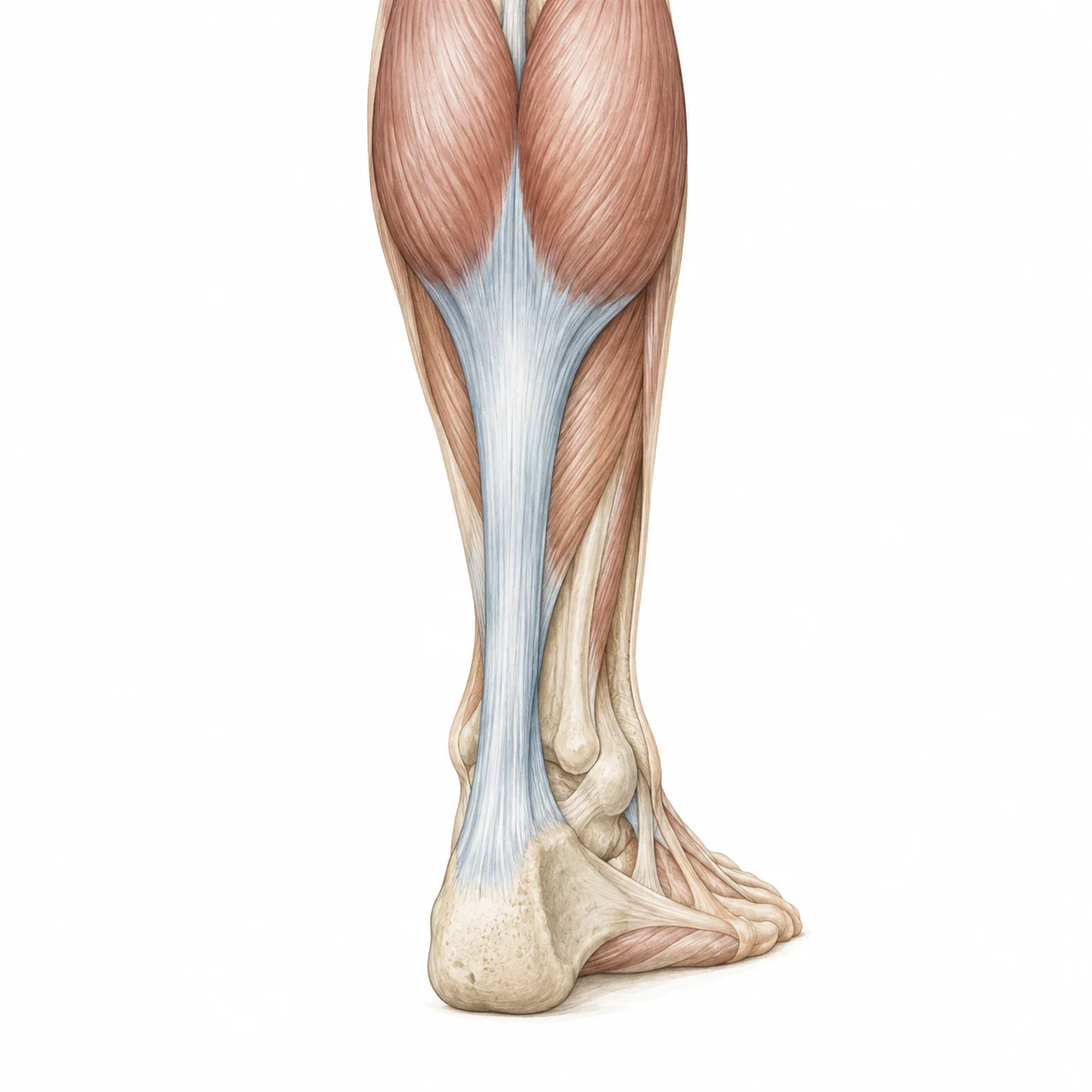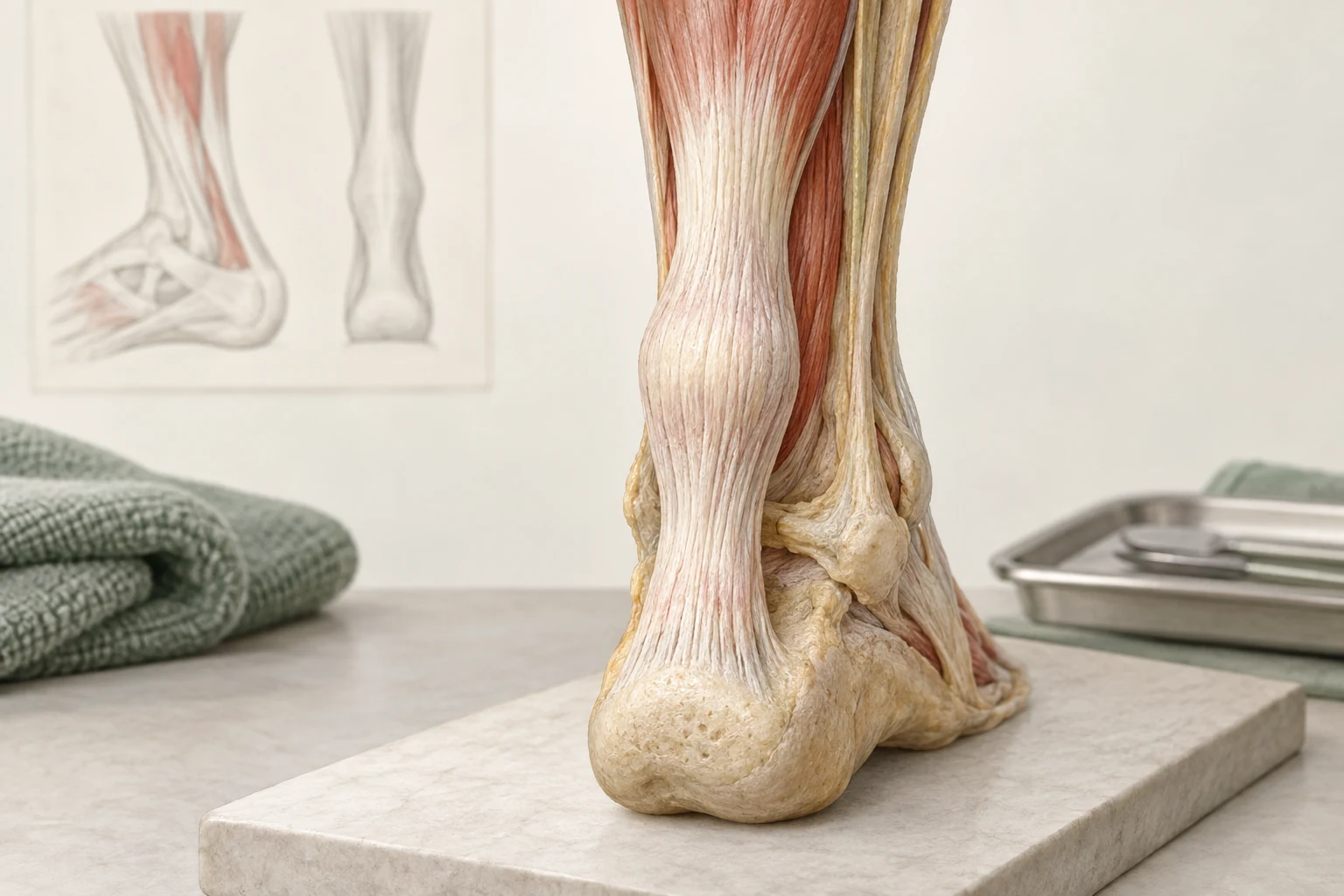
If there's a possible tear, you don't wait for a normal intake.
A sudden clear change during dropping off, jumping or a step deserves immediate medical assessment. Especially a snapping feeling, acute pain and loss of function can fit with an Achilles tendon rupture. Thuisarts advises to call immediately with such phenomena. Get in touch with GP or GP and describe what happened.
Stop the sports activity. Don't try to finish the training yet to see if it's loose. A routine appointment for shockwave or a self-chosen practice program is not the right first route at that time. The medical assessment should first clarify the possible injuries and how the foot should be protected.
What experience makes a rupture suspicious?
People can describe a sudden pain, a good-looking or the feeling of a blow to the calf. After that, it can be difficult to shut down powerfully. Swelling or a visible change may occur, but not every characteristic needs to be directly present or recognizable. So you don't have to wait until all the signals from a list match.
The Dutch Diagnosis guideline calls it acute story and loss of function as an important reason to think of a rupture. The health care provider assesses the whole thing. Do not try to find a palpable dimple yourself by pressing hard or do not let someone without expertise perform a test to reassure you.
Being able to move yet doesn't provide reliable comfort
A tear does not mean that any movement of the foot is impossible. Sometimes a custom way of walking still succeeds, while normally shutting down does not go well. Also, the first sharp pain can decrease. The patient information from Cambridge University Hospitals describes that pain can weaken and walk with a flatter pattern is sometimes still possible.
Therefore, the conclusion I may insist on is still unreliable, so nothing is torn. The injury moment remains important, even when the pain on the way home is reduced. When calling, indicate which function is suddenly different. That's information for triage; you don't need to know the diagnosis for sure yourself before you contact us.
What's the health care provider investigating?
In case of suspicion of a rupture, the caregiver looks at the story and investigates the tendon and calf function. The Thompson test and the assessment of an interruption can be used. The meaning depends on expert execution and the overall picture. This article therefore does not instruct you to repeat the test at home.
According to the guideline, physical examination can be sufficiently clear in the event of an appropriate picture. If doubt persists, ultrasound may be considered. A scan is not always necessary automatically, but the absence of a scan is also a reason to ignore an unclear injury. Ask what the assessment has shown, what is still uncertain and what protection or follow-up is needed.
Prep the phone call practically
You can pass on briefly:
- When and on what motion it happened.
- Whether you noticed a handsome, sudden pain or blow.
- Which didn't work out right after, as usual.
- Whether there's swelling, a wound, sensational change or any other noticeable change.
- Where you are and if someone can help you with safe transportation.
Don't keep walking back and forth on your own to demonstrate a symptom. Ask how best to keep the foot to the assessment. Get help if necessary and do not drive yourself when you cannot operate the vehicle safely. Self tape, rack or sturdy massage trying gives no certainty and can unnecessarily delay the assessment.
A different type of treatment plan begins after the assessment.
When a rupture is detected, the treating care provider shall discuss which treatment and protection are appropriate. That could be a different route than long-term tendinopathy. The choice depends on the injury and personal circumstances. Therefore, do not use an online schedule for ordinary Achilles tendon symptoms as a replacement for the instructions after a tear.
Ask who you can reach when you ask, what load is allowed and when control takes place. Write down the instructions so you don't have to gamble at home. If the first study was reassuring but the acute loss of function remains unexplained or the course changes unexpectedly, please contact again. The core is timely assessment of the injury, followed by clear personal agreements; a general recovery time or sports promise does not fit in with that.
Frequently asked questions
Should I call when the pain after the handsome is less?
Yes, in case of a handsome with sudden loss of function you should call GP or GP immediately. A decrease in pain does not rule out a rupture. In particular, tell us what happened at the time of the injury and which movement or removal suddenly doesn't work normally.
Can I do the Thompson test myself?
Do not use a self-test to exclude a tear or delay help. The implementation and interpretation require expertise and are part of a full investigation. Report your symptoms and have an assessment of what investigations are needed in your situation.
Is an ultrasound always required to fix a rupture?
No. Diagnosis may be made clinically with a clearly appropriate story and physical examination. If in doubt, an ultrasound can help. The healthcare provider determines which question to answer and how the outcome affects the follow-up policy.
Can shockwave treat a torn Achilles Tendon directly?
A suspected acute rupture first requires medical assessment and a specific treatment plan. An ordinary shockwave intake is not the first route for that. Do not allow treatment or sport to resume until it is clear which injury is present and what protection is needed.
Sources and evidence
- Thuisarts — I'm suffering from my Achilles Tendon (2026) ↗
Alternative sports load and call directly at possible rupture.
- guideline Achilles Tendonrupture — Diagnostics (2023) ↗
Acute signs, clinical diagnostics and ultrasound in doubt.
- Cambridge University Hospitals — Achilles tendon rupture management ↗
Clapping injury, sometimes decreasing pain and limitations of detachment and walking.
A personal follow-up step
From insight
to an appropriate plan.
At a paid intake, we'll discuss your symptom and do targeted research. ultrasound is included at no extra cost when it makes sense. Any treatments are agreed separately.
View the initial consultation