What do the terms really mean?
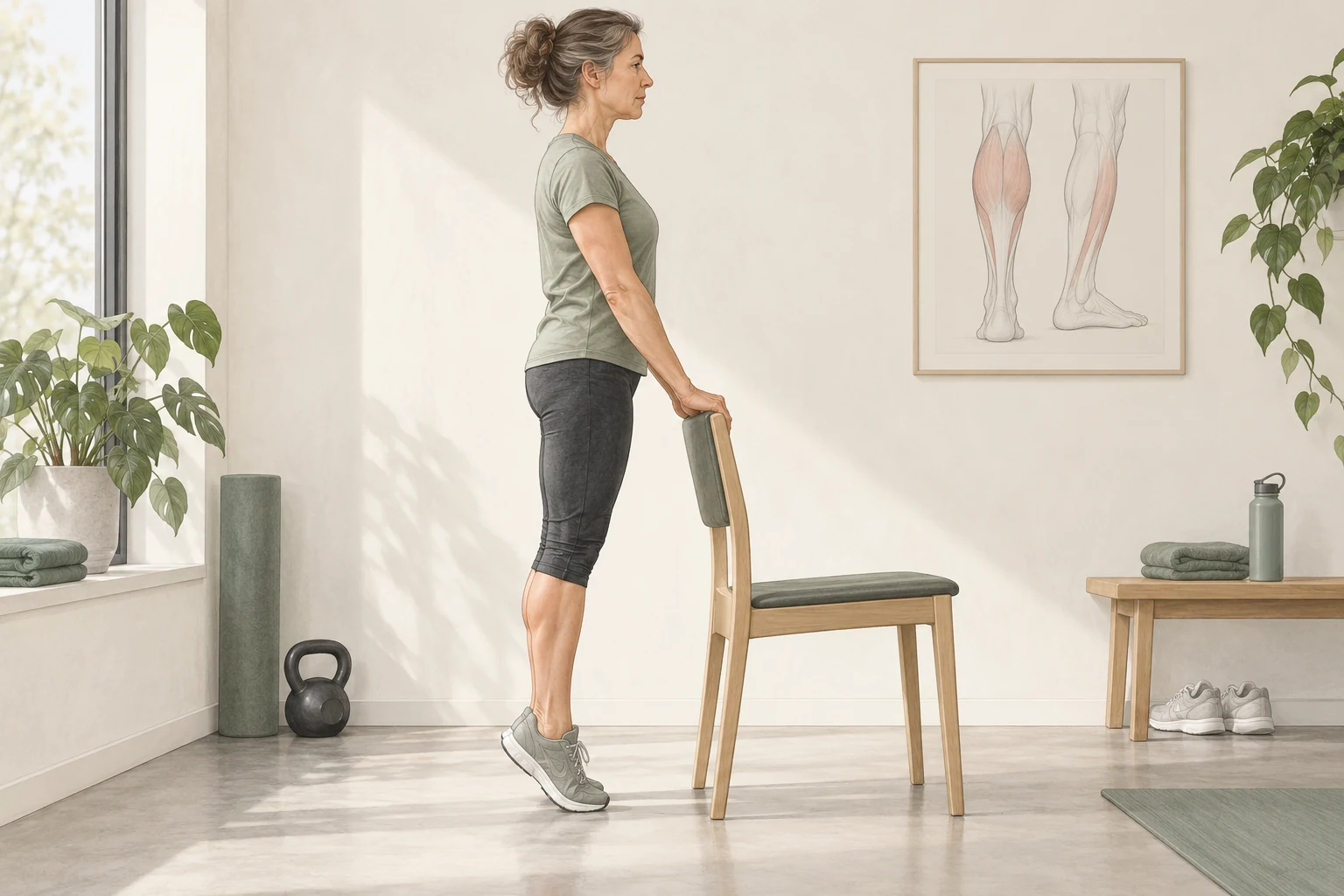
In an eccentric muscle action, the muscle provides strength while it grows longer. With a calf movement you can think of controlled dropping from a higher heel position. A concentric action is the phase in which the muscle shortens, such as lifting. An exercise can contain both phases, even when the emphasis is on one of them.
Heavy slow resistance, often abbreviated to HSR, is a training approach with relatively heavy resistance and slow performance. Heavy is a ratio to what a person can handle, not a fixed weight for everyone. The name does not automatically tell which range of motion, which version or which take-off load is suitable. Those parts should be separate in the prescription.
What does the direct comparison show?
In the research by Beyer and colleagues 58 people with long-term middle class symptoms were divided into eccentric training and HSR. Both groups improved in symptoms and function, while maintaining improvement in subsequent follow-up. The study does not prove that one method is superior in all forms of Achilles tendon symptoms.
The delineation is important: it was middle-piece symptoms, not every pain behind the heel. A full programme was also examined and not just one movement. Anyone who translates the research to "you" always has to train heavily slowly "you" skips that context. Ask which part of the evidence fits your diagnosis and practical situation.
The guideline leaves room for an appropriate form
The Dutch guideline on Conservative Treatment advises build-up calf power and suggests that clear differences in effects between forms of practice have not been established. Time, motivation, facilities and pain monitoring may be considered. This makes a common choice better to defend than to present a method as the only right solution.
A program that you understand and can run also offers better points of reference for adjustment. If a heavy variant always fails, that doesn't have to mean a lack of commitment. The start can be unsuitable, the equipment is missing or the working week is too stressful. These problems require adaptation, not just a more stringent repetition of the same opinion.
Compare the practical requirements
| Component | Eccentric Emphasis | Slowly train |
|---|---|---|
| Movement Accent | In particular, the controlled downward phase | Lifts and bags against relatively heavy resistance |
| Explanation that remains necessary | How you start, fall and return | How to choose resistance, tempo and range |
| Possible practical limitation | The variant is painful or clumsy to dose | Required resistance or material is not available |
| Joint basis | Gradual construction and evaluation | Gradual construction and evaluation |
This is a description of approaches, not an independent exercise schedule. In practice, variants can overlap. The important thing is that it's clear what you have to do, what purpose it has and when the next step is at stake.
A method works within a larger load context
A practice session is next to all other activities. Running, standing and repeated stairwells change what the calf-pee chain gets to process that week. Therefore, do not compare your response directly with someone who performs the same schedule but has another daily life. The chosen sport goal also determines which requirements will eventually become relevant.
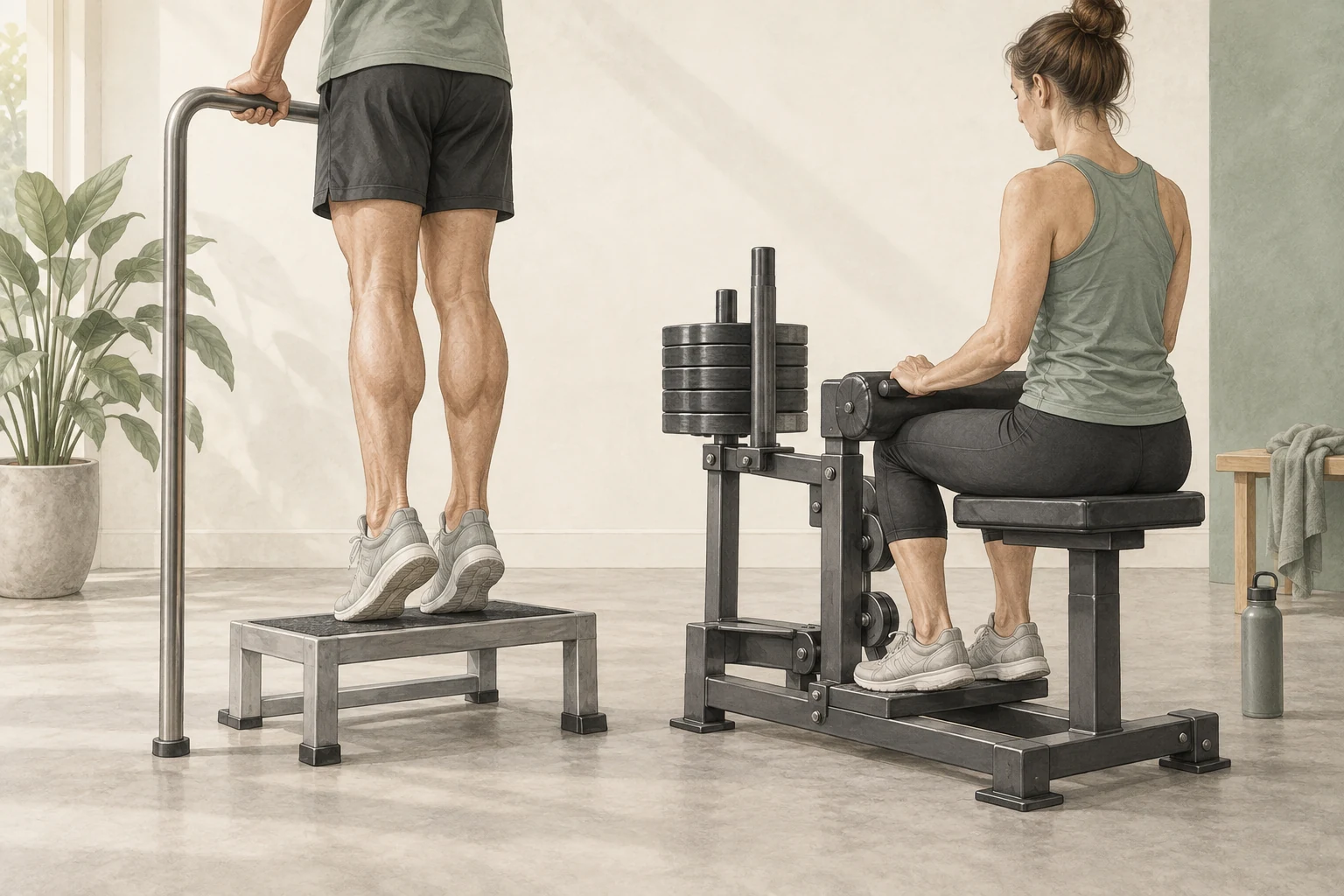
One example: two people choose HSR. The first can build quietly in a gym; the second has irregular services and no access to suitable resistance. For that second person, another form could be more executable. That doesn't mean anything about personal motivation. The best choice is a well-founded program that really fits the circumstances of the person.
Do not switch just because a new name sounds attractive
Before you switch, you look at the existing plan. Is it clearly executed, sufficiently adapted and linked to a functional purpose? What is the reason for change: pain, time pressure, lack of material or lack of progress? A concrete answer makes the switch more meaningful than starting a new program because it sounds more modern.
At each choice, decide how the effect is followed. Less pain, better deposition and more confidence in a daily activity can be relevant together. Lifting a single heavier weight is not the whole result. Insufficient progress also involves a re-evaluation of diagnosis and load, so that you do not alternate endlessly between training methods without solving the central question.
Frequently asked questions
Is eccentric training out of date?
No. It's a researched practice approach that could still have a place. The comparison available does not justify the need for everyone to switch to HSR. Look at diagnosis, execution, construction and feasibility before writing off a method.
Does heavy slow training mean that I have to use a lot of weight right away?
No. Heavy is relative to your current capabilities and the prescribed goal. A suitable start is chosen individually. Without explanation add a lot of resistance directly can be too big a step, especially when daily stress already gives many symptoms.
Do the same schedule apply to attachment charges?
Not on its own. Much research into this comparison is about the middle section of the Achilles Tendon. In the case of attachment problems, the range of movement can be chosen differently. Therefore, have a schedule adjusted instead of taking it from a study or video.
Can I combine both methods?
This can only be meaningfully assessed within the overall plan. Two programs run completely side by side possibly doubles the load. Ask which part adds something and how structure and response are followed, so that the whole remains feasible.
Sources and evidence
- Beyer et al. — Heavy Slow Resistance Versus Eccentric Training (2015) ↗
Randomised comparison with chronic middlepiece symptoms; both exercise groups improved.
- guideline Achilles tendinopathy — Conservative treatment options (2020) ↗
Active treatment, calf power and patient adjustment of exercises.
A personal follow-up step
From insight
to an appropriate plan.
At a paid intake, we'll discuss your symptom and do targeted research. ultrasound is included at no extra cost when it makes sense. Any treatments are agreed separately.
View the initial consultation